Muscle growth is not mysterious, but it is often explained badly. People hear “take amino acids” and assume that any amino acid supplement automatically builds muscle. In reality, muscle protein synthesis (MPS) is driven by a few controllable inputs: resistance training, total daily protein, enough essential amino acids (EAAs), and (for many people) hitting a leucine-rich protein dose per meal.
This article breaks down what actually drives MPS, why “BCAAs” are not the same as “protein”, how leucine fits into the picture, and how to build a simple plan for protein distribution and timing that supports growth and recovery.
What is muscle protein synthesis (MPS)?
MPS is the process of building new muscle proteins. Think of it as the “construction” side of muscle remodeling. Muscle protein breakdown (MPB) is the “demolition” side. Your body does both all the time. Over time, muscle grows when the balance shifts toward more building than breakdown, especially when training provides the signal to add tissue.
MPS is not a constant switch you turn on forever. It rises after resistance training and after a protein-rich meal, then returns toward baseline. Your job is to create repeated pulses of MPS over weeks and months while also providing enough total nutrition to support the adaptation.
The key driver: essential amino acids (EAAs)
Proteins are made of amino acids. Some amino acids are essential, meaning you must get them from food because your body cannot make them in adequate amounts. EAAs are the primary amino-acid driver of MPS. If a “protein source” is low in EAAs, it will not stimulate MPS as strongly.
This is why a complete, EAA-rich protein dose typically outperforms a supplement that contains only a few amino acids.
Where BCAAs fit
BCAAs are three amino acids: leucine, isoleucine, and valine. They are essential, and leucine is particularly important for signaling. But BCAAs alone do not provide the full set of EAAs needed to build new muscle proteins. In simple terms:
- BCAAs can signal, but they do not fully supply the raw materials.
- Complete protein or EAAs provide both the signal and the building blocks.
This is why many people do not see much benefit from BCAAs if they already eat enough high-quality protein.
Leucine: the “trigger”, not the whole job
Leucine is often described as the amino acid that “turns on” MPS. That is partially true: leucine strongly contributes to the signaling that initiates MPS after a meal. Many coaches use the term leucine threshold to describe the amount of leucine in a meal that tends to produce a robust MPS response.
However, leucine is not magic by itself. You still need adequate EAAs and total protein to sustain protein building. A useful mental model is:
- Leucine helps start the process.
- EAAs and total protein complete the process.
- Training determines where the new protein goes (muscle, not random tissue).
What matters more than supplements: total daily protein
If you want growth, start with total protein per day. Most people who “need amino acids” are simply under-eating protein or skipping protein at key meals.
A practical approach is to aim for a daily protein target and then distribute it across the day. Many lifters do well when protein is not concentrated into one giant dinner but is spread across 3–4 meals. This creates multiple MPS pulses and improves appetite control and recovery.
Protein per meal: why distribution matters
MPS responds to a protein dose and then becomes less sensitive for a period. That means a small protein snack every hour is not necessarily better than distinct protein meals. Most people do well with 3–4 protein feedings per day, each containing a meaningful protein dose.
Practical targets:
- 3 meals/day: make each meal a strong protein anchor.
- 4 meals/day: slightly smaller doses can still be effective, especially if appetite is limited.
If you only eat protein once or twice per day, you can still grow, but it is harder for many people to hit daily protein and to recover consistently.
Timing around training: what actually helps
The internet makes timing sound dramatic. In practice, timing is a small lever compared with total protein and consistent training. Still, timing can matter when your schedule is tight.
Pre-workout protein
A protein-rich meal a few hours before training supports performance and reduces the chance you train under-fueled. If you train early and cannot eat much, a smaller protein option can still help.
Post-workout protein
After training, a complete protein dose is a simple way to support recovery. But do not panic about a narrow “anabolic window”. If you ate protein earlier in the day, your muscles are already supplied with amino acids.
Practical rule: hit a good protein dose within a few hours after training, and focus on daily consistency.
Whole foods vs whey vs EAAs
Whole-food protein
Whole foods are the foundation. They deliver protein plus minerals and calories that support training and recovery. Examples include meat, fish, eggs, dairy, tofu, tempeh, legumes, and mixed meals that provide complete amino acids.
Whey protein
Whey is popular because it is convenient, EAA-rich, and naturally high in leucine. It is often an efficient way to hit protein targets when appetite or schedule is limited.
EAA supplements
EAA supplements can make sense when you cannot tolerate whole foods or whey, or when you need a low-calorie way to support protein intake during a cut. But they are not required for most people who can eat enough complete protein.
BCAA supplements
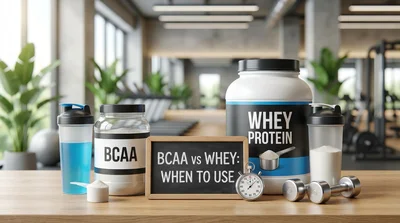
BCAAs can be useful in narrow situations (for example, when protein intake is extremely low and you cannot eat), but for most lifters, BCAAs are a weaker choice than whey, a complete protein meal, or an EAA product.
Older lifters: “anabolic resistance” and higher per-meal needs
As people age, muscles can become less responsive to a given protein dose. This is sometimes called anabolic resistance. In practical terms, many older lifters benefit from ensuring each protein meal is a strong dose, rather than relying on small protein snacks.
If you are older and training, prioritize:
- consistent resistance training
- adequate total daily protein
- protein at breakfast, not only at dinner
- high-quality protein sources with strong EAA content
Plant-based diets: you can build muscle, but plan it
Plant-based athletes can build muscle, but protein planning matters more. Some plant proteins are lower in certain EAAs, and digestion rates can differ. The solution is not panic. It is basic structure:
- Hit total protein daily, not “most days”.
- Use mixed proteins (legumes + grains, soy foods, blended sources).
- Anchor each meal with a meaningful protein portion.
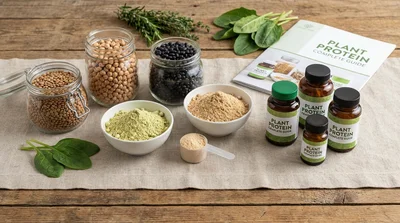
If you struggle to hit protein with food, a plant protein powder can help. The goal is not purity. The goal is consistency.
Cutting vs bulking: what changes?
During a cut
When calories are lower, your body has less energy for building. Protein becomes more protective. Most people on a cut benefit from higher protein and tighter meal structure to preserve muscle.
During a bulk
With a calorie surplus, growth is easier, but you still need quality training and enough protein. Overeating without progressive training mostly increases fat gain.
Practical dosing guide (simple, not obsessive)
Use these as coaching-style targets, not as a math contest.
- Daily protein: set a realistic daily target you can hit consistently.
- Meals: 3–4 protein meals per day.
- After training: get a complete protein dose within a few hours.
- If using supplements: prefer whey or EAAs over BCAAs if you want an MPS-focused option.
If you consistently hit daily protein and train progressively, you are already doing what drives MPS.
Example day: building MPS pulses with normal food
If you want a practical template, here is a simple “3 to 4 feedings” day. The exact foods can change, but the structure stays the same.
Option 1: three strong meals
- Breakfast: eggs and Greek yogurt, or tofu scramble plus a protein smoothie.
- Lunch: chicken, rice, and vegetables, or lentils plus grains and a side of soy.
- Dinner: fish or lean meat with potatoes and vegetables, or tempeh bowl with legumes.
Option 2: four moderate meals
- Breakfast: high-protein meal.
- Midday: protein meal or shake when schedule is tight.
- Post-training: whey, a protein meal, or an EAA-based plan if calories are low.
- Dinner: whole-food protein anchor.
Notice what is missing: complicated intra-workout supplements. If total protein is handled, most people do not need anything fancy during training.
When amino acid supplements can make sense
Most lifters do not need amino acid supplements if they can eat enough protein. But there are practical exceptions:
- Low appetite: whey or a ready-to-drink protein can be the easiest way to hit targets.
- Very low calories: EAAs can support intake when you are dieting hard, but do not use them to justify under-eating.
- Training very early: a small protein dose or an EAA dose may be easier than a full meal.
- GI sensitivity: some people tolerate EAAs better than certain powders or foods.
Even in these cases, the hierarchy is usually: complete protein meal first, whey second, EAAs third, and BCAAs last.
Protein quality: why some proteins “hit harder”
Two protein servings with the same grams can produce different MPS responses because protein quality differs. High-quality proteins tend to be more EAA-dense and easier to digest. This is one reason whey is often effective: it is rich in EAAs and leucine, and it digests quickly.
You do not need a perfect score chart. Use a simple quality rule:
- Animal and dairy proteins are typically high in EAAs.
- Soy is a strong plant option.
- Legumes and grains work well when combined and when total intake is high enough.
Quick checklist for building muscle with amino acids
- Train with progressive overload 3–5 days per week.
- Hit a realistic daily protein target.
- Distribute protein across 3–4 meals.
- Use whey or EAAs only if food is not enough.
- Sleep and recovery are not optional for consistent MPS.
Common myths
Myth: BCAAs build muscle by themselves
BCAAs can help signal MPS, but they do not provide the full set of EAAs needed to build new muscle proteins. Complete protein is usually the better tool.
Myth: You must drink a shake within 30 minutes
Timing matters less than people claim. The simplest rule is to hit protein near training and across the day.
Myth: More protein always means more muscle
There is a point where extra protein adds little if training, sleep, and total calories are not aligned. Use protein as a foundation, then focus on training quality and recovery.
Safety notes
For healthy people, higher-protein diets are generally well tolerated. If you have kidney disease or other medical conditions, protein targets should be individualized with a clinician. Also remember that supplements are not regulated like medications, so choose reputable brands and avoid products with hidden stimulants.
FAQ
Do I need BCAAs during training?
Most people do not. If you already hit daily protein and you ate a protein meal within a few hours of training, amino acids are available. Intra-workout BCAAs are mostly an expensive habit. If you train fasted and cannot tolerate food, a small protein dose or an EAA product can be a more complete option.
What about collagen?
Collagen is not a complete muscle-building protein because it is low in key EAAs. It may fit for connective tissue goals, but it should not replace your main protein intake if hypertrophy is the goal.
Will high protein hurt my kidneys?
In healthy people, higher-protein diets are generally safe. If you have kidney disease, protein targets should be individualized with a clinician. Do not use fear to under-eat protein if you are healthy and training.
Is fasting bad for MPS?
Long fasting windows can reduce the number of protein feedings per day. If growth is the goal, most people do better with more than one protein meal. You can still train and progress with time-restricted eating, but you must plan protein carefully.
Key takeaways
- MPS is driven mainly by resistance training plus adequate EAAs from complete protein.
- Leucine helps trigger MPS, but you still need total protein and full EAAs to build muscle.
- BCAAs are not the same as protein; whey, food protein, or EAAs are usually better choices.
- Consistency (daily protein, 3–4 meals, progressive training) beats perfect timing.