Overview
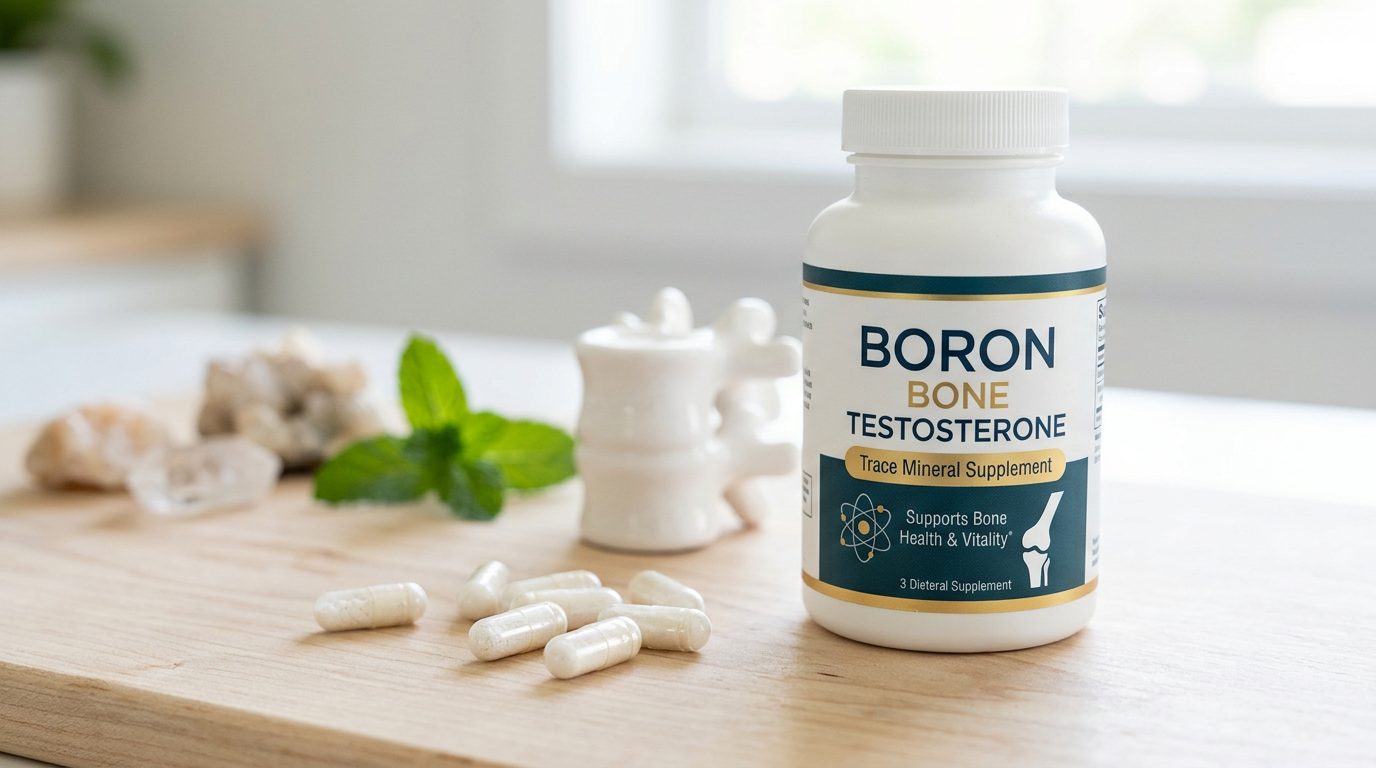
This guide covers the main evidence and practical use of boron for bone health and testosterone-related outcomes. Understanding the basics helps you make informed choices about supplementation and when it may support your goals. We summarize what research shows and how to apply it safely. Boron is a trace mineral that appears to influence mineral metabolism and, in some studies, hormone levels; it is often of interest to people looking to support bone density, joint comfort, or free testosterone. Whether you are an athlete, someone managing a specific condition, or simply aiming to optimize your routine, a clear picture of the evidence helps you and your provider decide.
Boron and Bone Health
Boron may support bone health by affecting how the body uses calcium, magnesium, and vitamin D. Some trials have found that boron supplementation was associated with improved calcium retention and higher circulating vitamin D in postmenopausal women; other work suggests benefits for bone density markers. Evidence is promising but not as extensive as for calcium and vitamin D alone; boron is best viewed as part of a broader bone-health strategy. Bone formulas and bone and joint supplements sometimes include boron. Adequate calcium, vitamin D, and weight-bearing exercise remain the foundation; boron may add support when intake from diet is low.
Boron and Testosterone
Some studies report that boron supplementation can raise free testosterone or lower sex hormone-binding globulin (SHBG) in certain populations (e.g. men engaged in resistance training). Results are not consistent across all trials; study designs and doses vary. Boron should not be viewed as a substitute for medical treatment of low testosterone; if you have symptoms or lab-confirmed low testosterone, work with a doctor. For generally healthy adults interested in boron for bone or hormone support, the evidence supports modest benefits in some contexts; do not exceed recommended doses or use boron in place of a balanced diet and lifestyle.
Food Sources and Supplementation
Boron is found in many plant foods: avocados, nuts (almonds, hazelnuts), legumes, dried fruits (raisins, prunes), broccoli, apples, and others. Dietary intake typically ranges from about 1 to 3 mg per day depending on region and diet. Supplemental boron is commonly sold in doses of 3 mg to 10 mg per day. There is no RDA; adequate intake for adults is often estimated at 1–3 mg daily. Higher doses have been used in research; long-term safety at high doses is not fully established. Always follow label directions or your healthcare provider's advice and do not exceed recommended amounts. You can compare boron supplements and multi-mineral formulas to find a product that fits your intake goals.
Dosing and Safety
Boron is generally well tolerated at typical supplemental doses (e.g. 3–6 mg daily). Very high intakes can be toxic; upper limits have been suggested around 20 mg per day for adults. Boron may interact with certain medications or affect hormone-sensitive conditions; if you are pregnant, breastfeeding, or have a medical condition, consult a provider before starting boron. For most adults, a modest dose as part of a comprehensive plan—when approved by your doctor—is a reasonable approach. Combine boron with adequate nutrition and exercise for the best evidence-based outcomes.
What the Research Actually Shows
Human trials on boron and bone have often used 3–10 mg/day and measured calcium balance, vitamin D status, or bone turnover markers. Results are mixed: some studies show improved retention of calcium and higher 25-hydroxyvitamin D; others show little effect. Differences may be due to baseline boron intake, vitamin D status, and population (e.g. postmenopausal women vs. young men). For testosterone, a few small studies in men doing resistance training reported increases in free testosterone or decreases in SHBG with boron supplementation; other studies have not replicated this. The takeaway: boron may have a role in mineral and hormone metabolism in some people, but it is not a guaranteed or dramatic effect. Use it as one part of a broader strategy—nutrition, training, sleep—and track how you feel and any relevant labs rather than expecting a quick fix.
Practical Protocol: How to Try Boron Safely
If you and your provider agree that boron is worth trying, use a simple protocol. Start with 3 mg daily (or the lowest dose on your product) for 2–4 weeks. Take it with a meal to reduce any GI upset. Do not change other supplements or diet dramatically at the same time so you can notice any effect. If you tolerate it and choose to continue, you can stay at 3–6 mg daily; avoid going above 10 mg unless under supervision. Recheck any relevant labs (e.g. vitamin D, testosterone if that was your goal) after 8–12 weeks to see trends. If you notice no benefit or any side effects, stop and reassess.
Who Might Benefit Most
People most likely to benefit from boron supplementation include those with low dietary boron intake (few nuts, legumes, or fruits), postmenopausal women focused on bone health, and—with weaker evidence—men seeking modest support for free testosterone in the context of resistance training and adequate sleep. Boron does not replace calcium, vitamin D, protein, or exercise; it may add a small edge when the rest of the plan is in place.
Boron in a Full Bone and Hormone Plan
Bone and hormone health depend on many factors: adequate calories and protein, sufficient calcium and vitamin D (from diet and sun or supplements), weight-bearing and resistance exercise, sleep, and stress management. Boron is one small piece; it may support mineral metabolism and in some studies hormone status, but it cannot compensate for poor diet, sedentary lifestyle, or untreated medical conditions. If your goal is bone density, prioritize calcium, vitamin D, and loading first; add boron as a possible adjunct when approved. If your goal is testosterone support, address sleep, training, body composition, and any medical causes of low testosterone before relying on boron; the evidence for boron and testosterone is limited and inconsistent. Bone formulas and bone and joint supplements on iHerb often include boron as part of a multi-ingredient product; check the label so you do not double your boron intake if you also take a standalone boron supplement.
Interactions and When to Avoid
Boron may interact with certain prescription drugs; evidence is limited but caution is reasonable. If you take hormone therapy, anti-estrogens, or medications for bone (e.g. bisphosphonates), discuss boron with your provider. Very high boron intake can be toxic; do not exceed 10 mg/day unless under medical supervision. Pregnant and breastfeeding women should get boron from food when possible and avoid high-dose supplements unless advised. People with kidney disease or hormone-sensitive conditions (e.g. certain cancers) should consult a doctor before starting boron. If you notice any new symptoms—digestive upset, skin changes, or mood changes—stop and reassess with your provider.
Long-Term Use and Monitoring
There is no strong evidence that long-term use of boron at 3–6 mg/day is harmful in healthy adults; however, long-term data are limited. If you use boron for months or years, periodic reassessment with your doctor is sensible: review diet, other supplements, and any new health conditions. For bone goals, repeat bone density or relevant labs as your provider recommends. For hormone goals, follow your doctor's guidance on testosterone or other hormone testing. Adjust or stop boron if your situation changes or if you no longer need it. Keeping a simple log of dose and how you feel can help you and your provider decide whether to continue.
FAQ
How long until I see an effect?
For bone-related outcomes, changes in markers or density take months; for testosterone, the few positive studies used several weeks of supplementation. Do not expect immediate results; consistency and overall lifestyle matter more.
Can I take boron with other minerals?
Yes. Many bone formulas contain calcium, magnesium, vitamin D, and sometimes boron. Avoid doubling up so your total boron does not exceed safe levels (e.g. stay under 10 mg/day unless advised otherwise).
Does boron cause weight gain or hair loss?
There is no strong evidence that typical supplemental doses cause weight gain or hair loss. If you notice such changes, stop and discuss with your provider.
Boron in Multi-Ingredient Bone and Hormone Products
Many bone formulas and some male health or performance supplements include boron as one of several ingredients alongside calcium, vitamin D, magnesium, zinc, or herbs. If you take such a product, check the label for boron content so you do not add a standalone boron supplement and exceed 10 mg/day total. Some multi-mineral or bone-support products provide 1–3 mg boron per serving, which fits within a safe range when diet is low. For testosterone-related goals, evidence is stronger for sleep, resistance training, body composition, and treating medical causes of low testosterone than for boron alone; use boron as a possible add-on, not a substitute for these. Bone formulas and bone and joint categories on iHerb list many options; compare labels for boron dose and total mineral content.
Quick Reference: Boron for Bone and Testosterone
Food first: avocados, nuts, legumes, dried fruits, and vegetables provide about 1–3 mg boron per day. Supplement: 3–6 mg/day is a common safe range; do not exceed 10 mg/day. Bone: combine with adequate calcium, vitamin D, protein, and weight-bearing exercise; boron may add support when diet is low. Testosterone: evidence is limited and inconsistent; address sleep, training, and medical causes first. Safety: avoid high doses; discuss with provider if pregnant, breastfeeding, or on medications. Reassess after 8–12 weeks and periodically with your doctor. Product choice: boron supplements and multi-ingredient formulas are available on iHerb; pick a reputable brand and stick to the label dose.
Building a Complete Bone and Hormone Support Plan
Boron fits into a bigger picture. For bone: prioritize calcium (about 1,200 mg/day total from food and supplements unless your doctor says otherwise), vitamin D (enough to reach and maintain a healthy blood level), protein (1.0–1.2 g per kg body weight per day for many adults), and weight-bearing and resistance exercise several times per week. Add boron at 3–6 mg/day only if your diet is low in boron-rich foods or you and your provider want to cover mineral metabolism. For testosterone: focus first on sleep quality and duration, resistance training, body composition, and ruling out medical causes of low testosterone (e.g. thyroid, prolactin, or other hormone issues). Boron is at best a small potential add-on; do not expect it to replace lifestyle or medical treatment. Keep a simple log of supplements and how you feel so you can reassess with your doctor after 8–12 weeks and adjust as needed. Bone formulas and bone and joint products on iHerb offer single-ingredient and combination options; always check total boron when using more than one product. Bottom line: boron may support bone and in some contexts hormone metabolism; get it from food when possible and add 3–6 mg/day as a supplement only if needed and approved. Do not exceed 10 mg/day and combine with adequate nutrition and exercise for best results. Many people get enough boron from diet alone; supplementation is most useful when intake is low (e.g. few nuts, legumes, or fruits) or when you and your provider want to cover mineral and possible hormone support as part of a structured plan. Reassess after 8–12 weeks and adjust as needed. There is no need to take boron if you already eat a diet rich in nuts, legumes, and fruits and your bone and hormone fundamentals (sleep, training, nutrition) are solid; when in doubt, discuss with your provider whether adding boron is appropriate for your goals. Stick to the recommended dose and do not stack multiple boron-containing products without checking total intake.
Key Takeaways
- Boron may support bone health and, in some studies, free testosterone; evidence is promising but not uniform.
- Get boron from food (avocados, nuts, legumes, dried fruits) when possible; supplement with 3–6 mg/day if needed and approved.
- Do not exceed recommended doses; very high intake can be toxic. Consult a provider if pregnant, breastfeeding, or on medications.
- Combine boron with adequate calcium, vitamin D, protein, and exercise for bone and overall health.