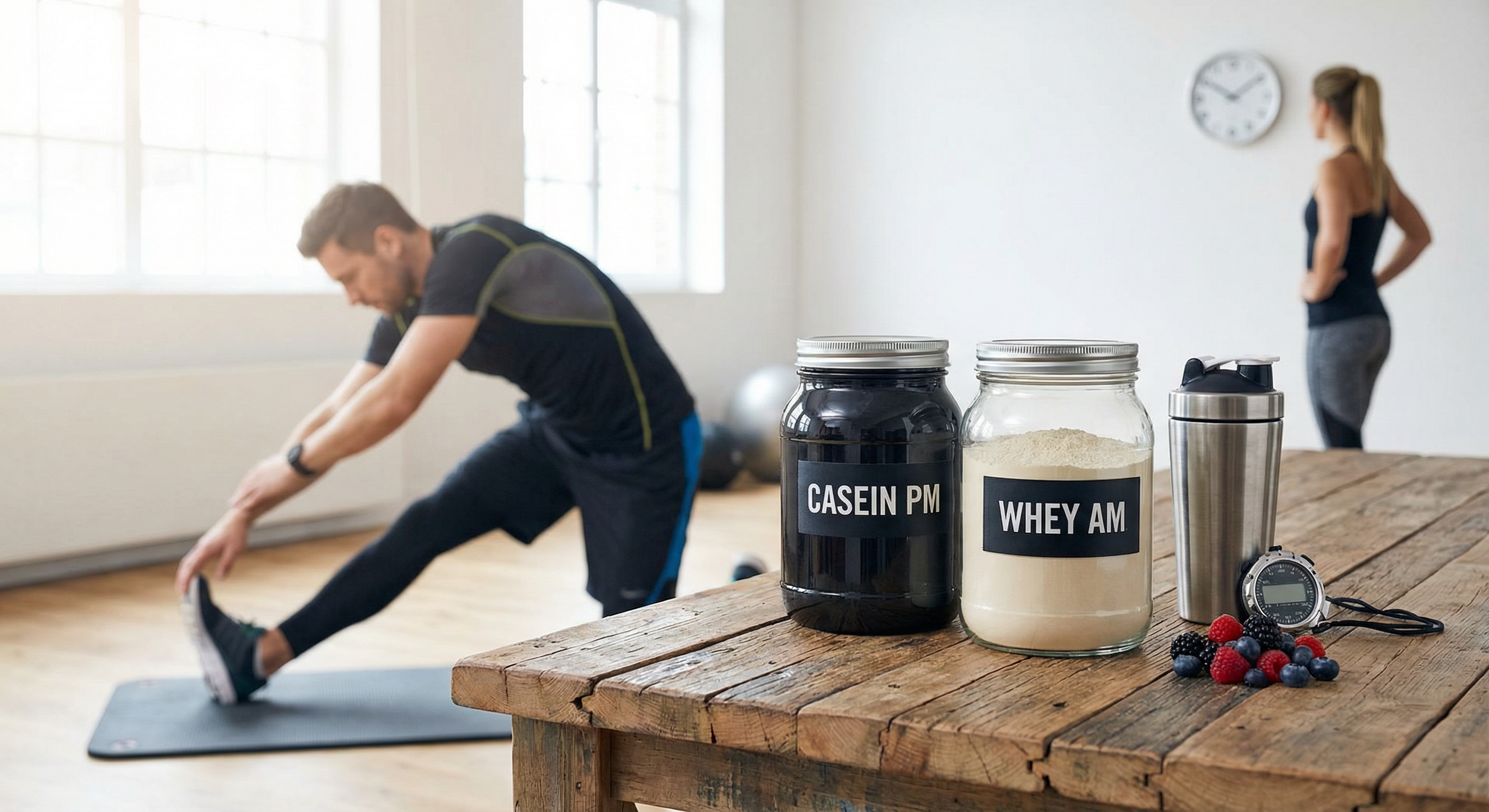
Whey and Casein: Different Digestion Speeds
Whey protein is digested quickly and spikes blood amino acids within one to two hours, making it ideal for post-workout recovery when you want to stimulate muscle protein synthesis rapidly. Casein forms a gel in the stomach and is absorbed slowly over several hours, providing a steady release of amino acids. Both are high-quality, complete proteins from milk; the main difference is timing and how your body uses them. As a bodybuilder and coach, I rely on both: whey when speed matters, casein when sustained release matters.
Choosing between whey and casein is less about one being better and more about when you take them. Use whey around training for fast delivery; use casein before bed or when you will go many hours without food to sustain amino acid availability. Total daily protein intake remains the main driver of muscle growth; timing and type fine-tune the response.
Post-Workout: Why Whey Fits Best
After resistance or intense training, muscles are primed to take up amino acids. Whey's fast digestion helps maximize the anabolic window and supports recovery. A dose of 20–40 g of whey within a couple of hours of training is a common and evidence-based approach. You can pair it with carbohydrates to support glycogen replenishment and insulin response. Leucine, which is abundant in whey, is a key trigger for muscle protein synthesis; the rapid rise in blood amino acids after whey intake supports a strong anabolic signal.
Casein post-workout is not wrong; it still delivers amino acids and supports growth. But whey tends to produce a sharper rise in muscle protein synthesis in the short term, which is why most athletes and coaches prefer whey after training. If you only have casein or a blend, that will still support recovery; the difference is often marginal when daily protein is adequate.
Before Bed: The Case for Casein
During sleep you go many hours without eating. Casein's slow release can help maintain a positive protein balance overnight and may reduce muscle breakdown. Studies suggest that 30–40 g of casein before bed can improve overnight muscle protein synthesis and recovery, especially when daily protein intake is already adequate. The prolonged amino acid availability is thought to blunt proteolysis and support repair during the fasting period of sleep.
If you do not have casein, a mix of cottage cheese and milk or a slow-digesting plant option can approximate the effect. Greek yogurt or skyr also provide casein-like protein. The goal is sustained amino acid availability through the night without a heavy meal that could disturb sleep.
Meal Gaps and Sustained Release
When you know you will skip a meal or go four to six hours without protein, casein or a blended protein (whey + casein) can help bridge the gap. Slow-release options keep amino acids in circulation longer, which can support muscle maintenance and satiety. This is useful during a busy workday, travel, or when you are cutting and spacing meals to manage hunger.
Conversely, if you have a meal or snack soon, whey is unnecessary unless you specifically want a fast post-workout hit. Whole foods with mixed protein (e.g. chicken, eggs, dairy) also provide both fast and slow components. Many bodybuilders use whey only around training and rely on whole foods and casein at other times.
Leucine and the Anabolic Response
Both whey and casein are rich in leucine, the amino acid that strongly stimulates muscle protein synthesis. Whey delivers leucine quickly, which can produce a higher peak in synthesis over the first few hours; casein delivers it gradually, which can extend the duration of a moderate synthesis response. For building muscle, hitting a leucine threshold per meal (roughly 2–3 g from high-quality protein) matters; both whey and casein can achieve that when dosed appropriately (e.g. 20–40 g per serving).
Blends and Real Food
Protein blends (whey + casein, or milk protein concentrate) offer a middle ground: a faster initial spike plus sustained release. They are convenient when you want one product for multiple contexts. Real food remains the foundation: eggs, chicken, fish, dairy, and legumes spread across the day provide variety and often better satiety. Use supplements to fill gaps, hit targets around training, or when whole-food protein is inconvenient.
Cutting and Bulking
When cutting calories, protein needs often increase (e.g. 2–2.4 g/kg) to preserve muscle. Casein and whey both help hit targets without excess calories; casein can improve satiety between meals. When bulking, total calories and protein matter most; timing still helps but is less critical than during a deficit. Some athletes use casein at night year-round and whey post-workout; others rotate based on availability and preference.
Quality and Choosing Products
Look for products with clear labeling (protein per serving, source). Whey isolate has less lactose and is often preferred by those sensitive to dairy; concentrate is cheaper and still effective. Casein is naturally slow-release; micellar casein is a common form. Hydrolysates are pre-digested for slightly faster absorption but are usually more expensive. Compare whey and casein options on iHerb to find forms and flavours that suit you. Third-party tested brands (e.g. NSF, Informed Sport) give extra assurance for athletes subject to doping control.
Practical Summary
- Post-workout: Prefer whey (20–40 g) for rapid recovery.
- Before bed: Casein (30–40 g) for overnight amino acid supply.
- Long gaps: Casein or blend when meals are delayed.
- Daily total: Still matters most; timing optimizes within that.
Use both strategically rather than worrying about one being superior; total daily protein and training consistency drive most of the results.