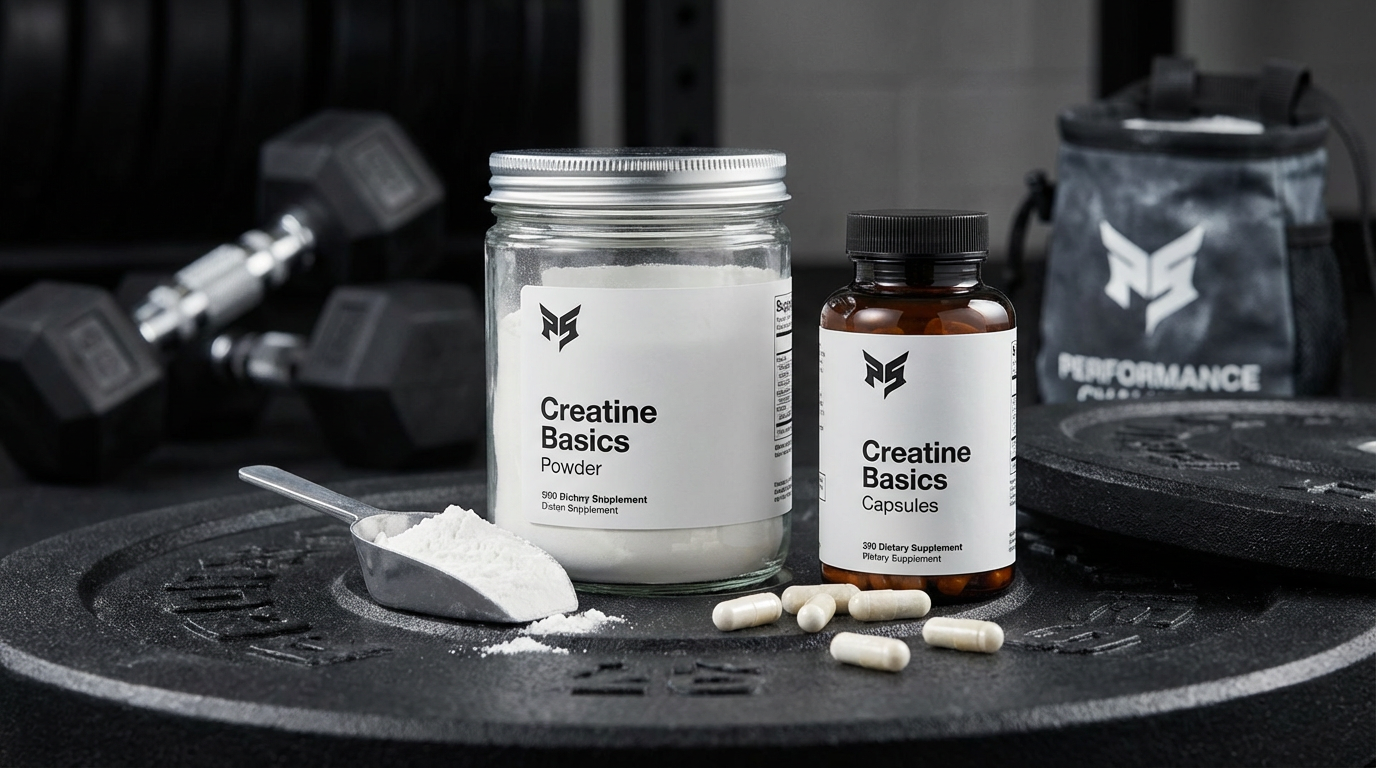
Creatine is one of the most studied supplements in sport and exercise science. It can support strength, power, and muscle growth when combined with resistance training, and it has a strong safety record at typical doses. As a fitness coach, I recommend it to athletes and active adults who want an evidence-based edge. This guide covers how creatine works, how to dose it (including loading and maintenance), who it helps, and what to expect. For product options, you can browse creatine on iHerb and sports nutrition.
What creatine is and how it works
Creatine is a compound made from amino acids and stored mainly in muscle. Your body makes some and you get more from meat and fish. In the muscle, creatine helps regenerate adenosine triphosphate (ATP), the immediate fuel for short, intense efforts. Supplementing raises muscle creatine and phosphocreatine stores, which can improve performance in repeated high-intensity efforts (e.g. heavy sets, sprints) and support gains in strength and lean mass when you train. Effects are well documented in resistance training; benefits in team sports and endurance are more context-dependent.
Most research uses creatine monohydrate; it is cheap, effective, and well absorbed. Other forms (HCl, nitrate, etc.) are not clearly better for performance. Stick with monohydrate unless you have a specific reason to try another form.
Who benefits from creatine
Creatine is most consistently helpful for people doing resistance training who want more strength, power, or muscle. It can also help in sports with repeated short, intense efforts (sprints, jumps, combat). Older adults may see benefits for strength and muscle mass when they lift. Vegetarians and vegans often have lower baseline creatine and may notice a larger relative response. Endurance athletes sometimes use it for recovery or high-intensity segments; the evidence is mixed. It is not essential—you can make progress without it—but it is a low-cost, evidence-based option for many.
Dosing: loading vs maintenance
Two common approaches: loading then maintenance, or maintenance only. Loading: about 0.3 g/kg per day (often 20 g split into 4 doses) for 5–7 days to saturate muscle quickly, then 3–5 g per day to maintain. Maintenance only: 3–5 g per day from the start; full saturation takes longer (around 3–4 weeks) but avoids the loading phase. Both work; loading gets you to saturation faster if you need it soon. Take creatine with or without food; timing (e.g. pre- or post-workout) does not seem to matter much for long-term results.
Forms and quality
Creatine monohydrate is the standard. Micronised monohydrate dissolves more easily and may reduce stomach upset in sensitive people. There is no need for expensive "advanced" forms for most users. Store in a dry place; creatine can degrade slowly in solution, so pre-mixing large batches in liquid is not ideal. Take a consistent daily dose; consistency matters more than timing.
Safety and side effects
Creatine is well studied and generally safe at 3–5 g per day and during loading phases. Some people report bloating or digestive discomfort during loading; switching to maintenance-only or splitting the dose can help. Weight gain in the first weeks is often water retention in muscle, not fat. Stay hydrated. People with kidney disease should avoid creatine unless a doctor approves it. There is no solid evidence that creatine causes kidney damage in healthy people at normal doses. If you have a medical condition or take multiple medications, check with your doctor before starting.
Combining with training and diet
Creatine works best with resistance training and adequate protein and calories for your goals. It does not replace hard work or nutrition. Pair it with progressive overload and enough sleep and recovery. Some people cycle creatine (e.g. 8–12 weeks on, a few weeks off); it is not required, and many use it year-round without issue.
Women and creatine
Women often have less research specifically on them, but the mechanisms and benefits apply. Lower body weight means smaller absolute doses (e.g. 3 g per day) are often enough. Loading is optional; 3 g daily is a simple starting point. Creatine does not cause masculinisation or replace a good training and nutrition plan.
Older adults
Older adults can benefit from creatine for strength and muscle mass when they do resistance training. It may help offset age-related loss of muscle and function. Dosing is similar (3–5 g per day); loading is optional. Combine with adequate protein and regular strength training.
What to expect
During loading, some notice a small weight increase (water) and possibly more "full" muscles. Strength and power gains build over weeks with training. Do not expect overnight changes; give it at least a few weeks of consistent use and training. If you stop supplementing, muscle creatine levels gradually return to baseline; any strength or size you gained from training can be maintained with continued training and diet.
Myths and misconceptions
Creatine does not turn into fat when you stop; the initial weight is mostly water. It is not a steroid and does not have the same risks as anabolic hormones. You do not have to take it with sugar or juice; that was popular with loading protocols but is not necessary for absorption. Caffeine does not cancel out creatine in most people; the old concern came from a single study and has not held up. Creatine will not dehydrate you if you drink enough fluid; in fact, staying hydrated is good practice with or without creatine. Women and teenagers (post-puberty) can use creatine; the same evidence-based dosing applies, with lower absolute amounts for smaller body weights.
Practical tips
Start with 3–5 g per day and stay consistent. If you choose to load, split the 20 g into four 5 g doses through the day to reduce stomach upset. Mix powder in water, juice, or a shake; it does not need to be with a full meal. If you travel, small daily portions in a bag or a pill form can make it easier to stay consistent. Track your training and body weight if you want to see the effect; give it at least 4–6 weeks before judging. Do not double the dose thinking more is better; 5 g per day is enough for most people to maintain saturation after loading or after a few weeks of maintenance-only.
FAQ
Do I need to load creatine?
No. Loading speeds saturation; 3–5 g daily without loading also works and avoids possible digestive issues from higher doses.
When is the best time to take creatine?
Whenever is convenient. Pre- or post-workout is fine; daily consistency matters more than timing.
Does creatine cause hair loss?
One study suggested a link with DHT; the evidence is weak and not replicated in the broader literature. Most experts do not consider it a practical concern at normal doses.
Stacking with other supplements
Creatine is often used alongside protein, caffeine, or pre-workout formulas. It does not conflict with whey or plant protein; taking it in the same shake is fine. Caffeine does not negate creatine for most people. If you use beta-alanine, the combination is safe and targets different pathways. Avoid adding many new supplements at once; introduce creatine first, give it a few weeks, then add another if needed. That way you can see what actually helps and avoid wasting money or confusing results. Keep total daily creatine at 3–5 g; more is not better.
Key takeaways
- Creatine monohydrate is evidence-based for strength, power, and muscle with resistance training.
- Dose: 3–5 g per day; loading (e.g. 20 g/day for 5–7 days) is optional and speeds saturation.
- Safe for most healthy adults; stay hydrated; avoid if you have kidney disease unless cleared by a doctor.
- Combine with resistance training and adequate protein; consistency matters more than timing.
- Simple, low-cost option for athletes and active adults; not required but often worthwhile.