Why Vegans May Need Supplements
A well-planned vegan diet can provide most nutrients, but a few are hard to get in sufficient amounts from plants alone. Vitamin B12 is not made by plants in a form we can use; vitamin D often comes from sun and fortified foods or supplements; omega-3 EPA and DHA are mainly in fish and algae; and iron from plants is less well absorbed than from animal sources. Knowing which supplements to consider helps you stay healthy on a long-term vegan diet.
Vitamin B12: Non-Negotiable
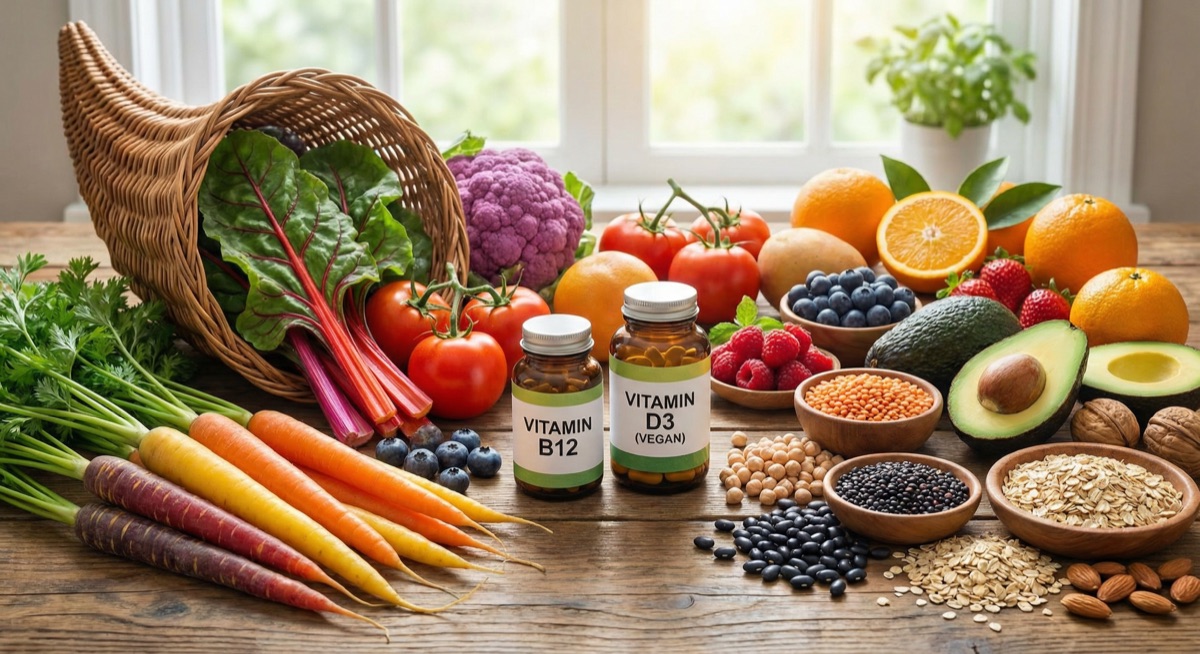
Vitamin B12 is essential for nerves and blood cells. Reliable natural sources are animal products; plant foods do not provide adequate B12. Vegans should take a B12 supplement or use reliably fortified foods (e.g. some plant milks, nutritional yeast, or cereals). Typical supplemental doses are 25–100 mcg daily or 1,000–2,500 mcg once or twice a week. Blood tests can confirm your level; if low, your doctor may recommend higher or more frequent doses until replete. Do not skip B12 — deficiency can cause lasting nerve damage if left untreated.
Vitamin D
Vitamin D supports bones, immunity, and mood. Many people, not only vegans, are low because they get little sun or live in northern latitudes. Vegans can use vitamin D2 (plant-derived) or D3 from lichen (vegan). A common maintenance dose is 600–2,000 IU daily depending on sun exposure and blood level. Have your level checked if possible and adjust dose with your doctor; avoid very high long-term doses unless advised.
Omega-3 (EPA and DHA)
ALA from flax, chia, and walnuts is important but converts only partly to EPA and DHA. For reliable EPA and DHA, vegans can take an algae-based omega-3 supplement. These provide DHA and often some EPA without fish. Typical doses are 200–500 mg DHA per day or as on the label. This is especially relevant if you rarely eat ALA-rich foods or want to match intakes often seen in fish eaters.
Iron
Plant iron (non-heme) is less well absorbed than heme iron from meat. Vegans can improve absorption by eating iron-rich foods (lentils, beans, tofu, spinach, fortified cereals) with a source of vitamin C (citrus, peppers, tomatoes) and avoiding tea or coffee at the same meal. If blood tests show low iron, a supplement may be needed; take it with vitamin C and separate from calcium and caffeine. Do not self-treat suspected deficiency — get tested first.
Other Nutrients
Iodine can be low if you do not use iodised salt or eat seaweed regularly; a small amount of seaweed or an iodine supplement can fill the gap. Zinc is in beans, nuts, and seeds but is better absorbed when soaked or fermented; variety helps. Calcium can come from fortified plant milks, tofu set with calcium, and leafy greens; supplement if intake is consistently low. A general multivitamin or targeted supplements can help if your diet is very limited; a dietitian can tailor advice.
Summary
- B12: Essential for vegans; supplement or use fortified foods consistently.
- Vitamin D: Consider based on sun and blood level; D2 or vegan D3.
- Omega-3: Algae-based DHA (and EPA) for reliable long-chain intake.
- Iron: Prioritise food + vitamin C; supplement only if tests show need.
Vegan diets can be healthy and complete with attention to B12, vitamin D, omega-3, and iron; use supplements and fortified foods to fill gaps and get blood tests when in doubt.
Evidence and Practical Tips
Research on supplements has grown; quality matters: choose reputable brands and follow dosing. Give new supplements several weeks before judging effect. Supplements do not replace diet, sleep, or medical care. Consult a provider if you take medications or have health conditions. Compare options at iHerb and store in a cool, dry place; check expiry dates. Individual response varies; consistency and lifestyle remain the foundation.
Evidence and Practical Tips
Research on supplements has grown; quality matters: choose reputable brands and follow dosing. Give new supplements several weeks before judging effect. Supplements do not replace diet, sleep, or medical care. Consult a provider if you take medications or have health conditions. Compare options at iHerb and store in a cool, dry place; check expiry dates. Individual response varies; consistency and lifestyle remain the foundation.
Evidence and Practical Tips
Research on supplements has grown; quality matters: choose reputable brands and follow dosing. Give new supplements several weeks before judging effect. Supplements do not replace diet, sleep, or medical care. Consult a provider if you take medications or have health conditions. Compare options at iHerb and store in a cool, dry place; check expiry dates. Individual response varies; consistency and lifestyle remain the foundation.
Evidence and Practical Tips
Research on supplements has grown; quality matters: choose reputable brands and follow dosing. Give new supplements several weeks before judging effect. Supplements do not replace diet, sleep, or medical care. Consult a provider if you take medications or have health conditions. Compare options at iHerb and store in a cool, dry place; check expiry dates. Individual response varies; consistency and lifestyle remain the foundation.