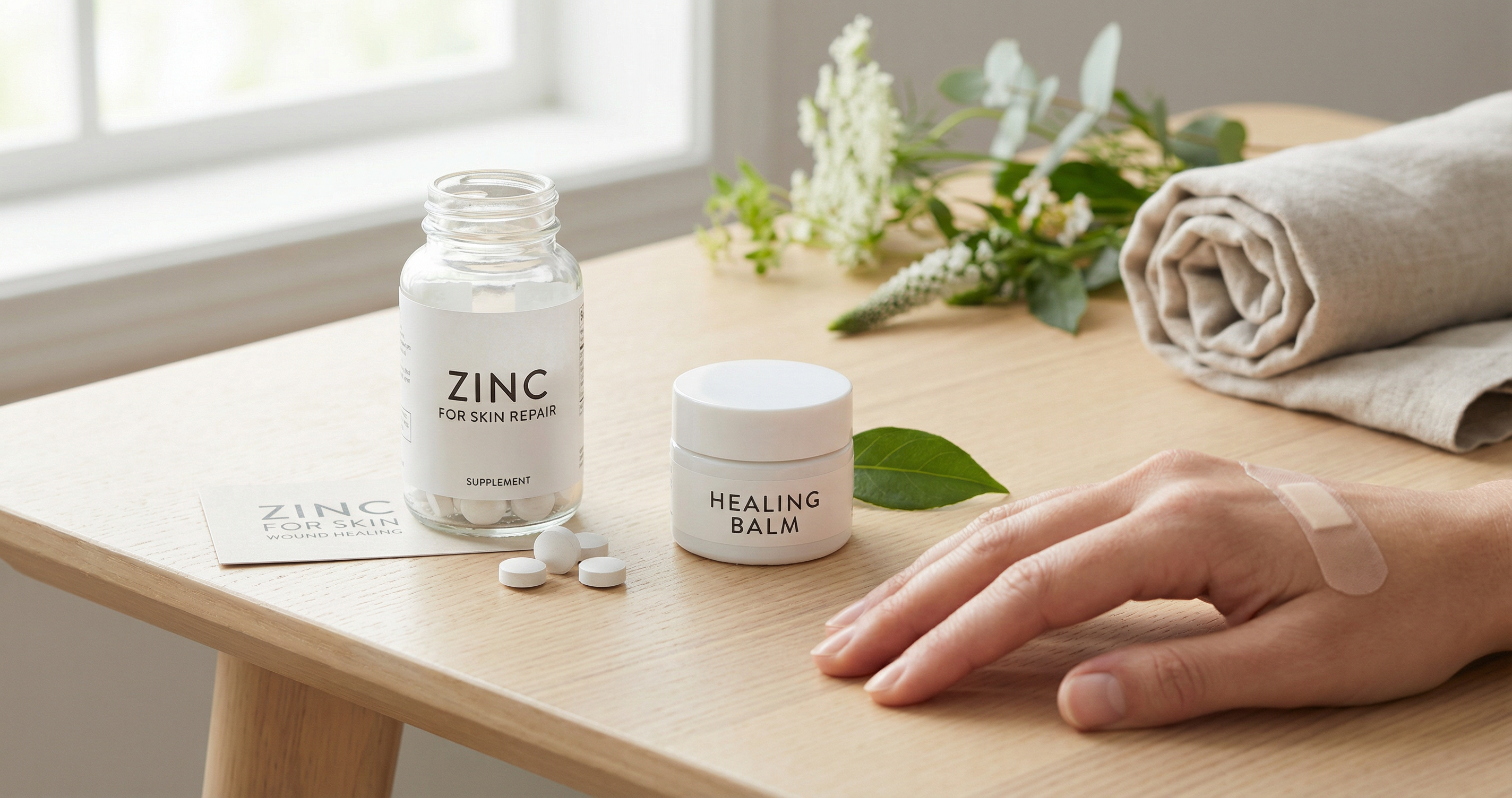
Zinc and Skin Health
Zinc is an essential trace mineral that supports immune function, protein synthesis, and cell division—all important for skin integrity and wound healing. It acts as a cofactor for enzymes involved in collagen formation and tissue repair; deficiency impairs wound healing and can cause skin lesions. Recommended Dietary Allowance (RDA) for adults is 8–11 mg/day for women and men; upper limit (UL) is 40 mg/day from supplements and fortified food. As a dietitian I see interest in zinc for skin and wound healing; adequate zinc is necessary for normal repair, but supplementation only helps when status is low—megadoses do not speed healing in replete individuals and can cause copper deficiency and immune dysfunction.
Wound Healing and Skin
Zinc is involved in inflammatory, proliferative, and remodelling phases of wound healing; it supports keratinocyte migration, collagen synthesis, and immune defence at the wound site. Deficiency is associated with delayed healing, poor skin condition, and increased infection risk. In well-nourished people, randomised trials of zinc supplementation for acute wound healing (e.g. surgical, minor cuts) generally do not show a benefit; the evidence is stronger for correcting deficiency or in chronic wounds (e.g. pressure ulcers) when zinc status is low. Topical zinc (e.g. in creams, pastes) may help in some wound and skin conditions; oral zinc is for systemic status. Bottom line: ensure adequacy from diet; supplement only when deficient or when your doctor recommends it for a specific indication.
Food Sources and Status
Good food sources include meat, shellfish (especially oysters), legumes, seeds, nuts, whole grains, and dairy. Plant sources contain phytates that can reduce zinc absorption; soaking, fermenting, or consuming with animal protein can improve bioavailability. Vegetarians and vegans may have lower zinc intake or absorption and should include varied zinc-rich foods. Blood tests (serum zinc) can be used to assess status, though they are not perfect; clinical signs of deficiency include delayed wound healing, skin rash, hair loss, and impaired immunity. If you suspect deficiency, see your doctor or dietitian before starting high-dose zinc—excess zinc can suppress copper absorption and cause harm.
What the Research Shows
Meta-analyses and guidelines suggest that zinc supplementation can improve wound healing in people who are deficient; in replete individuals, extra zinc does not consistently speed healing. Some studies in chronic wounds (e.g. venous leg ulcers) show benefit when baseline zinc is low. For skin conditions like acne, evidence is mixed; some trials suggest modest benefit from oral or topical zinc, others do not. Zinc is not a substitute for proper wound care, infection control, or medical treatment; it is a supportive factor when status is inadequate. Always prioritise medical advice for wounds or skin concerns.
Dose and Safety
If supplementation is indicated, typical doses for deficiency or wound support are 15–30 mg elemental zinc per day (e.g. zinc gluconate, zinc sulfate); higher doses (e.g. 40 mg or more) long-term can cause copper deficiency and should be used only under medical supervision. Do not exceed the UL (40 mg/day for adults) from supplements and fortified food combined. Take zinc with food to reduce stomach upset; avoid taking large doses with calcium or iron at the same time, as they can compete for absorption. For skin and wound healing, focus on a balanced diet first; add supplements only when testing or clinical need supports it.
Summary
- Role: Trace mineral; cofactor for enzymes in collagen synthesis and tissue repair; supports immune function; RDA 8–11 mg/day.
- Evidence: Adequate zinc is necessary for wound healing and skin; supplementation helps when deficient; no proven benefit from megadoses in replete people.
- Food: Meat, shellfish, legumes, seeds, nuts, whole grains; vegetarians should prioritise varied zinc sources.
- Safety: UL 40 mg/day; long-term high doses can cause copper deficiency; use supplements only when indicated.
Zinc for skin and wound healing: get enough from diet; supplement only when status is low or your doctor or dietitian recommends it.