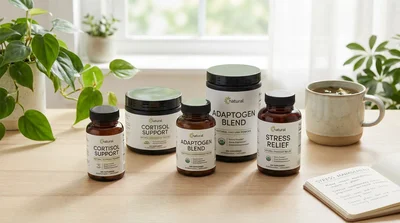
When stress is high, many people reach for a quick fix: more caffeine, more productivity hacks, or a long list of supplements. A smarter strategy is to build a small, repeatable routine that supports calm focus during the day and real recovery at night. That is where an adaptogen stack can help.
In this guide you will learn what stacking actually means, how to match adaptogens to your stress pattern, how to dose and time them without overstimulation, and how to cycle responsibly. If you want to browse options while you read, start with adaptogen supplements and supportive herbal extracts.
What an adaptogen stack is (and what it is not)
Stacking means combining two or more adaptogens with different “timing profiles” so the day feels more balanced. Most successful stacks are not complicated. They often look like:
- One daytime option to support stamina or calm focus.
- One evening option to help you downshift and protect sleep.
What stacking is not: it is not a way to push through chronic sleep debt. If you routinely sleep 5 hours, skip meals, and then “stack” stimulatory herbs, you can feel wired and fragile. The best stack supports your nervous system, not your grind.
Start with your stress pattern
Before choosing ingredients, identify the pattern you are trying to change. These are common profiles:
- Wired at night, tired in the morning: you feel alert late, but struggle to start the day.
- Anxious and tense: tight chest, racing thoughts, shallow sleep, light irritability.
- Burned out and flat: low motivation, low drive, recovery feels slow.
- Overtrained or “too much output”: heavy training plus work stress, frequent soreness, restless sleep.
Different adaptogens fit different patterns. A stack that feels great for “burned out and flat” can feel too stimulating for “anxious and tense”.
Daytime adaptogens: focus and stamina
Daytime choices should support energy without damaging sleep. If you are sleep-sensitive, keep the daytime dose conservative and set a caffeine cutoff.
Rhodiola (Rhodiola rosea)
Rhodiola is commonly used for fatigue and mental stamina during stressful periods. It tends to be more energizing, so many people prefer it in the morning. You can browse rhodiola supplements and look for clear extract details.
- Typical timing: morning or early afternoon.
- Common approach: start low, increase only if you need it.
- Best for: deadline weeks, mental fatigue, “dragging” mornings.
Eleuthero (Siberian ginseng)
Eleuthero is often described as steadier and subtler than stronger stimulants. It may be a good “background” adaptogen for long stretches of work or travel. Compare options under eleuthero.
- Typical timing: morning or midday.
- Best for: steady stamina and resilience, not an immediate kick.
Cordyceps
Cordyceps is often used for physical performance and endurance. Some people use it when stress includes a heavy training block. See cordyceps products and avoid late-day dosing if you are sleep-sensitive.
- Typical timing: morning or early afternoon.
- Best for: physical output and training stamina.
Evening adaptogens: downshift and sleep protection
The evening part of the stack is often the most important. Better sleep is a force multiplier for stress resilience, mood, appetite control, and immune function.
Ashwagandha
Ashwagandha is one of the most popular calming adaptogens. Many people take it in the evening. Look at ashwagandha supplements and choose a product with clear dosing rather than a vague blend.
- Typical timing: evening, or split dose if it feels neutral.
- Best for: tension, sleep support, “wired” evenings.
- Extra caution: thyroid conditions, pregnancy, and sedating medications.
Reishi
Reishi is a medicinal mushroom often chosen for calm and recovery. Many people describe it as grounding rather than stimulating. Browse reishi supplements and choose reputable brands.
- Typical timing: evening.
- Best for: downshift, relaxation, recovery routines.
Tulsi (holy basil)
Tulsi is often used as a gentle daily calming herb and can work well in tea form. It can also fit daytime for anxious stress patterns. See holy basil (tulsi) options if you want a consistent capsule or extract.
- Typical timing: afternoon or evening.
- Best for: mild anxiety, mental tension, gentle support.
How to build a two-part stack (step by step)
Use this simple structure to avoid overdoing it.
- Pick the anchor. Choose the one adaptogen you are most confident will help your pattern.
- Choose the time window. Morning if you need focus and stamina; evening if you need calm and sleep.
- Run a one-item trial for 10–14 days. Keep everything else stable.
- Add the second item only if there is a clear gap. Example: daytime is better, but nights are still wired.
- Keep the stack small. Two items is usually enough for a first cycle.
Example stacks by profile
- Wired at night: tulsi (late afternoon) + ashwagandha (evening).
- Mental fatigue and deadlines: rhodiola (morning) + reishi (evening).
- Heavy training block: cordyceps (morning) + ashwagandha (evening).
- Burned out and flat: eleuthero (morning) + reishi (evening), with a strong sleep routine.
If you are anxious, avoid building a stack that is mostly stimulating. Calm first, focus second is often the better order.
Dosing, timing, and cycling
Always follow the product label and start with the lowest reasonable amount. “More” can backfire by disturbing sleep or digestion.
- Start low: 3–7 days at a conservative dose.
- Change one variable: do not change dose, timing, and caffeine on the same day.
- Respect timing: keep energizing extracts earlier; keep calming extracts later.
- Track outcomes: sleep quality, afternoon crash, mood reactivity, training recovery.
Cycling: many people use a simple cycle like weekdays only, or 6–8 weeks on with a short break. Cycling helps you confirm that the benefit is real and reduces the temptation to keep increasing dose.
Safety and interactions (do not skip this)
If you take prescription medication or have a chronic condition, get clinician guidance. Common situations that deserve extra caution:
- Pregnancy and breastfeeding: avoid experimentation.
- Autoimmune disease or immunosuppressive therapy: be cautious with immune-active herbs and mushrooms.
- Thyroid conditions: be cautious with ashwagandha.
- Blood pressure, heart rhythm issues, panic symptoms: avoid overly stimulating stacks.
- Surgery planning and blood thinners: discuss herbs with a clinician.
Stop and reassess if you develop new insomnia, palpitations, agitation, or persistent digestive symptoms. A smaller dose, earlier timing, or a switch to a calmer option is often enough.
Quality checklist for choosing products
- Clear ingredient identity: species and plant part, not just a vague name.
- Transparent dosing: avoid proprietary blends that hide amounts.
- Standardization: when available, it improves repeatability.
- Brand quality: reputable manufacturing and testing practices.
FAQ
Can I stack adaptogens with coffee?
Often yes, but be conservative. If your stress pattern includes anxiety or poor sleep, lowering caffeine can help more than adding another energizing herb.
How fast should I feel it?
Some people notice effects in days, but steadier benefits are easier to judge after 2–4 weeks of consistent use and stable routines.
Should I take adaptogens when I am sick?
When sick, prioritize rest, hydration, and medical guidance when needed. Do not treat supplements as permission to keep training or to ignore symptoms.
Key takeaways
- Build a small stack: usually one daytime option and one evening option.
- Match the stack to your stress pattern and protect sleep.
- Start low, change one variable at a time, and evaluate over 2–4 weeks.
- Use extra caution with pregnancy, autoimmune conditions, and medications.