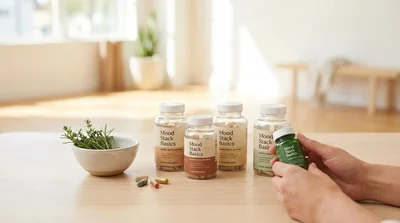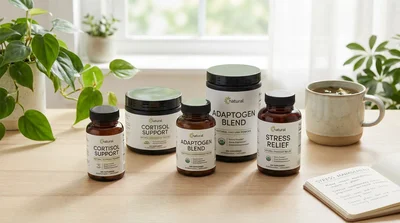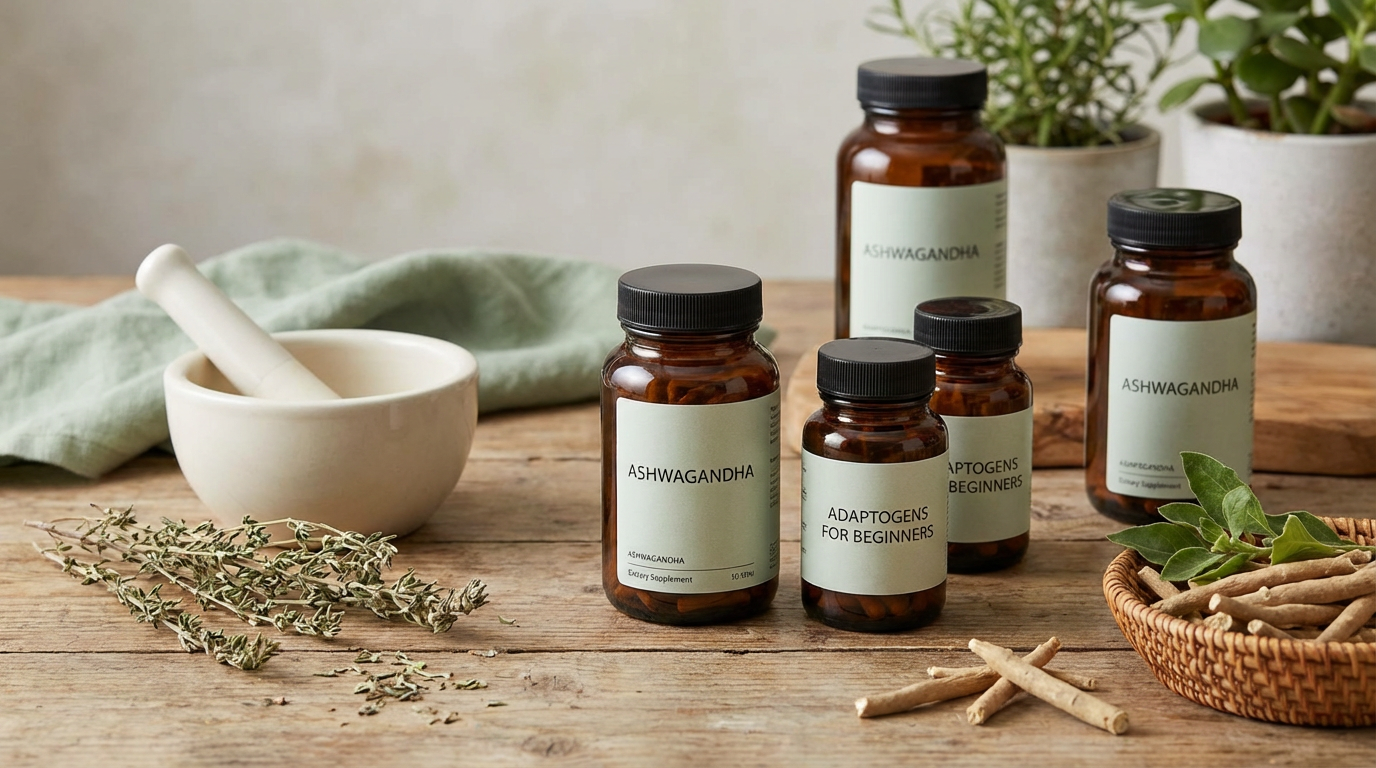
If you are new to adaptogens, the idea can feel overwhelming: shelves full of herbs with long names, conflicting advice, and promises about stress and mood. This guide is for you. We will cover what adaptogens are, how they may support stress resilience and mood, which ones are best to start with, how to dose and use them safely, and how they fit into a broader approach to sleep, rest, and nervous-system balance. You can browse adaptogen supplements and herbal extracts when you are ready to compare products.
What are adaptogens?
Adaptogens are a class of herbs and fungi that have been used for a long time in traditional systems to help the body adapt to stress and maintain balance. They are not stimulants like caffeine and they are not sedatives; instead, they are thought to support the stress-response system so that you can handle physical, mental, or emotional load without swinging between wired and crashed. Modern research is still catching up, but many people use them for stress, fatigue, mood, and sleep support as part of a healthy lifestyle.
Why this topic matters for stress and mood
Chronic stress and low mood affect millions of people. They can show up as anxiety, irritability, poor sleep, low energy, or a sense of being overwhelmed. Adaptogens do not replace therapy, medication, or lifestyle changes, but they can be one piece of the puzzle: a gentle, evidence-informed option to explore alongside sleep, nutrition, movement, and stress-management practices. Understanding what they are and how to use them helps you make clearer choices instead of piling on supplements without a plan.
What the evidence shows (and what it does not)
Quality studies on adaptogens are growing but still mixed. Some herbs have more human data than others. Ashwagandha, for example, has been studied for perceived stress and sometimes sleep; rhodiola has been studied for fatigue and cognitive performance under stress. Results are often modest and vary by person, extract, and dose. What we can say is that adaptogens are generally well tolerated when used as directed, and many people report feeling calmer or more stable with consistent use. They are not a cure for anxiety or depression; if you have a diagnosed condition, work with your doctor and use adaptogens only as discussed.
Choosing your first adaptogen: stress vs mood vs energy
Different adaptogens have different profiles. Matching the herb to your main concern makes it easier to see an effect.
- Stress and calm: Ashwagandha and holy basil (tulsi) are often chosen for stress and a sense of calm. Ashwagandha is one of the most researched; many take it in the evening to support sleep and recovery.
- Mood and balance: Adaptogens that support stress resilience can indirectly support mood by reducing the sense of being overwhelmed. Ashwagandha and rhodiola are both used in this way.
- Energy and fatigue: If your main issue is low energy or mental fatigue (rather than anxiety), rhodiola or eleuthero are often tried first. They tend to feel more supporting than stimulating.
- Sleep and relaxation: Ashwagandha, and sometimes reishi or lemon balm, are used for relaxation and sleep quality. They work best when combined with good sleep habits.
Start with one adaptogen so you can notice how you feel. Do not stack several new herbs at once.
Forms and dosing: what beginners should know
Adaptogens come as capsules, powders, tinctures, and teas. Capsules and standardized extracts are the easiest for beginners because the dose is clear. Always read the label and follow the product's recommended dose; typical ranges are often 300–600 mg/day for ashwagandha root extract and 200–400 mg/day for rhodiola, depending on standardization. Start at the lower end and give it at least two to four weeks before judging. Consistency matters more than a single high dose. If you take other supplements or medications, check for interactions or ask a pharmacist or doctor.
Timing: when to take your first adaptogen
Timing can improve results and avoid side effects.
- Ashwagandha: Many people take it in the evening or with dinner to support wind-down and sleep. If it makes you drowsy during the day, move it to later.
- Rhodiola: Usually taken in the morning or early afternoon; taking it late can interfere with sleep in some people.
- Eleuthero and holy basil: Often taken in the morning or split between morning and midday.
Take your adaptogen at the same time each day so it becomes part of your routine and you can track how you feel.
Safety and who should be cautious
Adaptogens are generally well tolerated when used as directed, but they are biologically active. Use extra care if you are pregnant or breastfeeding, have autoimmune disease, thyroid disorders, or take prescription medications (especially for mood, blood pressure, or blood sugar). Do not use adaptogens to replace prescribed treatments. If you have any health condition or are on medication, talk to your doctor before starting. Stop use if you notice new or worsening symptoms.
How adaptogens fit into stress and mood support
Think of adaptogens as one layer of support, not the whole solution. The strongest levers for stress and mood are usually:
- Sleep: enough duration and a consistent schedule.
- Nutrition: regular meals, enough protein and nutrients, minimal crash diets.
- Movement: regular gentle or moderate activity, not only high intensity.
- Stress management: boundaries, rest, breathwork, or mindfulness if they help you.
When these are in place, adaptogens can add a small but meaningful benefit. When they are not, herbs alone are unlikely to fix the problem.
A simple 4-week plan for beginners
If you want a clear way to try your first adaptogen, use a short plan.
Week 1: Choose one and set a baseline
- Pick one adaptogen (e.g. ashwagandha for stress/sleep or rhodiola for energy/focus).
- Take it at the same time each day at the low end of the label dose.
- Do not change other supplements, caffeine, or sleep habits this week so you can see the effect of the herb.
- Note simple markers: sleep quality, mood, energy, and any side effects.
Week 2: Strengthen the foundation
- Keep the same adaptogen and dose.
- Add one habit: e.g. a fixed wake time, or 20 minutes of walking, or a short wind-down before bed.
- Keep tracking sleep, mood, and energy.
Week 3: Adjust only if needed
- If you feel better, keep the current dose.
- If you feel no change, you can try the middle of the product's dose range, or wait until week 4 before deciding.
- If you feel worse (e.g. more anxious or worse sleep), reduce the dose or stop and try a different herb later.
Week 4: Decide and simplify
- If the adaptogen helps, keep the lowest effective dose.
- If it does not help after consistent use, stop and consider a different adaptogen or focus on lifestyle only.
- Do not add multiple new adaptogens at once; give your body and mind time to respond.
Combining adaptogens with breathwork and relaxation
From a yoga and mindfulness perspective, adaptogens work best when the nervous system has some predictability. Simple practices can amplify their effect:
- Breathwork: a few minutes of slow, even breathing (e.g. equal inhale and exhale) can lower stress arousal. Doing this before bed or after work supports relaxation.
- Rest: short rest periods during the day (even 5–10 minutes with eyes closed or legs up) help the body recover.
- Routine: consistent sleep and wake times, and a simple wind-down (dim light, no screens, maybe tea or reading) make it easier to benefit from calming adaptogens like ashwagandha.
Common beginner mistakes
- Starting with several adaptogens at once: You will not know which one works or causes side effects. Start with one.
- Expecting instant results: Many people need 2–4 weeks of consistent use to notice a difference.
- Ignoring sleep and lifestyle: Adaptogens support resilience; they do not replace poor sleep or chronic overload.
- Using high doses from day one: Start low and increase only if needed; this reduces the risk of side effects.
- Not checking interactions: If you take prescription or over-the-counter drugs, check for interactions before adding adaptogens.
When to see a doctor
Adaptogens are not a substitute for medical care. See a doctor if you have persistent low mood, anxiety, or sleep problems; if you have a history of thyroid, autoimmune, or mental health conditions; or if you are on medication. A professional can help you decide whether adaptogens are appropriate and how to use them safely.
Quality and how to pick a product
Not all products are equal. Look for:
- Standardized extracts when possible (e.g. KSM-66 for ashwagandha, or a stated percentage of active compounds for rhodiola).
- Clear dose per serving and a reputable brand.
- Simple formulas at first (single herb or a small number of ingredients) so you can tell what is helping.
You can compare options on trusted retailers such as iHerb's adaptogen category and read labels before buying.
Summary: key takeaways for beginners
- Adaptogens are herbs and fungi that may support stress adaptation and balance; they are not stimulants or sedatives.
- Match the herb to your goal: ashwagandha and holy basil for stress and calm; rhodiola and eleuthero for energy and focus.
- Start with one adaptogen, use the low end of the dose, and give it 2–4 weeks before judging.
- Prioritize sleep, nutrition, and stress management; use adaptogens as support, not replacement.
- Check safety and interactions if you are pregnant, breastfeeding, or on medication; when in doubt, ask a doctor.
Adaptogens for beginners do not have to be confusing. Choose one herb, use it consistently, and pair it with healthy habits. That is the best way to see whether they support your stress and mood — and to build a routine you can sustain.
Evidence in practice: what to expect
Research on adaptogens is still evolving. Most studies use specific extracts and doses, so results in the real world can vary. In practice, people often report feeling calmer or more stable after 2–4 weeks of consistent use; some notice better sleep or less afternoon slump. Not everyone responds the same way. Keeping a simple log (sleep, mood, energy) helps you see whether the herb is helping. If there is no change after 4–6 weeks at a reasonable dose, it is reasonable to try a different adaptogen or focus on lifestyle only. Evidence-based use means giving one thing a fair trial and then deciding based on your own experience.
FAQs for beginners
Can I take adaptogens with other supplements?
Yes, but add one new thing at a time. If you already take vitamins or other herbs, introduce the adaptogen and wait at least two weeks before adding anything else. This way you can tell what is helping or causing side effects.
What if I miss a day?
Occasional missed doses are fine. Consistency over weeks matters more than perfection. If you miss several days, resume at your usual dose; do not double up.
Do adaptogens work for anxiety?
Some people find they help with mild stress or worry when used alongside sleep and lifestyle changes. They are not a replacement for therapy or medication for anxiety disorders. If you have diagnosed anxiety, work with your doctor and use adaptogens only if agreed.
In short: start with one herb, give it time, and pair it with good sleep and stress habits. That is how most beginners get the best and safest result from adaptogens.
Quick start: three steps
If you want to begin today with minimal friction: (1) Pick one adaptogen — ashwagandha for stress and sleep, or rhodiola for energy and focus. (2) Take it at the same time every day for at least two weeks at the low end of the label dose. (3) Track three things: sleep quality, mood or calm, and energy in the afternoon. Do not change anything else in that period. After two weeks, decide whether to keep the dose, increase slightly, or try a different herb. This simple protocol keeps variables low and makes it easier to see what works for you. Remember: adaptogens support your system; they do not replace sleep, good food, or rest. Build the habit first, then let the herb add a small edge.