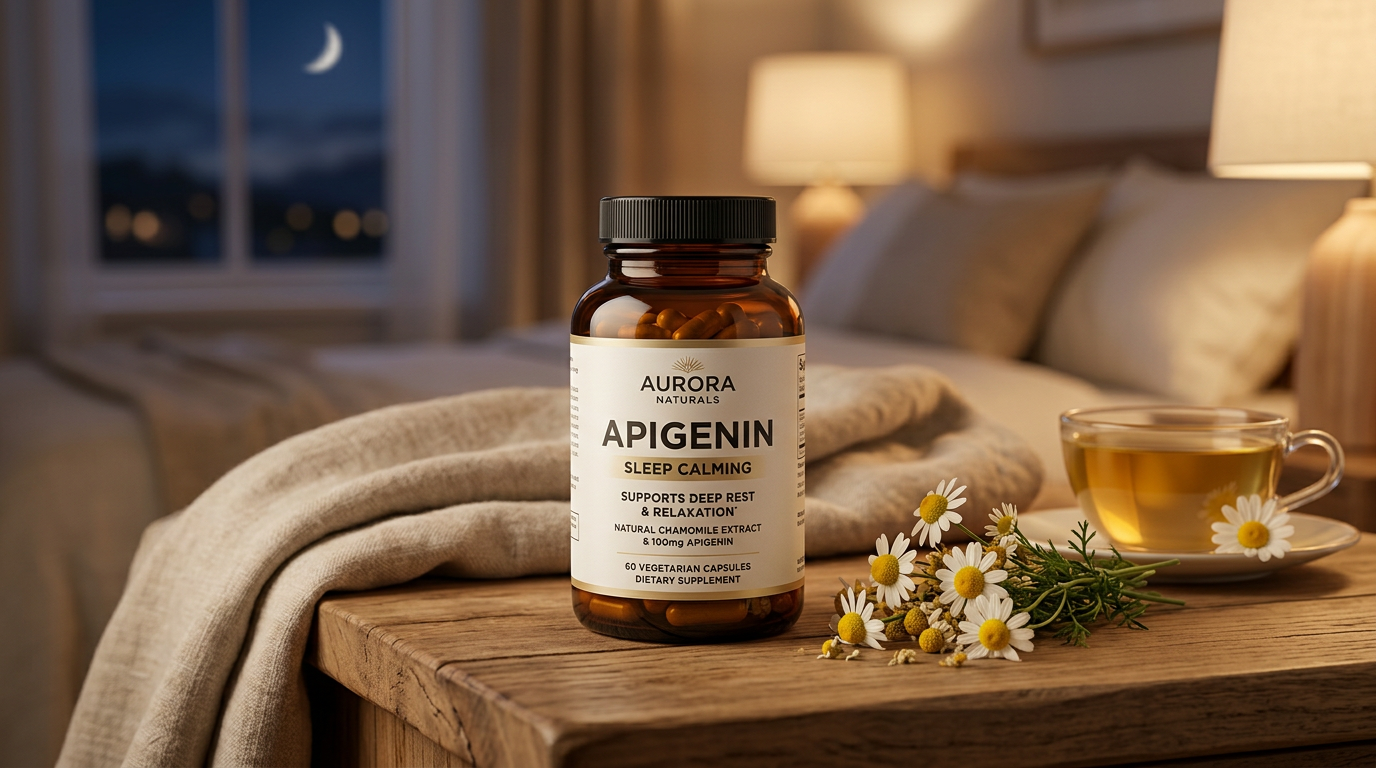
Apigenin is a plant compound that shows up in familiar foods and herbs, most famously in chamomile. It is often discussed as a gentle option for relaxation and sleep support, especially for people whose sleep is disrupted by stress, racing thoughts, or difficulty winding down. The appeal is simple: apigenin sits at the intersection of “food-like” and “supplement-like”, with a long history of use through herbs and teas.
This guide explains what apigenin is, what research can and cannot tell us, and how to use it in a practical, safe way. It is educational content and does not replace medical care. If you are pregnant, use prescription medications (especially sedatives or blood thinners), or have a diagnosed sleep disorder, consult a clinician before experimenting.
Quick takeaways (read this first)
- What it is: a flavonoid found in chamomile, parsley, celery, and other plants.
- What it may help: relaxation and sleep onset for some people, particularly when stress is the main barrier.
- What it will not fix: sleep apnea, severe insomnia driven by medical causes, or chronic sleep restriction.
- How to try it: start low, take it in the evening, track sleep for 1–2 weeks, and avoid stacking many sedating supplements at once.
- Safety: be cautious with sedatives, alcohol, surgery, pregnancy, and herb allergies.
What is apigenin?
Apigenin is a naturally occurring flavonoid, a category of plant compounds that often contribute to color, taste, and protective effects in plants. You can get apigenin from foods, but the amount varies by plant type, growing conditions, and preparation. That variability is one reason supplements exist: they provide a consistent dose that is difficult to reach from diet alone.
Apigenin is commonly mentioned alongside chamomile because chamomile tea is a traditional bedtime beverage and contains apigenin and related compounds. It is also present in parsley and celery, which is why some people view apigenin as a “food-adjacent” approach compared with stronger sleep aids.
How apigenin may support sleep and calm
There are multiple plausible mechanisms, but it helps to keep expectations realistic. “Mechanism” does not automatically mean “clinically meaningful effect”. Apigenin is often discussed for:
- Relaxation signaling: apigenin has been studied for interactions with brain pathways linked to calm, including GABA-related signaling. This may be relevant for sleep onset.
- Stress modulation: some research suggests flavonoids can influence stress-related biology. For stress-driven insomnia, even a small calming effect can matter.
- Indirect sleep support: if apigenin helps you feel less “wired”, your bedtime routine becomes easier to follow and sleep efficiency can improve.
A useful way to frame apigenin is as a wind-down helper. It is not a substitute for sleep hygiene or for treating an underlying sleep disorder, but it may help the transition from daytime activation to nighttime calm.
What does the evidence show?
Evidence quality varies. Some data comes from chamomile preparations, which include multiple compounds, not only apigenin. Direct trials of isolated apigenin for insomnia are more limited. That means you should avoid overconfident claims and instead use a structured trial approach.
Practical interpretation:
- Best-supported use case: mild sleep difficulty, especially trouble falling asleep due to stress.
- Less clear: deep, chronic insomnia with multiple nightly awakenings and daytime impairment.
- Most realistic expectation: modest improvement in relaxation and sleep onset, not a dramatic knockout effect.
If your sleep issues are severe, persistent, or paired with symptoms like loud snoring, gasping, morning headaches, restless legs, or significant daytime sleepiness, treat that as a medical evaluation issue rather than a supplement project.
Food sources: how to get apigenin without supplements
Dietary apigenin is a great starting point because it also supports overall nutrition. Common sources include chamomile, parsley, and celery. Food-based strategies work best when paired with a calming evening routine. For example, chamomile tea after dinner and a screen-free wind-down window can be more effective than tea alone.
Practical ways to use food sources:
- Chamomile: use a consistent steep time, and make it a cue to dim lights and slow down.
- Parsley: add a handful to salads, soups, or a simple yogurt-based sauce.
- Celery: pair with protein or healthy fat for a more stable snack.
Supplement forms: apigenin vs chamomile extracts
People use several approaches:
- Chamomile tea: gentle and low risk for most people, but not standardized.
- Chamomile extract: more concentrated than tea, still a multi-compound herb extract.
- Apigenin supplements: a measured amount of apigenin, useful for consistent trials.
If you want a calming ritual and a mild effect, tea can be enough. If you want to test a consistent dose with minimal variables, a standardized apigenin supplement is easier to evaluate.
Apigenin dosage and timing (practical guidance)
Because products vary and individual response differs, start low and build cautiously. Many people take apigenin in the evening, often 30–90 minutes before bed. Consider these principles:
- Start low: assess sensitivity and next-day grogginess.
- Increase slowly: if the first dose does nothing, increase gradually over several nights.
- Keep variables stable: avoid changing caffeine intake, alcohol, and multiple supplements at the same time.
A helpful test design is a 10–14 day trial with simple tracking: bedtime, time-to-sleep, number of awakenings, and morning alertness.
How to build a sleep routine around apigenin
Supplements tend to work best when the routine supports them. Use apigenin as a cue for your wind-down rather than as a rescue tool at 2 a.m. A routine might include dimming lights 60–90 minutes before bed, a slightly cooler bedroom, slow breathing or gentle stretching, and a consistent caffeine cutoff time.
Apigenin fits best when the body is already moving toward calm. If you are working late on a bright screen and then take a supplement, the supplement has to fight the environment.
Stacking: what combines well and what to avoid
Some people combine apigenin with other sleep-support supplements. The key is to keep the stack small so you can identify what helps and avoid excessive sedation.
Often-used combinations (keep it simple)
- Magnesium (evening): may support relaxation, especially if dietary intake is low.
- Glycine: often used for sleep quality and winding down.
- L-theanine: may reduce stress-related mental noise for some people.
Be cautious with
- Alcohol: can increase sedation early but disrupts sleep architecture later.
- Multiple sedating herbs: stacking many herbs makes side effects more likely and evaluation harder.
- Prescription sedatives: combining without medical guidance can be risky.
If your goal is to sleep better, one change at a time is safer. If apigenin helps, there is less need to keep adding products.
Safety, interactions, and who should avoid apigenin
Apigenin is often considered gentle, but gentle is not risk-free. Use extra caution if any of the following apply:
- Pregnancy and breastfeeding: avoid experimenting without clinician approval.
- Upcoming surgery: discuss supplements with your care team ahead of time.
- Blood thinners or bleeding disorders: confirm safety with a clinician.
- Allergy to chamomile or related plants: reactions are possible for sensitive individuals.
- Daytime drowsiness: if you feel groggy, reduce dose or stop.
If you regularly rely on sedating supplements to override a schedule problem, the long-term solution is usually schedule and light management, not higher doses.
When apigenin is a good fit (and when it is not)
Good fit
- mild difficulty falling asleep due to stress
- a desire for a gentle wind-down aid alongside a routine
- preference for food-adjacent approaches rather than strong sedatives
- willingness to run a structured trial and track results
Not a good fit as a primary strategy
- sleep restriction due to schedule constraints
- suspected sleep apnea or another medical sleep disorder
- late alcohol or late caffeine that you are not willing to change
- expectation of a strong knockout effect
Troubleshooting: if it does not work
If apigenin does nothing, do not assume you need stronger and stronger supplements. Check the common blockers:
- Timing mismatch: try earlier or later dosing relative to your bedtime.
- Too many variables: remove other new supplements and keep caffeine stable for a week.
- Sleep environment: reduce light, noise, and heat in the bedroom.
- Stress load: add a 5–10 minute relaxation practice daily rather than only at night.
For persistent insomnia, consider evidence-based behavioral approaches such as CBT-I, which often outperform supplements when the problem is chronic.
FAQ
Is chamomile tea enough?
For many people, yes, especially when the ritual is consistent. If you want more predictable dosing, an extract or apigenin supplement may be easier to evaluate.
Will apigenin keep me asleep all night?
It is more commonly used for winding down and sleep onset. Night awakenings often have other drivers such as stress, alcohol, temperature, or sleep apnea.
How fast should I expect results?
Some people notice effects on the first few nights. Others need a consistent routine and a week or two of repetition to see a clear pattern.
Key takeaways
- Apigenin is a flavonoid often associated with chamomile and gentle relaxation support.
- Best use case is stress-related difficulty falling asleep, not severe medical insomnia.
- Start low, take it in the evening, and run a structured 10–14 day trial with simple tracking.
- Keep stacks minimal and be cautious with sedatives, alcohol, surgery, and pregnancy.