Why Chamomile and Sleep Matter Together
Sleep and relaxation are foundations of well-being. Poor sleep affects mood, focus, recovery, and long-term health. Many people look for gentle, natural supports before turning to medication. As a yoga and mindfulness teacher, I see how ritual, breath, and simple plant allies like chamomile can ease the transition into rest. Chamomile has been used for centuries to calm the nerves and support sleep; modern research is beginning to clarify how it works and for whom it may help. This guide summarizes the evidence, practical use, and how to combine chamomile with habits that support relaxation and sleep.
What the Evidence Shows
Chamomile (typically German chamomile, Matricaria chamomilla, or Roman chamomile, Chamaemelum nobile) contains compounds such as apigenin, which may bind to certain receptors in the brain and support a calming effect. Quality studies are still limited compared to pharmaceutical sleep aids, but several randomized trials suggest that chamomile extract or tea can improve sleep quality and reduce mild insomnia in some adults. Effects are usually modest: better perceived sleep, slightly longer sleep duration, or easier onset. Chamomile does not knock you out like a sedative; it is better thought of as a gentle support for relaxation and winding down. Individual response varies; some people notice a clear benefit, others little or none.
Forms and Dosing
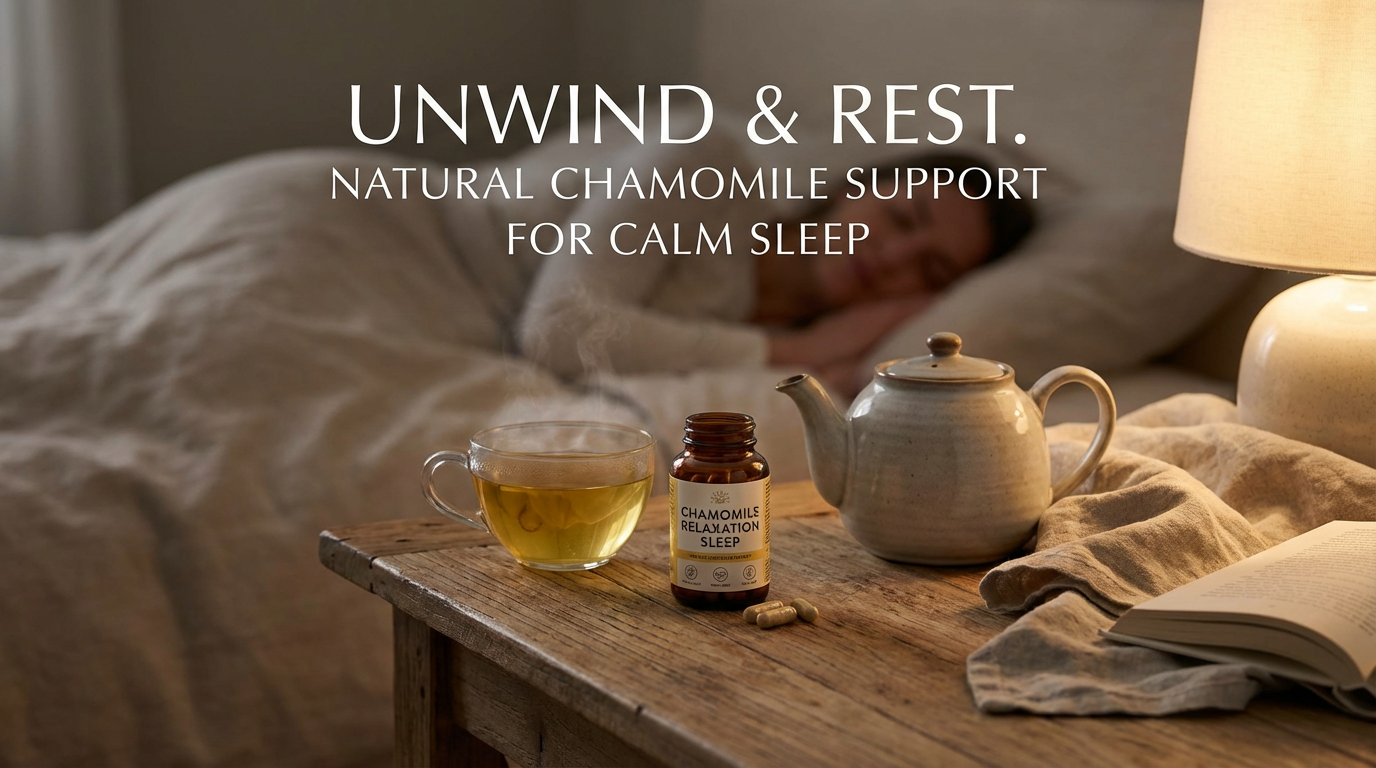
Chamomile is available as tea (dried flowers), liquid extracts, and capsules. Tea is the most traditional and ritual-friendly: steeping a bag or loose flowers for 5–10 minutes in hot water creates a simple wind-down routine. One to two cups in the evening is a common dose. For standardized extracts (e.g. in capsules), follow the product label; studies have often used doses equivalent to roughly 200–500 mg of dried chamomile or 220–1100 mg of extract per day, sometimes in divided doses. Start low and give it a few days to a few weeks; consistency matters more than a single large dose. Avoid megadoses; more is not necessarily better and can rarely cause sensitivity reactions in susceptible people.
Timing and Ritual
Taking chamomile 30–60 minutes before bed fits most people. Use it as part of a wind-down routine: dim lights, limit screens, and perhaps combine with gentle stretching, breathwork, or a few minutes of meditation. The ritual itself — preparing the tea, sitting quietly — can reinforce the body's shift toward rest. If you practice yoga or mindfulness, a short evening practice followed by chamomile tea can become a reliable signal that the day is ending and sleep is near.
Chamomile and Stress
Stress and anxiety often underlie poor sleep. Chamomile has been studied for generalized anxiety as well as sleep; some trials show small improvements in anxiety scores and sleep when chamomile is used over several weeks. It is not a replacement for therapy or treatment of clinical anxiety or insomnia, but it can be a helpful adjunct for mild tension and restlessness. Pair it with stress-management habits: boundaries around work, regular movement, and practices that regulate the nervous system.
Safety and Interactions
Chamomile is generally well tolerated. Rarely, people with allergy to plants in the daisy family (Asteraceae) may react to chamomile. If you have known allergies to ragweed, chrysanthemums, or related plants, use caution or avoid. Chamomile may have mild blood-thinning effects in theory; if you take anticoagulants or have a bleeding disorder, discuss with your doctor before regular use. It can interact with a few medications metabolized by the same liver enzymes; if you take prescription drugs, check with your pharmacist or doctor. Pregnant and breastfeeding women often avoid medicinal doses of chamomile due to limited safety data; a cup of tea occasionally is usually considered low risk, but ask your midwife or doctor if unsure.
Combining With Sleep Hygiene
Supplements and herbs work best within a healthy sleep environment. Keep a consistent sleep and wake time when possible; get daylight in the morning and limit bright screens at night. Keep the bedroom cool, dark, and quiet. Avoid large meals, caffeine, and alcohol close to bedtime. Chamomile can support this foundation but cannot compensate for chronic sleep deprivation or a chaotic schedule. If you have persistent insomnia, see a doctor or sleep specialist to rule out sleep apnea, restless legs, or other conditions.
Tea vs. Extracts
Tea is simple, hydrating, and ritual-friendly; the warmth and aroma add to the relaxation effect. Extracts and capsules offer standardized doses and convenience when you are travelling or prefer not to drink before bed. Choose a reputable brand; quality varies. If you use tea, opt for organic or well-sourced chamomile to reduce exposure to contaminants. You can find chamomile tea and supplements on iHerb to compare forms and brands.
Other Herbs and Blends
Chamomile is often combined with other calming herbs: lemon balm, passionflower, valerian, or lavender. Blends can be appealing, but it is harder to know which herb is helping. If you try a blend, use it consistently for a few weeks before judging. If you prefer single-herb chamomile first, you can add others later if needed. Sleep support products sometimes include chamomile among other ingredients; read labels for dose and avoid stacking many sedating herbs without guidance.
Children and Elderly
Chamomile tea is sometimes used for children in small amounts (e.g. weak tea), but evidence for safety and efficacy in young children is limited. Consult a paediatrician before giving chamomile to infants or small children. In older adults, chamomile may help with mild sleep issues, but be cautious with interactions if they take multiple medications. A single cup of tea is usually low risk; regular use of higher-dose extracts should be discussed with a doctor.
Mindfulness and Chamomile
Chamomile pairs well with mindfulness practices. Sipping tea slowly and noticing the taste, warmth, and sensation in the body can anchor you in the present and slow racing thoughts. A short body scan or breathing exercise (e.g. 4–7–8 breath or simple diaphragmatic breathing) after tea can deepen the shift into rest. In yoga, chamomile can follow a gentle evening sequence — forward folds, supported poses, or legs-up-the-wall — to support the nervous system before bed. The plant is not magic; the combination of ritual, attention, and a mild calming agent often works better than chamomile alone.
When to See a Doctor
If you have chronic insomnia, loud snoring, gasping at night, or excessive daytime sleepiness, see a doctor or sleep specialist. Sleep apnea, restless legs syndrome, and other conditions need proper diagnosis and treatment. Chamomile and sleep hygiene are not substitutes for that. If you rely on alcohol or over-the-counter sleep aids regularly, discuss with your doctor before adding or changing supplements. For anxiety or mood issues that affect sleep, therapy and sometimes medication are part of the picture; chamomile can complement but not replace professional care.
Summary
- Chamomile may support relaxation and sleep in some adults; effects are modest and vary by person.
- Use tea or standardized extracts; dose per label or 1–2 cups tea in the evening; allow 30–60 minutes before bed.
- Combine with a wind-down routine: dim lights, less screens, breathwork or gentle yoga.
- Safety: generally well tolerated; caution with Asteraceae allergy, anticoagulants, and pregnancy; check drug interactions.
- Chamomile supports but does not replace sleep hygiene or treatment for clinical insomnia; see a doctor if sleep problems persist.