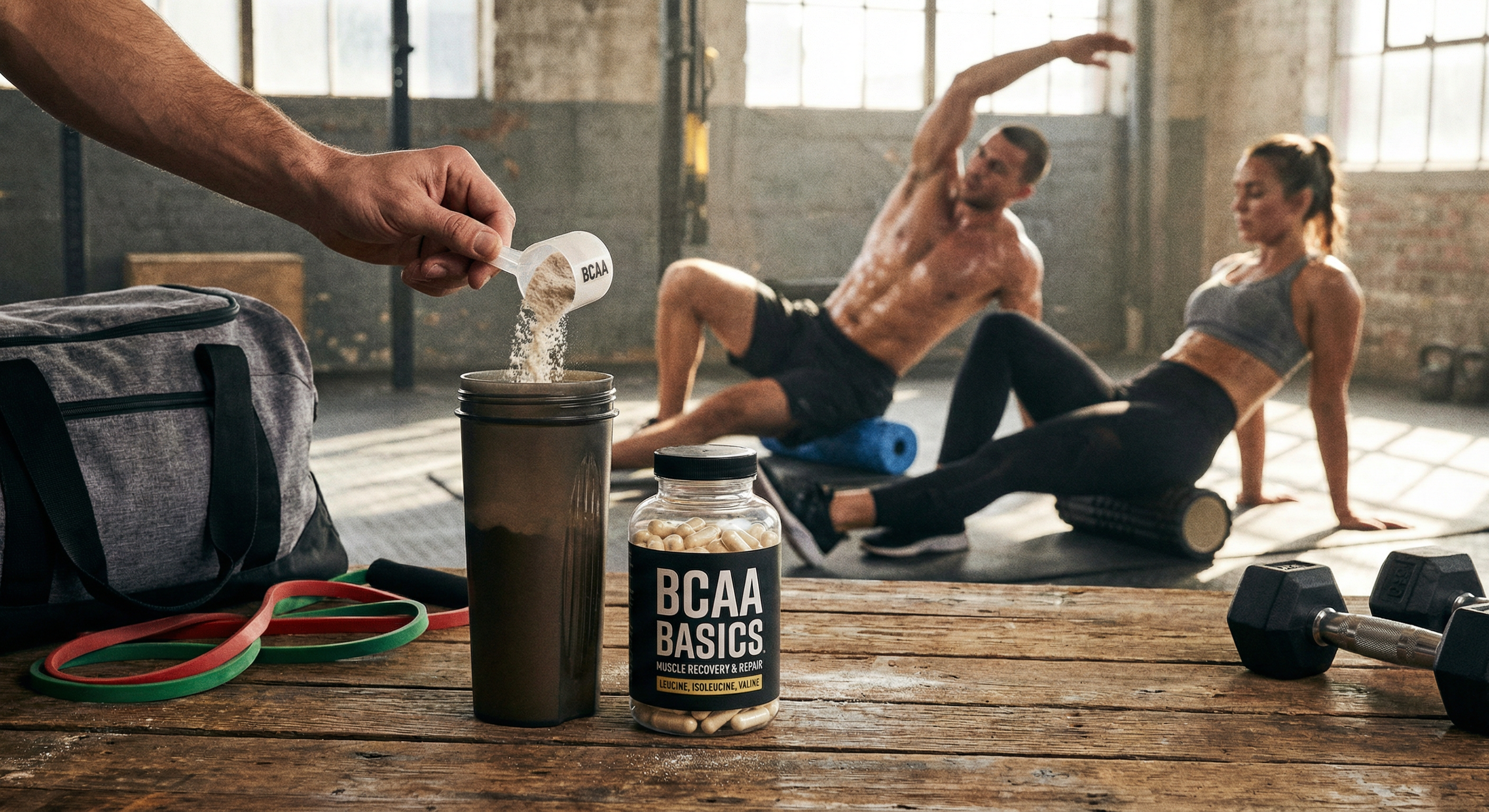
Branched-chain amino acids (BCAAs) are three essential amino acids: leucine, isoleucine, and valine. They are called branched-chain because of their chemical structure. Your body cannot make them; you get them from protein in food or from supplements. BCAAs are used by muscle tissue for energy and protein synthesis; leucine in particular is a key trigger for muscle protein synthesis (MPS). As a fitness trainer and someone who works with athletes and bodybuilders, I see BCAAs marketed for muscle building, reducing soreness, and sparing muscle during cuts. The evidence is nuanced: whole protein already provides BCAAs and all other amino acids, so the real question is when a BCAA-only supplement adds value beyond a good diet and adequate protein.
In this guide you will learn what BCAAs are, when they might help, how to dose and time them, how they compare to whey and whole protein, and who should consider them. For product comparison you can browse amino acid supplements and protein products.
What Are BCAAs and Why Do They Matter for Muscle?
Leucine, isoleucine, and valine are essential amino acids: your body cannot synthesize them in meaningful amounts, so they must come from diet or supplements. In muscle, leucine activates the mTOR pathway, which supports protein synthesis. Isoleucine and valine contribute to energy production and nitrogen balance. Together, the three are often used around workouts to support performance and recovery when whole food or a full protein shake is not practical.
BCAAs are not magic. They are a subset of the amino acids you get from any complete protein. Whey, eggs, meat, fish, and plant-based proteins like soy or pea all deliver BCAAs plus the rest of the amino acids needed for full MPS. So the first rule is: hit your daily protein target (typically 1.2–2.2 g per kg body weight depending on goals) with food and, if needed, a protein supplement. BCAAs become a tactical option in specific situations.
When Might BCAAs Help?
Training fasted: If you train early in the morning without eating, 5–10 g BCAAs may help limit muscle breakdown and support performance. A pre-workout meal or whey shake would be more complete, but BCAAs are a light option when you do not want a full meal.
Very high training volume: Some athletes and bodybuilders use BCAAs during or around long or intense sessions. The benefit is usually small if total daily protein is already sufficient; BCAAs may add a slight edge in recovery or perceived fatigue.
Low-calorie diets: When cutting, adequate protein plus resistance training is key to preserving muscle. BCAAs do not replace whole protein but can be a convenience when calories are tight and you want an extra safeguard around training.
Reducing soreness: Some studies suggest a modest effect on delayed-onset muscle soreness (DOMS); results are mixed and the practical impact is often small. Do not rely on BCAAs as the main strategy for recovery; sleep, nutrition, and load management matter more.
BCAAs vs Whole Protein
Whole protein sources (whey, casein, meat, fish, eggs, dairy, soy, pea) provide BCAAs plus all other essential and non-essential amino acids. For most people, hitting daily protein targets with food and a protein supplement if needed is enough. BCAAs are a subset; they can stimulate MPS but building and repairing muscle is more effective with complete protein. Use BCAAs as a tactical choice (e.g. during fasted training or when you cannot have a full meal or shake), not as a replacement for dietary protein. Common ratio is 2:1:1 (leucine to isoleucine to valine); higher leucine products may further support MPS in some contexts. Compare options in amino acids and sports nutrition.
Dosing and Timing
Typical supplemental doses are 5–10 g BCAAs per serving, often taken before, during, or after training. Leucine content matters: about 2–3 g leucine per dose is often cited for MPS stimulation. Timing is flexible; total daily protein and training quality matter more than the exact time you take BCAAs. Do not use BCAAs to compensate for low overall protein; prioritise food and whole-protein supplements first. People with kidney or liver disease should discuss amino acid supplements with their doctor.
Who Might Consider BCAAs
Athletes and active individuals who train fasted, do very long or intense sessions, or are in a calorie deficit and want an extra safeguard for muscle might consider BCAAs as one tool. Vegetarians and vegans who struggle to meet protein needs might use BCAAs to top up, but whole plant protein (legumes, tofu, tempeh, seitan, protein powder) is preferable for completeness. If you already eat 1.6–2 g protein per kg and distribute it across the day, BCAAs may add little. Save budget for whole food and protein supplements before investing heavily in BCAAs.
Evidence: What the Research Suggests
BCAA research shows mixed results. In fasted training, BCAAs can reduce markers of muscle breakdown and support performance in some studies; in others, the effect is small. For muscle growth in well-fed athletes, whole protein or leucine-rich meals usually outperform BCAA-only supplements because they supply all amino acids. For soreness, meta-analyses suggest a small benefit at best. The practical takeaway: BCAAs have a place in specific scenarios (fasted training, very high volume, convenience) but are not a substitute for adequate total protein and good training.
Quality and Form
Choose products with clear labelling: total BCAAs per serving and leucine content. Ratio 2:1:1 is common; 4:1:1 or similar higher-leucine formulas exist. Powder allows flexible dosing; capsules are convenient. Avoid products with unnecessary fillers or vague proprietary blends. Store in a cool, dry place and use before the use-by date.
Safety and Interactions
BCAAs are generally well tolerated at typical doses (5–10 g per serving). Very high intakes can add to the metabolic load on liver and kidneys; if you have kidney or liver disease, get medical advice before using amino acid supplements. BCAAs can interact with certain medications (e.g. for diabetes, Parkinson's); if you take prescription drugs, check with your doctor. Pregnant or breastfeeding women should follow medical guidance.
Practical Stacks and When to Skip BCAAs
If you train fasted: BCAAs (5–10 g) before or during the session, then a full meal or protein shake within a couple of hours. If you train fed: often no need for BCAAs; a post-workout meal or shake with whole protein is sufficient. If you are cutting: keep protein high (1.6–2.2 g per kg), use resistance training, and consider BCAAs only as an optional add-on around training, not as a replacement for meals. If your protein intake is already high and well distributed: you can skip BCAAs and spend the budget on food or whole protein.
BCAAs and Fasted Training: What the Data Says
When you train in a fasted state, muscle protein breakdown can increase because amino acids from food are not available. Several studies show that consuming BCAAs (or leucine alone) before or during fasted exercise can reduce breakdown markers and support net protein balance. The effect is not huge, and a post-workout meal with complete protein remains important. If you prefer training fasted, 5–10 g BCAAs with about 2–3 g leucine is a reasonable protocol; follow with a full meal or shake within one to two hours for best recovery.
Do You Need BCAAs on Rest Days?
On rest days, total daily protein and distribution across meals matter most. If you hit 1.6–2.2 g per kg from food and spread it over three to five meals, extra BCAAs are usually unnecessary. Some people take a small dose with a light snack if they train late and dinner is far away; that is optional. Prioritise whole food and consistent protein intake on rest days over BCAA supplements.
Common Mistakes When Using BCAAs
Using BCAAs to replace meals or to make up for low daily protein is a frequent mistake. BCAAs do not provide the full amino acid profile needed for muscle repair and growth; they are a subset. If your total protein is below about 1.2 g per kg (or higher if you are building muscle or cutting), fix that first with food and whole protein before adding BCAAs. Another mistake is expecting BCAAs to do the work of recovery on their own. Sleep, calories, and progressive overload matter more than any single supplement. Taking BCAAs while chronically under-sleeping or overtraining will not fix the underlying issue.
Spending a large budget on BCAAs while skipping quality whole food and protein powder is also backwards. For most people, a good whey or plant protein and solid meals give a better return than high-dose BCAA stacks. Finally, assuming that more is better can backfire. Very high intakes of single amino acids can imbalance others and add unnecessary load; stick to evidence-based doses (5–10 g per serving, 2–3 g leucine) unless a professional advises otherwise.
When to Reassess and Simplify
If you have been taking BCAAs for months and are unsure whether they help, try a simple test: stop BCAAs for two to four weeks while keeping total protein and training the same. If you notice no difference in performance, recovery, or soreness, you may not need them and can put the budget toward food or other priorities. Many athletes find that once daily protein is high and well distributed, BCAAs add little. Reassess periodically; supplements should earn their place based on your own response, not marketing.
FAQ
Can I take BCAAs with protein powder?
Yes. Taking BCAAs with or without protein powder is fine. If you are already having a whey or plant protein shake, the shake already contains BCAAs; adding more is optional and may only be useful in edge cases (e.g. very long sessions or extreme deficit).
What ratio of leucine to isoleucine to valine is best?
2:1:1 is the most common and well studied. Higher leucine (e.g. 4:1:1) may slightly enhance MPS stimulation in some contexts but is not essential for most people.
Are BCAAs useful for endurance athletes?
Endurance athletes need adequate total protein and carbs; BCAAs are not a substitute. In very long events, some use BCAAs to limit fatigue or mental drop-off, but evidence is mixed. Focus on fuelling and recovery first.
Summary Table: BCAAs vs Whole Protein
For a quick reference: BCAAs supply three amino acids (leucine, isoleucine, valine) and can stimulate MPS but do not provide the full set needed for optimal muscle building. Whole protein (whey, eggs, meat, fish, plant protein) supplies BCAAs plus all other amino acids and is the better choice for daily intake and post-workout. Use BCAAs only when the situation calls for them: fasted training, very high volume, or a light option when a full meal or shake is not possible. Typical dose 5–10 g per serving with about 2–3 g leucine; total daily protein and meal distribution matter more than BCAA timing. If in doubt, prioritise hitting your protein target from food and whole-protein supplements first. Store BCAAs in a cool, dry place and use before the use-by date. Pregnant or breastfeeding women should follow medical guidance before using amino acid supplements. If you are new to BCAAs, start with one scenario (e.g. fasted morning training) and keep total protein and training consistent for a few weeks so you can tell whether BCAAs are helping. Do not add several new supplements at once; that makes it hard to attribute any benefit or side effect to a single product.
Takeaways
- BCAAs are leucine, isoleucine, and valine; they support muscle protein synthesis and can be used during fasted training or as a convenience.
- Whole protein is the foundation; BCAAs do not replace adequate dietary protein (1.2–2.2 g/kg depending on goals).
- When they may help: fasted training, very high volume, low-calorie dieting (as a small add-on); evidence for soreness reduction is mixed.
- Dose: often 5–10 g per serving, 2–3 g leucine; total daily protein and meal distribution matter more than BCAA timing.
- Prioritise food and whole-protein supplements; use BCAAs tactically, not as a substitute for a good diet.
BCAAs can have a place in an athlete's toolkit when used in context—but they are not magic; protein intake and training quality come first.