Beta-glucans are naturally occurring polysaccharides found in yeast, mushrooms, oats, and barley. They are widely studied for their potential to support immune function by modulating how certain immune cells recognize and respond to threats. As a physician with an interest in sports medicine and preventive care, I often get questions about whether beta-glucan supplements can help with resilience to infections or general immune health. This guide summarizes what the evidence shows, how to use beta-glucans sensibly, and when food sources may be enough versus when supplementation might be considered.
For product options, see beta-glucan and immune formulas on iHerb.
What Are Beta-Glucans?
Beta-glucans are chains of glucose molecules linked in specific ways (beta-glycosidic bonds). Their structure varies by source: yeast and mushroom beta-glucans (e.g. 1,3/1,6) tend to be more studied for immune effects; oat and barley beta-glucans (1,3/1,4) are well known for cholesterol and blood sugar benefits. Immune-related research often focuses on yeast-derived (e.g. Saccharomyces cerevisiae) or mushroom-derived (e.g. shiitake, reishi, maitake) beta-glucans, which can bind to receptors on immune cells and influence their activity. They do not directly "boost" immunity in a simplistic way; rather, they may help prime or modulate the response so the body is better prepared to handle pathogens without overreacting.
What Does the Evidence Show?
Human studies on beta-glucans and infection outcomes are mixed. Some trials suggest reduced incidence or severity of upper respiratory infections in athletes, older adults, or stressed populations; others show no clear effect. Differences in source, dose, duration, and population make it hard to draw one-size-fits-all conclusions. In general, beta-glucans are considered safe and may offer modest support for immune resilience when used as part of a healthy lifestyle—adequate sleep, nutrition, and stress management remain foundational. They are not a substitute for vaccination, hygiene, or medical treatment when needed.
Food Sources of Beta-Glucans
Oats and barley are rich in soluble beta-glucans and are easy to include in the diet (oatmeal, barley in soups or salads). Mushrooms (shiitake, reishi, maitake, oyster) contain beta-glucans and other bioactive compounds; cooking does not destroy them. Including a variety of these foods supports overall diet quality and fiber intake. For people who eat oats and mushrooms regularly, additional beta-glucan from supplements may add little; for those who rarely consume these sources or want a standardized dose, a supplement can be an option.
Supplement Forms and Dosing
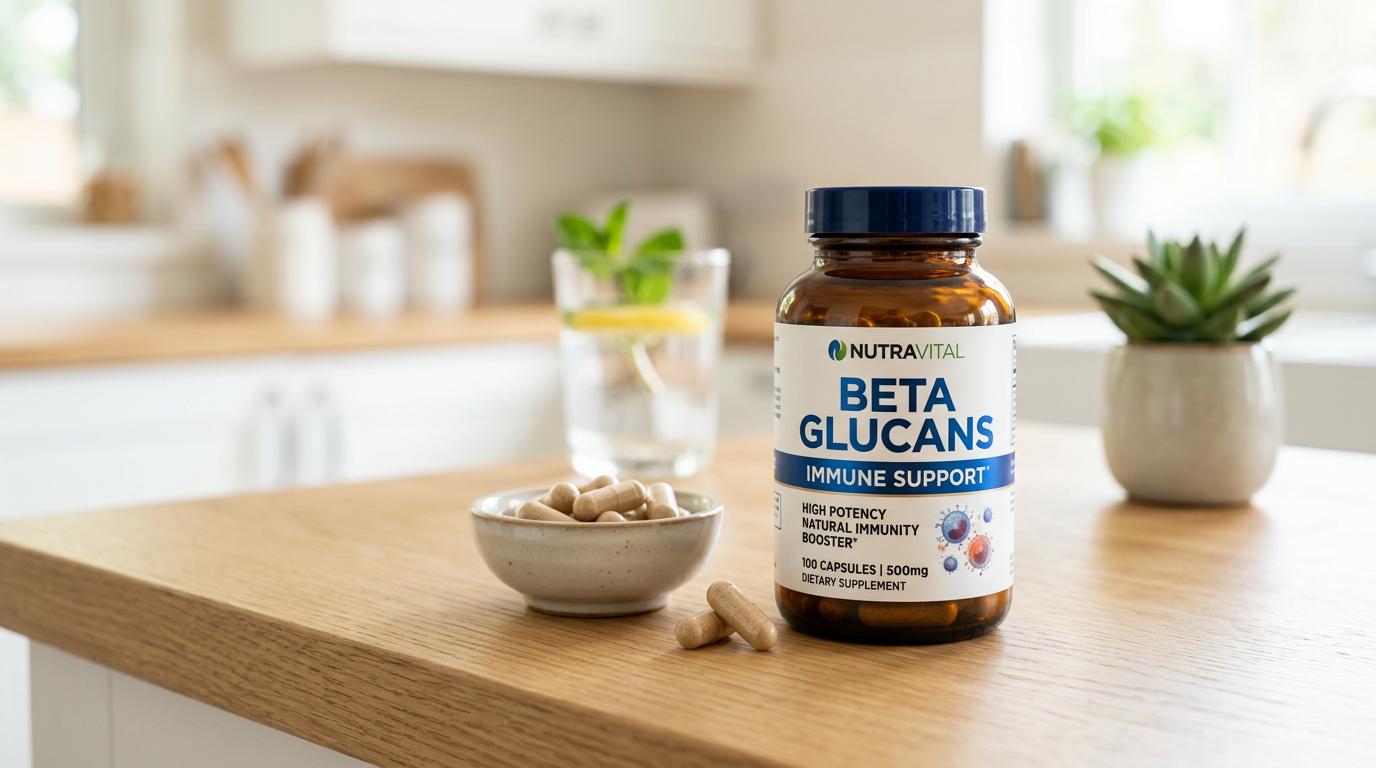
Supplements typically provide yeast or mushroom beta-glucan in capsules or powders. Doses in studies vary widely—often from about 100 mg to 500 mg or more per day of well-characterized extracts. Follow the product label and choose brands that specify the source and, if possible, the type and purity of beta-glucan. There is no established "best" dose for immune support; starting in the middle of the range used in studies (e.g. 250–500 mg daily) and using for several weeks during periods of higher stress or exposure is a reasonable approach. Long-term continuous use is not well studied; some people use beta-glucans seasonally or during travel instead of year-round.
Safety and Interactions
Beta-glucans are generally well tolerated. They can theoretically stimulate immune activity, so individuals with autoimmune disease or on immunosuppressive therapy should discuss use with a doctor before starting. Allergic reactions to yeast or mushrooms are possible; if you have known allergies, choose a source you tolerate (e.g. mushroom-only if you are allergic to yeast). Beta-glucans are not a replacement for prescribed immunosuppressants or other medications.
Who Might Benefit Most?
Populations often studied include athletes under heavy training, older adults, and people experiencing high stress or frequent travel—all situations where immune resilience may be challenged. Even then, effect sizes in trials are usually modest. The biggest gains for immune health still come from sleep, nutrition, physical activity, and stress management; beta-glucans can be a small part of the picture, not the centerpiece.
Quality and Purity
Not all beta-glucan supplements are equal. Look for products that state the source (yeast or mushroom species), the type of beta-glucan (e.g. 1,3/1,6), and the amount per serving. Third-party testing or certifications can help ensure the product contains what the label claims. Avoid mega-doses unless there is a clear rationale; more is not necessarily better and could increase the chance of unnecessary immune stimulation in sensitive individuals.
Timing and Duration
There is no strong evidence that taking beta-glucans at a specific time of day improves immune outcomes. Many people take them in the morning with breakfast or with other supplements. Using them for 4–12 weeks during high-exposure or high-stress periods is a common approach; year-round use is not well studied for long-term safety or necessity. If you stop and later restart, there is no known need for a special loading phase—consistent daily intake for a few weeks is typically sufficient to align with how the trials were done.
Combining With Other Immune Support
Beta-glucans are often combined in formulas with vitamin C, zinc, vitamin D, or elderberry. These nutrients have their own evidence bases; combining them does not necessarily multiply benefits and can increase cost. If you already take a multivitamin or targeted vitamins for immune health, adding a standalone beta-glucan is optional. Focus on one or two well-chosen interventions rather than stacking many supplements without a clear rationale.
When to See a Doctor
Beta-glucans are not a treatment for active infection, autoimmune disease, or immunodeficiency. If you have recurrent infections, unexplained fatigue, or a known immune condition, work with your doctor for diagnosis and treatment. Supplements can be discussed as a possible adjunct once the main plan is in place.
Practical Takeaways
- Beta-glucans are polysaccharides from yeast, mushrooms, oats, and barley; structure and effects vary by source.
- Evidence for reduced infections or stronger immunity is mixed; some studies show modest benefit, others none.
- Food sources (oats, barley, mushrooms) are a good base; supplements can be considered for a standardized dose.
- If you use a supplement, follow the label, choose a reputable brand, and do not expect beta-glucans to replace sleep, diet, or medical care.
How Beta-Glucans May Support Immune Function
Beta-glucans from yeast and mushrooms can bind to receptors on immune cells such as macrophages and dendritic cells. This binding may prime or modulate the immune response rather than cause a simple boost. In theory, a primed system responds more effectively when it encounters a pathogen, without overreacting in a way that could cause inflammation or autoimmune issues. Human data are mixed: some trials in athletes, older adults, or stressed populations suggest fewer or milder upper respiratory infections; others show no clear benefit. Differences in the type of beta-glucan (source, structure, molecular weight), dose, duration, and population make it hard to generalize. Overall, beta-glucans are considered safe and may offer modest support as part of a healthy lifestyle; they are not a substitute for vaccination, hand hygiene, or medical treatment when needed.
If you choose to try a beta-glucan supplement, use it alongside adequate sleep, a balanced diet, stress management, and physical activity. Those factors have stronger and more consistent evidence for supporting immune health than any single supplement.
Yeast vs. Mushroom vs. Oat Beta-Glucans
Not all beta-glucans are the same. Yeast-derived beta-glucans (e.g. from Saccharomyces cerevisiae) and mushroom-derived ones (shiitake, reishi, maitake) are often studied for immune modulation; they typically have 1,3/1,6 linkages. Oat and barley beta-glucans have 1,3/1,4 linkages and are best known for effects on cholesterol and blood sugar; their immune research is less extensive. When buying a supplement for immune support, check whether the label specifies the source (yeast or mushroom species) and, if possible, the type or structure of beta-glucan. Products that list only "beta-glucan" without source or dosage details are harder to compare to the studies. You can browse beta-glucan and immune formulas on iHerb for options.
Who Might Consider Beta-Glucans?
Populations often studied include athletes under heavy training load, older adults, and people experiencing high stress or frequent travel—situations where immune resilience may be challenged. Even in those groups, effect sizes in trials are usually modest. If you fall into one of these categories and want to add a beta-glucan, a reasonable approach is to use a mid-range dose (e.g. 250–500 mg daily of a well-characterized product) for 4–12 weeks during the high-risk or high-stress period, rather than year-round without a clear plan. If you have autoimmune disease, are on immunosuppressive therapy, or have known allergies to yeast or mushrooms, discuss use with your doctor before starting. Beta-glucans are not a treatment for active infection or immunodeficiency; they are at best a possible adjunct to a healthy lifestyle.
What to Expect and When to Reassess
Do not expect beta-glucans to prevent every cold or flu. At best, they may slightly reduce the number or severity of upper respiratory infections in some people. It can take several weeks of consistent use to align with how the trials were done. If after 8–12 weeks you notice no difference in how often you get sick or how you recover, you can stop and put the money toward sleep, nutrition, or other evidence-based habits. There is no need to use beta-glucans indefinitely unless you and your provider see a clear reason. Revisit the decision periodically; your stress, travel, and training load may change, and so may the need for any supplement.
Final Checklist
Before and while using a beta-glucan: Prioritize sleep (7–8 hours for most adults), a varied diet with enough protein and micronutrients, regular physical activity, and stress management. Use the supplement as a small add-on, not the centerpiece. Choose a product with a clear source and dose; follow the label. If you have health conditions or take medications, check with your doctor. Do not use beta-glucans to replace vaccines, hygiene, or medical care when you are ill. With that approach, beta-glucans can be a low-risk, modest-support option for immune resilience during demanding periods.
Summary of Key Points
Beta-glucans are natural compounds from yeast, mushrooms, oats, and barley. Their structure and effects depend on the source: yeast and mushroom beta-glucans are often studied for immune modulation; oat and barley for cholesterol and blood sugar. Evidence that they reduce infections or strengthen immunity is mixed—some studies show modest benefit in athletes, older adults, or stressed populations; others show no clear effect. They are generally safe when used as directed but are not a substitute for sleep, nutrition, vaccination, or medical care. If you try a supplement, use 250–500 mg daily of a well-characterized product for 4–12 weeks during high-stress or high-exposure periods; choose a reputable brand and do not expect dramatic results. People with autoimmune disease, on immunosuppressants, or with yeast or mushroom allergies should discuss use with a doctor first. Keep expectations realistic and prioritize the fundamentals of health; beta-glucans are at best a small addition to a solid foundation.
If you try a beta-glucan supplement, use it for 4–12 weeks during a demanding period. Choose a product that states the source (yeast or mushroom) and amount per serving. Pair it with good sleep, a balanced diet, and stress management. Do not use it in place of vaccines or medical care when you are sick. For most healthy adults, beta-glucans are low risk; for people with autoimmune disease or on immunosuppressants, talk to your doctor first. With realistic expectations, beta-glucans can be one small part of a resilient lifestyle. Use them as a complement to sleep, diet, and stress management, not as a replacement for medical care or vaccination when needed.
Research Summary and Practical Bottom Line
Clinical trials of beta-glucans for immune support have used varied sources (yeast, shiitake, reishi, maitake), doses (often 100–500 mg daily), and durations (weeks to months). Outcomes measured include incidence and duration of upper respiratory infections, immune cell markers, and sometimes symptom severity. Meta-analyses have not shown a large or consistent effect across all studies; some subgroups (e.g. athletes in heavy training) show modest benefit. This suggests that if you choose to try a beta-glucan, you should use a well-characterized product at a mid-range dose for at least 4–8 weeks during a period of high stress or exposure, rather than expecting immediate or dramatic protection. Combine it with proven foundations: adequate sleep, a varied diet rich in fruits and vegetables, regular physical activity, stress management, and vaccination where applicable. Reassess after 8–12 weeks; if you notice no clear difference in how often you get sick or how you recover, you can stop and reallocate time and money to other health habits. Beta-glucans are a low-risk option that may offer modest support for some people when used as part of a broader healthy lifestyle.