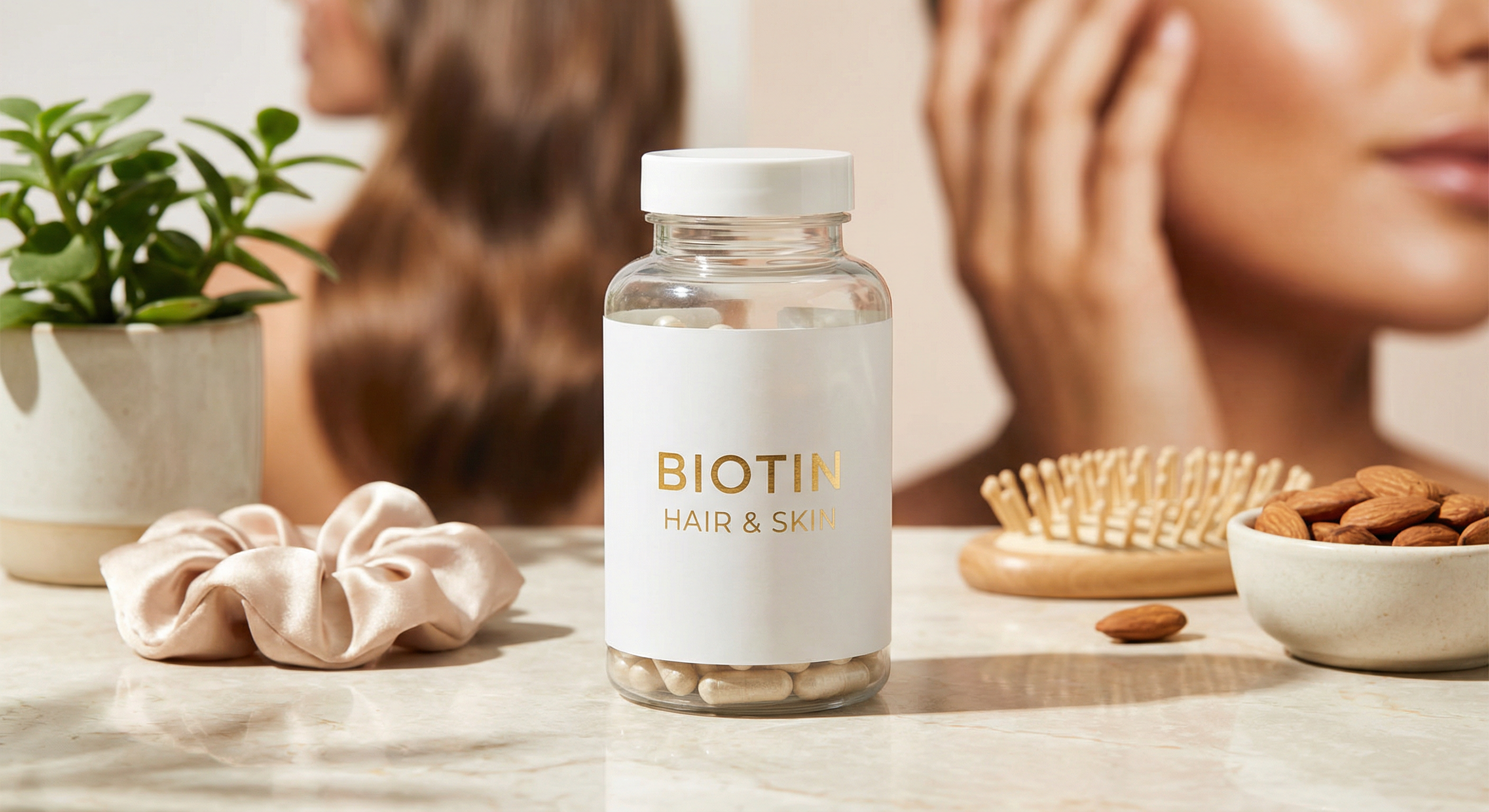
Biotin (vitamin B7) is a water-soluble B vitamin that acts as a coenzyme in metabolism: it helps your body use fats, carbohydrates, and amino acids. It also supports healthy skin, hair, and nails through its role in keratin structure and cell growth. As a nutritionist, I often get questions about whether biotin supplements can improve hair thickness, reduce brittle nails, or clear skin—and how much is enough or too much. This guide summarizes what biotin does, what the evidence says about supplementation for hair and skin, and how to get enough from food or supplements safely.
Biotin is found in many foods—egg yolks, liver, nuts, seeds, sweet potato, spinach—and in supplements. Deficiency is uncommon in people who eat a varied diet, but it can occur with certain conditions or prolonged raw-egg consumption (a protein in raw egg white binds biotin). When deficiency does occur, it may show up as thinning hair, skin rash, brittle nails, or fatigue. For most people, getting enough biotin from food is straightforward; biotin supplements and hair, skin and nails formulas are popular for those who want extra support or have increased needs.
What Is Biotin?
Biotin is a cofactor for enzymes involved in carboxylation reactions—important in fatty acid synthesis, glucose metabolism, and amino acid breakdown. It also supports the structure of keratin, the protein that makes up hair, skin, and nails. The body cannot make biotin in sufficient amounts; we get it from diet and from gut bacteria, though the bacterial contribution is hard to quantify. Recommended adequate intake (AI) for adults in the United States is 30 mcg per day; many multivitamins and standalone supplements provide 300–10,000 mcg (0.3–10 mg) per day. Biotin is generally well absorbed and excess is excreted in urine; there is no established tolerable upper intake level (UL), but very high doses are not necessary for most people and can interfere with lab tests.
Biotin and Hair Health
Biotin is involved in the production of keratin, the protein that makes up hair, skin, and nails. Low biotin status has been linked to hair loss in some studies, and supplementing may help in cases of confirmed deficiency. In the general population, evidence that biotin improves hair growth or thickness in people who are not deficient is limited; many reports are anecdotal or from small studies. That said, biotin is generally safe at typical supplemental doses, and some people choose to take it as part of a broader approach to hair health—along with a balanced diet, adequate protein, and good scalp care. If you experience significant or sudden hair loss, a healthcare provider can help rule out other causes (e.g. thyroid issues, nutrient deficiencies, stress, hormonal changes) before attributing it to biotin. Hair growth is slow (about 1 cm per month), so any intervention takes months to show visible change; patience and consistency matter.
Biotin and Skin and Nails
Biotin supports skin and nail integrity through its role in cell growth and fatty acid metabolism. Brittle nails have been associated with low biotin in some research, and small studies suggest that biotin supplementation may improve nail firmness in people with brittle nails. For skin, biotin deficiency can contribute to a scaly rash, especially around the eyes, nose, and mouth; correcting deficiency typically improves these symptoms. In non-deficient individuals, the effect of extra biotin on skin and nails is less clear but many users report subjective improvements. As with hair, combining biotin with a nutrient-rich diet and good nail and skin care is a sensible approach. Sun protection, gentle cleansing, and moisturizing remain foundational for skin health.
Food Sources and Supplementation
Good food sources of biotin include egg yolks (cooked), organ meats like liver, nuts (almonds, peanuts), seeds, sweet potato, spinach, broccoli, and whole grains. Cooking eggs reduces the binding of avidin (in egg white) to biotin, so cooked eggs are a reliable source. Most multivitamins and B-complex formulas contain biotin, and standalone biotin supplements are widely available in doses from about 100 mcg to 10,000 mcg (10 mg) per day. There is no established upper limit, but very high doses are not necessary for most people; typical supplemental doses range from 2,500 to 5,000 mcg daily for hair, skin, and nail support. Always follow label directions or your healthcare provider's advice. If you eat eggs, nuts, and vegetables regularly, you may already be meeting or exceeding the AI; supplements can still be used for convenience or if you have increased needs (e.g. pregnancy, certain medications, or conditions that affect biotin status).
Dosing and Safety
Adequate intake (AI) for adults is set at 30 mcg per day in the United States; many supplements provide far more than this, and biotin is generally well tolerated. High doses can interfere with certain lab tests (e.g. troponin, thyroid, and some hormone assays), so if you use high-dose biotin, tell your doctor before blood work and consider pausing supplementation a few days before scheduled labs if your doctor recommends it. Biotin does not typically cause serious side effects at standard doses. If you are pregnant, breastfeeding, or taking medications, check with a healthcare provider before starting or changing supplements. For most people, a balanced diet plus optional biotin or hair-skin-nails formulas can support healthy hair, skin, and nails when used as part of an overall healthy lifestyle.
Who Might Benefit From Extra Biotin?
People with confirmed biotin deficiency (e.g. due to genetic disorder, long-term raw egg white consumption, or certain medications) benefit from supplementation under medical guidance. Pregnant and breastfeeding women have slightly higher needs; many prenatal vitamins include biotin. People with brittle nails or thinning hair sometimes try biotin as part of a broader plan; evidence of benefit in non-deficient individuals is limited but the supplement is low risk at typical doses. Anyone with unexplained hair loss, rash, or fatigue should have other causes ruled out (thyroid, iron, B12, stress) before relying on biotin alone.
Interactions and Lab Tests
Biotin can interfere with certain immunoassays that use biotin-streptavidin technology, leading to falsely high or low results for troponin, thyroid hormones (TSH, T4, T3), and some other hormones. If you take high-dose biotin (e.g. 5 mg or more daily), inform your doctor and consider stopping biotin 2–3 days before blood draws if your doctor recommends it. Standard multivitamin doses (e.g. 30–300 mcg) are less likely to cause issues, but it is still good practice to list all supplements on your medical history.
Summary
- Biotin (B7) supports metabolism and keratin structure; deficiency can cause hair, skin, and nail changes.
- Evidence that extra biotin improves hair or nails in non-deficient people is limited; supplementation is generally safe at typical doses.
- Food sources (eggs, liver, nuts, seeds, vegetables) and multivitamins often provide enough; standalone biotin is an option for extra support.
- High-dose biotin can interfere with some lab tests—tell your doctor and consider pausing before blood work if advised.
Hair Growth Timeline and Realistic Expectations
Hair grows slowly—about 0.3–0.4 mm per day or roughly 1 cm per month. So any change from diet, supplements, or topical treatments takes months to become visible. If you start biotin or a hair formula for thinning or brittle nails, give it at least 3–6 months before judging effect. During that time, focus on the basics: enough protein (hair and nails are largely protein), adequate calories (crash dieting can trigger shedding), and gentle handling (avoid tight styles, excessive heat, or harsh chemicals). Biotin is one piece of the puzzle; it will not reverse genetic hair loss or replace treatment for thyroid, iron, or hormonal causes. If you have confirmed biotin deficiency, correction often improves hair and nail findings within a few months.
Track progress with simple measures: photos of the hairline or part every few months, or note how many hairs you lose in the shower or brush. If you see no change after 6 months and other causes have been ruled out, you can reassess whether to continue biotin or try other evidence-based options with your provider.
Biotin in Multivitamins vs. Standalone Supplements
Most multivitamins and B-complex formulas contain 30–300 mcg of biotin—enough to meet or exceed the adequate intake (AI) of 30 mcg/day. Standalone biotin supplements often provide 1,000–10,000 mcg (1–10 mg) per serving. For general health and to avoid deficiency, a multivitamin or B-complex is usually sufficient. If you are targeting hair, skin, or nails specifically and your provider is comfortable with it, a standalone biotin product at 2,500–5,000 mcg daily is a common choice; higher doses do not necessarily give better results and increase the chance of lab test interference. Always list biotin (and dose) on your medication and supplement list when you see a doctor or before blood work. You can compare biotin supplements and hair, skin and nails formulas on iHerb.
Other Nutrients That Support Hair, Skin, and Nails
Biotin is not the only nutrient involved. Iron (especially ferritin) is important for hair growth; low ferritin is a common cause of diffuse shedding in women. Zinc supports skin and immune function; deficiency can affect hair and nails. Vitamin C is needed for collagen; vitamin D and omega-3s play roles in skin and inflammation. Protein and adequate calories are foundational—hair and nails are made of protein, and severe restriction can trigger telogen effluvium (shedding). So before or alongside biotin, consider a basic blood panel (e.g. ferritin, B12, vitamin D, thyroid) if you have unexplained hair loss or brittle nails. Correcting deficiencies often has a bigger impact than adding high-dose biotin when you are not deficient.
Pregnancy, Breastfeeding, and Biotin
Biotin needs are slightly higher in pregnancy and lactation; many prenatal vitamins include biotin (often 30–300 mcg). High-dose biotin (e.g. 5–10 mg daily) is not well studied in pregnancy, so sticking to prenatal or moderate supplemental doses is prudent unless your obstetrician recommends otherwise. Biotin is water-soluble and excess is excreted; there is no known teratogenic effect at typical intakes. If you are breastfeeding and take high-dose biotin, a small amount can pass into milk; again, moderate doses from a prenatal or multivitamin are generally considered safe. When in doubt, discuss with your OB or a dietitian.
Takeaways for Daily Practice
Use biotin as part of a broader approach: balanced diet, enough protein and calories, gentle hair and nail care, and treatment of any underlying deficiency or condition. Keep dose in a reasonable range (e.g. 30–5,000 mcg daily unless your doctor advises more for a deficiency). Before blood work, tell your doctor you take biotin and consider pausing high doses if they recommend it. Give hair and nail interventions at least 3–6 months before judging effect. If you have significant or sudden hair loss, get a proper workup rather than relying on biotin alone. With that approach, biotin can be a safe, low-cost option for general support of hair, skin, and nails.
Final Checklist
Biotin (B7) supports metabolism and keratin; deficiency can cause hair, skin, and nail changes. Evidence that extra biotin improves hair or nails in non-deficient people is limited; supplementation is generally safe at typical doses. Get enough from food (eggs, liver, nuts, seeds, vegetables) and multivitamins when possible; add standalone biotin only if you want targeted support or have higher needs. Always tell your doctor you take biotin and at what dose; pause high doses before blood work if advised. Address sleep, stress, iron, B12, and thyroid when relevant—they often matter more than biotin for hair and nails. Give any intervention 3–6 months before judging; track with photos or notes. Biotin is a sensible part of a holistic plan, not a stand-alone fix for hair loss or brittle nails when other causes have not been ruled out. Combine it with a nutrient-rich diet, gentle styling, and treatment of any underlying deficiencies for the best chance of improvement over time. Check iron, B12, and thyroid if hair loss or brittle nails persist; biotin supports but does not replace treatment of underlying deficiencies.
When choosing a biotin product, look for the amount per serving (mcg) and a form you will take consistently. Biotin is often included in B-complex or multivitamin formulas; standalone biotin is useful when you want a higher dose without extra B vitamins. Store in a cool, dry place and use by the expiry date. There is no need to megadose; 30–500 mcg daily is typical for general support unless your provider recommends more for a diagnosed deficiency.