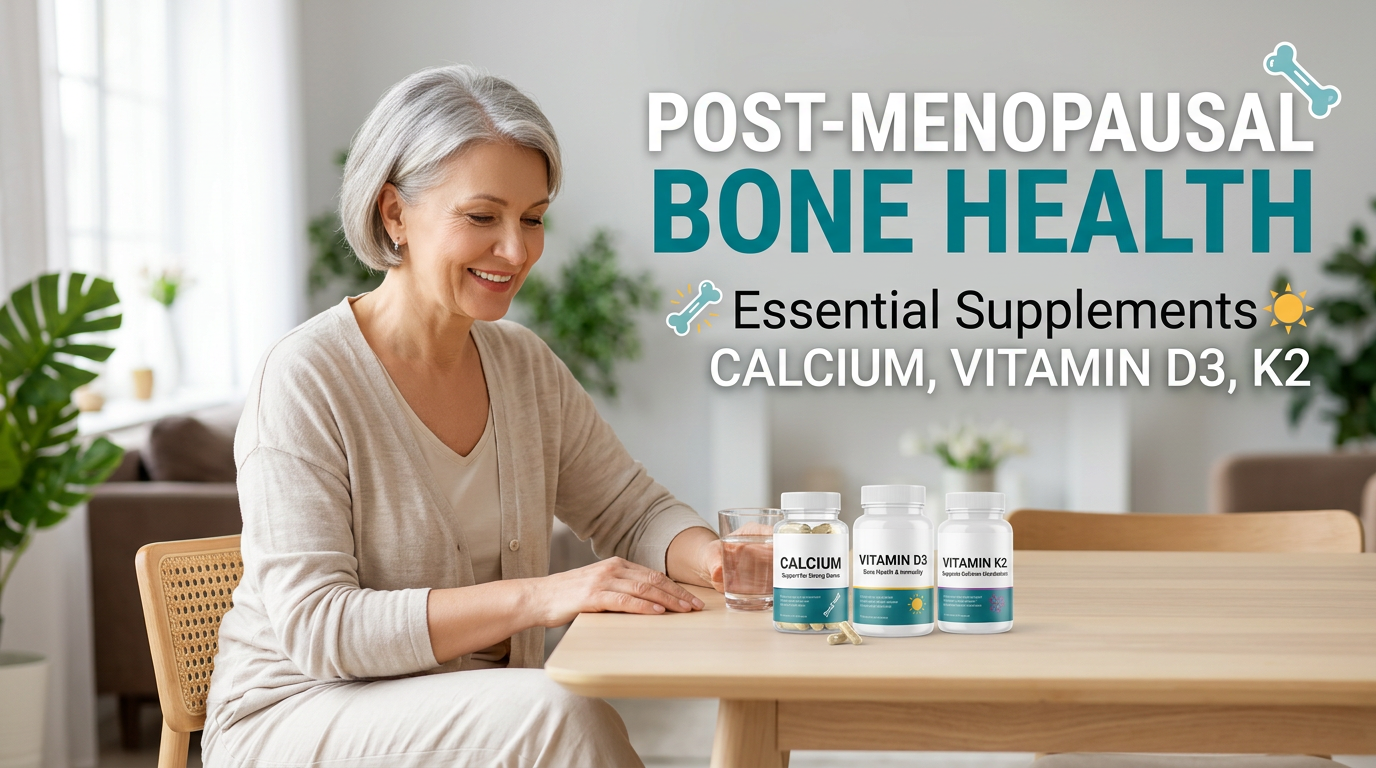
After menopause, declining estrogen is associated with accelerated bone loss and a higher risk of osteoporosis and fracture. Bone is living tissue that constantly remodels; when resorption (breakdown) outpaces formation, density drops. As a sport and musculoskeletal physician, I often counsel postmenopausal women on how to protect bone health through nutrition, exercise, and—when appropriate—supplements and medication. This guide covers what research shows, how to use calcium and vitamin D safely, the role of exercise and other nutrients, and when to consider prescription treatment. Whether you are managing osteoporosis risk, recovering from a fracture, or simply aiming to optimize bone health as you age, a clear picture of the evidence helps you and your healthcare provider decide on the best approach. For product options, see bone formulas and bone and joint supplements on iHerb.
Why bone health changes after menopause
Estrogen helps maintain bone by slowing resorption. When estrogen levels drop after menopause, bone breakdown can outpace formation, leading to net bone loss and lower density. Women are at greater risk than men in part because of lower peak bone mass and the effect of menopause. The rate of loss is often highest in the first few years after menopause, then may slow but continue. Lifestyle and nutrition can slow bone loss and, in some cases, support modest gains in density. Weight-bearing and resistance exercise stimulate bone remodeling; adequate calcium and vitamin D are essential. Supplements and medications may be recommended based on your bone density, fracture risk, and overall health.
Calcium and vitamin D
Calcium is the main mineral in bone; vitamin D promotes calcium absorption and supports bone metabolism. Postmenopausal women are often advised to aim for 1,200 mg of calcium per day from diet and supplements combined, and sufficient vitamin D (commonly 800–1,000 IU or more if deficient). Bone formulas and bone and joint supplements can help meet these targets when diet and sun exposure fall short. Take calcium in divided doses (e.g. 500–600 mg per dose) for better absorption. Have your vitamin D level checked so your provider can recommend an appropriate dose; excess vitamin D can be harmful. Meta-analyses show that calcium plus vitamin D can reduce fracture risk in older adults when intake is adequate.
Vitamin K2 and magnesium
Vitamin K2 may help direct calcium into bone and away from soft tissues; magnesium is involved in bone structure and vitamin D metabolism. Some studies suggest that K2 and adequate magnesium support bone density and fracture risk in postmenopausal women, though evidence is not as strong as for calcium and D. K2 is found in fermented foods (natto, some cheeses) and as MK-7 in supplements; typical supplemental doses are 90–180 mcg per day. If you take anticoagulants (e.g. warfarin), discuss K2 with your doctor. Magnesium (e.g. citrate or glycinate) at 200–400 mg elemental magnesium per day may help when dietary intake is low. A balanced diet plus targeted supplementation addresses common gaps; multivitamins and bone formulas can provide combined support when chosen with attention to dose and quality.
Protein and other nutrients
Protein is important for muscle and bone; adequate protein intake is associated with better bone outcomes in older adults. Many postmenopausal women do not eat enough protein; aiming for a consistent daily intake (e.g. 1.0–1.2 g per kg body weight, depending on activity and health) supports both muscle and bone. Vitamin C, zinc, and other trace minerals play roles in collagen and bone matrix. Focus on a varied diet first; use supplements to fill gaps rather than replace food.
Exercise: weight-bearing and resistance
Weight-bearing and resistance exercise are among the most effective non-drug strategies for bone health. They stimulate bone remodeling and help maintain or improve density. Walking, jogging, dancing, stair climbing, and strength training (with weights or resistance bands) are all valuable. Consistency matters; aim for a mix you can sustain long-term. Balance and functional training also reduce fall risk, which is critical for preventing fractures. If you have osteoporosis or have had a fracture, work with a physical therapist or qualified trainer to design a safe program.
When medication may be recommended
Beyond supplements and lifestyle, prescription medications (e.g. bisphosphonates, denosumab, hormone therapy, or other agents) may be recommended for women with osteoporosis or high fracture risk. These decisions are made with a doctor after bone density testing (DXA) and risk assessment. Medication does not replace calcium, vitamin D, and exercise; they work together. If your doctor suggests medication, ask about duration, monitoring, and how it fits with your supplements and diet.
Bone density testing
DXA (dual-energy X-ray absorptiometry) measures bone mineral density and is used to diagnose osteopenia and osteoporosis and to monitor change over time. Testing is typically recommended for postmenopausal women and for others with risk factors (previous fracture, family history, long-term steroid use, etc.). Your provider will advise when to get tested and how often to repeat. Results guide whether lifestyle and supplements are enough or whether medication is indicated.
Safety and interactions
Stay within recommended calcium and vitamin D intakes; very high doses of calcium from supplements have been linked in some studies to cardiovascular concerns. Do not exceed upper limits for vitamin D without monitoring. If you have kidney disease, hypercalcemia, or a history of stones, discuss calcium and D with your doctor. Anticoagulant users should discuss vitamin K2. Report all supplements to your healthcare provider so they can check for interactions with medications.
Practical takeaways
Bone health after menopause benefits from a combination of weight-bearing and resistance exercise, adequate calcium and vitamin D, sufficient protein, and other lifestyle factors. Supplements can fill gaps when diet is insufficient; prescription treatments are used when risk warrants. Get a bone density test as your provider recommends, and discuss any new supplements or medications with your doctor to ensure they are safe and appropriate for you. Small, consistent steps—daily activity, balanced meals, and the right supplements—add up over time to protect your bones and reduce fracture risk.
FAQ
How much calcium and vitamin D do I need after menopause?
Most guidelines suggest 1,200 mg calcium per day (diet plus supplements) and 800–1,000 IU vitamin D or more if deficient. Have your vitamin D level checked to personalize dose.
Can I improve bone density with exercise alone?
Exercise helps maintain or modestly improve density and is essential, but it works best together with adequate calcium, vitamin D, and protein. If you already have osteoporosis, your doctor may also recommend medication.
When should I consider medication?
When DXA shows osteoporosis or high fracture risk, or after a fragility fracture. Your doctor will weigh your risk, age, and preferences to decide.
Calcium form: carbonate vs. citrate
Calcium carbonate is cost-effective and provides more elemental calcium per tablet; it is best taken with food for absorption. Calcium citrate can be taken with or without food and may be better for older adults or those on acid-reducing medication (e.g. proton pump inhibitors), as it does not require stomach acid for absorption. If you have trouble tolerating one form, try the other. Whichever you choose, split your daily total into doses of 500–600 mg for better absorption. Many bone formulas specify the form of calcium on the label; compare options to find one that fits your needs and budget.
Alcohol, smoking, and bone health
Heavy alcohol use and smoking both increase bone loss and fracture risk. If you drink, limit to moderate amounts (e.g. up to one drink per day for women); excess alcohol interferes with calcium balance and bone remodeling. Quitting smoking is one of the most impactful steps for bone and overall health; even reducing smoking helps. If you need support to cut back or quit, your doctor can suggest resources. These lifestyle factors work together with calcium, vitamin D, and exercise; improving them amplifies the benefit of supplements and reduces the need for higher doses or medication when possible.
Hormone therapy and bone health
Estrogen-based hormone therapy (HT) can reduce bone loss and fracture risk when started around menopause; it is not a first-line choice for osteoporosis alone but may be considered for women who also have significant menopausal symptoms. Decisions depend on your age, time since menopause, personal and family history, and preferences. HT has benefits and risks (e.g. cardiovascular, thromboembolic, breast); it is prescribed by a doctor after discussion. If you use or are considering HT, your provider can explain how it fits with calcium, vitamin D, exercise, and other bone medications. Non-hormonal options (bisphosphonates, denosumab, etc.) are often preferred when the main goal is bone protection without hormonal effects. Whatever path you choose, consistent nutrition and activity remain important.
Monitoring and follow-up
Bone density (DXA) is typically repeated every 1–2 years or as your provider recommends, depending on your baseline result and risk. Blood tests for vitamin D, calcium, and sometimes kidney function help tailor dosing. If you start or change supplements, share the list with your doctor so they can check for interactions and ensure your total intake stays within safe limits. Keep a simple log of what you take (dose and form) to make these conversations easier. Long-term bone health is a marathon: consistent nutrition, activity, and sensible supplementation, with regular follow-up, give the best chance of maintaining density and avoiding fractures as you age.
Key takeaways
- After menopause, bone loss can accelerate; calcium, vitamin D, and exercise are foundational.
- Bone formulas and targeted supplements can help meet daily needs when diet falls short.
- Weight-bearing and resistance exercise stimulate bone and reduce fall risk.
- Bone density testing and risk assessment guide when medication is needed.
- Work with your provider to combine lifestyle, supplements, and medication as appropriate for your risk level.
Bone health after menopause is a long-term project. No single supplement or pill replaces consistent nutrition, weight-bearing and resistance exercise, and—when indicated—medical treatment. Get your bone density and vitamin D level checked as your provider recommends; keep a simple list of the supplements you take so your doctor can check for interactions and ensure your total calcium and D intake stay within safe limits. If you have osteoporosis or high fracture risk, follow your treatment plan and use supplements to fill gaps rather than to replace medication. Small, sustainable habits (daily activity, balanced meals, the right supplements in the right doses) add up over the years to protect your bones and reduce the chance of fractures. Revisit your plan with your provider every 1–2 years or when your health or medications change. If you have already had a fragility fracture (e.g. wrist, hip, spine from a minor fall or bump), treatment is especially important; your doctor may recommend medication in addition to calcium, vitamin D, and exercise. Do not delay a bone density test or ignore high fracture risk in the hope that supplements alone will be enough; they are part of the solution, but medical management saves bones and lives when risk is elevated. Stay consistent, ask questions, and adjust your plan with your provider so that your bones stay as strong as possible for as long as possible. Many women find it helpful to set a few concrete habits: for example, calcium with breakfast and dinner, a daily walk or strength session, and a reminder to take vitamin D. Building these into your routine makes it easier to stay consistent. If you travel or your schedule changes, plan ahead so you do not skip supplements or activity for long. Your future self will thank you for the small, steady investments you make in bone health today. Finally, share your full supplement list with your doctor and pharmacist so they can check for interactions with medications and ensure your total calcium and vitamin D intake stay within safe limits. Bone health after menopause is a team effort: you, your provider, and consistent daily habits working together for the long term. Do not skip your bone density scan or assume that supplements alone are enough if you have already been told you have osteopenia or osteoporosis; medication, when recommended, reduces fracture risk more than supplements alone. Your bones will benefit most from a clear plan that you and your provider agree on and that you can stick to year after year.