Digestive bitters are herbal preparations used for centuries to support digestion and appetite. As a dietitian, I often get questions about whether they work and how to use them safely. This guide covers what bitters are, what the evidence shows, how to dose and time them, and how they fit into a broader approach to gut health. You can browse digestive bitters on iHerb to compare products.
What are digestive bitters?
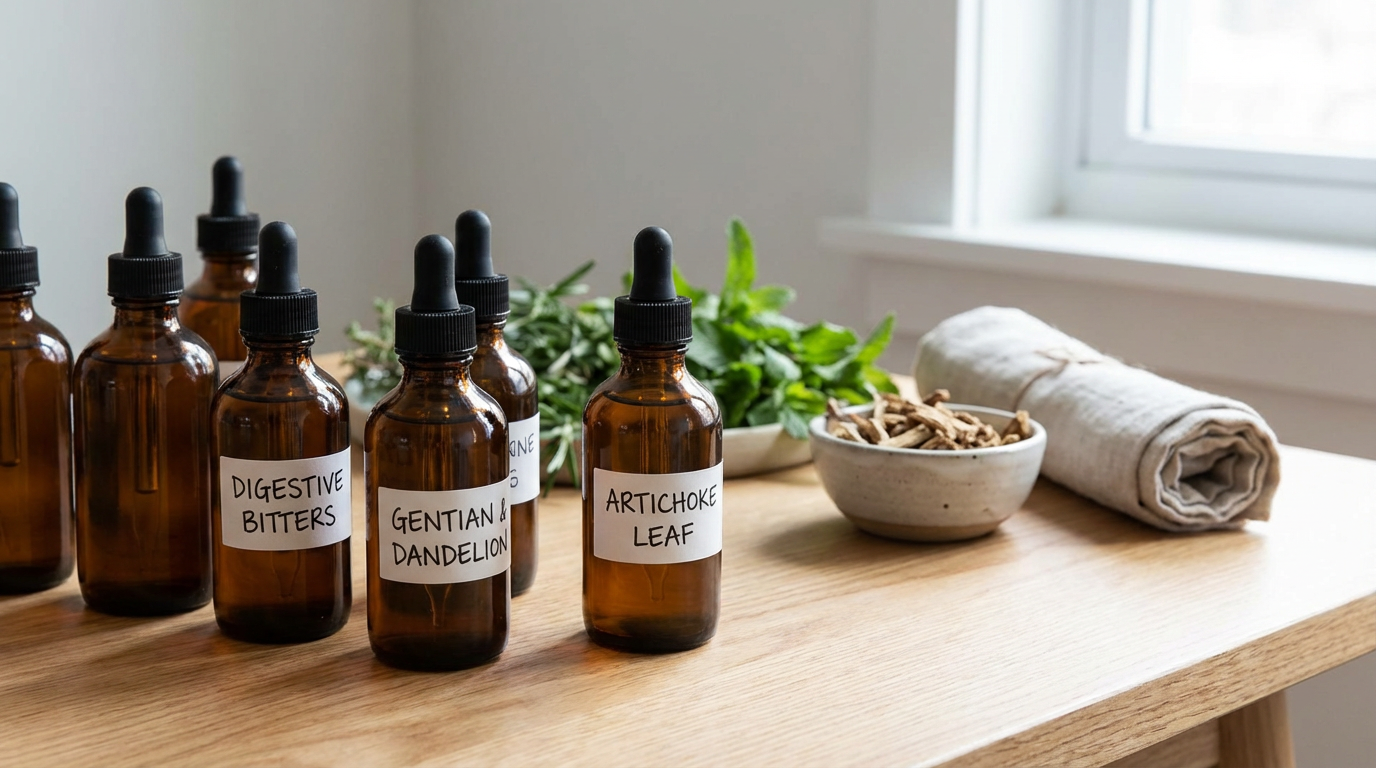
Digestive bitters are liquid or solid preparations made from bitter-tasting herbs and botanicals. Common ingredients include gentian, dandelion root, artichoke leaf, wormwood, orange peel, and other bitter compounds. The bitter taste triggers a reflex response: when bitter receptors on the tongue and in the gut are stimulated, the body increases saliva, gastric acid, and digestive enzyme secretion. This "cephalic phase" of digestion can improve the breakdown of food and the sense of readiness to eat. Bitters are not a single supplement but a category; formulations vary widely in strength and ingredient mix.
Traditional use and modern interest
Bitters have a long history in traditional medicine and in cuisines (e.g. aperitifs) to stimulate appetite and digestion before meals. Modern interest has focused on their potential to reduce bloating, support bile flow, and improve tolerance of fatty meals. While high-quality clinical trials are limited compared with some other supplements, mechanistic reasoning and some small studies support the idea that bitter compounds can enhance digestive secretions and gastric emptying. They are generally used before or with meals rather than as a standalone treatment for disease.
Benefits: what the evidence suggests
Evidence for digestive bitters is mixed but promising in certain areas. Bitter compounds can increase gastric acid and pepsin secretion, which may help protein digestion. Artichoke leaf extract has been studied for functional digestive symptoms and may support bile production and fat digestion. Gentian and other bitters are used in European herbal practice for loss of appetite and mild digestive discomfort. Most studies are small or use combination products, so it is hard to isolate the effect of bitters alone. Overall, bitters are a reasonable option for healthy adults who want to support appetite or digestion before meals, especially when symptoms are mild and not due to an underlying condition.
Who might benefit
People who may find bitters helpful include those with occasional low appetite, a sense of fullness after small meals, or mild bloating after eating. Some use them before larger or fattier meals to support bile and enzyme release. Bitters are not a substitute for treating acid reflux, ulcers, or gallbladder disease; in those cases, professional diagnosis and treatment are needed. If you have gastroesophageal reflux or excess stomach acid, bitters could theoretically worsen symptoms in some people, so use with caution or avoid. Pregnant and breastfeeding women should choose products that are appropriate for use in pregnancy or avoid unless advised by a clinician.
Dosage and timing
Dosing depends on the product. Liquid bitters are often taken in small doses (e.g. a few drops to one teaspoon) diluted in water, 10–15 minutes before meals. Capsules or tablets follow label instructions. Consistency is more important than a single large dose; many people use them before one or two main meals. Do not exceed the recommended dose on the label. Starting low and observing your response is sensible, especially if you are new to bitters.
Forms and ingredients
Bitters come as liquids (tinctures, sprays), capsules, and tablets. Liquids may act faster because of contact with the tongue. Look for products that list bitter herbs clearly (e.g. gentian, artichoke, dandelion) and avoid products with unnecessary additives or very high alcohol if you prefer to limit alcohol. Quality varies; choose reputable brands and store as directed. For a broader selection of gut-support supplements, see gut health on iHerb.
Safety and interactions
Bitters are generally well tolerated in recommended doses. Because they can increase gastric acid, they may not be suitable for everyone with reflux or peptic ulcer. They can interact with medications that affect stomach acid or liver metabolism; if you take prescription drugs, check with your doctor or pharmacist before starting. Do not use bitters to replace medical care for persistent digestive symptoms, weight loss, or abdominal pain.
Combining with diet and lifestyle
Bitters work best as part of a balanced approach: regular meals, adequate fiber and fluids, and stress management. Eating slowly and chewing well supports digestion regardless of supplements. If you have ongoing bloating, constipation, or discomfort, a dietitian can help tailor diet and supplement choices to your situation.
Bitters vs. digestive enzymes
Bitters and digestive enzyme supplements are not the same. Bitters stimulate your body to produce more of its own acid and enzymes; they work through the bitter reflex and may support bile release. Enzyme supplements provide exogenous enzymes (e.g. lipase, amylase, lactase) that directly break down food in the gut. Some people use both: bitters before a meal to prime digestion, and enzymes with the meal if they need extra support for specific foods (e.g. lactose, beans). For enzyme options see digestive enzymes on iHerb.
Research and limitations
Most clinical trials on bitters use combination products or specific extracts (e.g. artichoke) rather than traditional multi-herb bitters. Outcomes often include subjective measures like appetite or fullness. So while the mechanism is plausible and traditional use is long-standing, high-certainty evidence for broad-spectrum bitters is limited. This does not mean they do not work; it means that if you try them, your own response is the best guide alongside sensible dosing and safety checks.
FAQ
Can I take bitters every day?
Many people use bitters daily before one or two meals. Follow the product label and do not exceed recommended doses. If you notice any discomfort or worsening of reflux, reduce or stop.
Do bitters contain alcohol?
Liquid tinctures often contain alcohol as a solvent. If you avoid alcohol, look for alcohol-free formulas or capsule forms.
How long until I notice an effect?
Some people notice improved appetite or reduced fullness soon after starting; others take a few days. There is no need to use them indefinitely if you do not find benefit.
Summary
- Digestive bitters are herbal preparations that stimulate digestive secretions via the bitter reflex.
- Evidence is limited but supports potential benefits for appetite and mild digestive symptoms.
- Use small doses before meals as directed; choose quality products and follow the label.
- Not suitable for everyone; avoid or use with caution if you have reflux or ulcers, and check interactions with medications.
- Bitters differ from enzyme supplements; both can be used in a complementary way when appropriate.
- Combine with a healthy diet and lifestyle; seek professional advice for persistent symptoms.