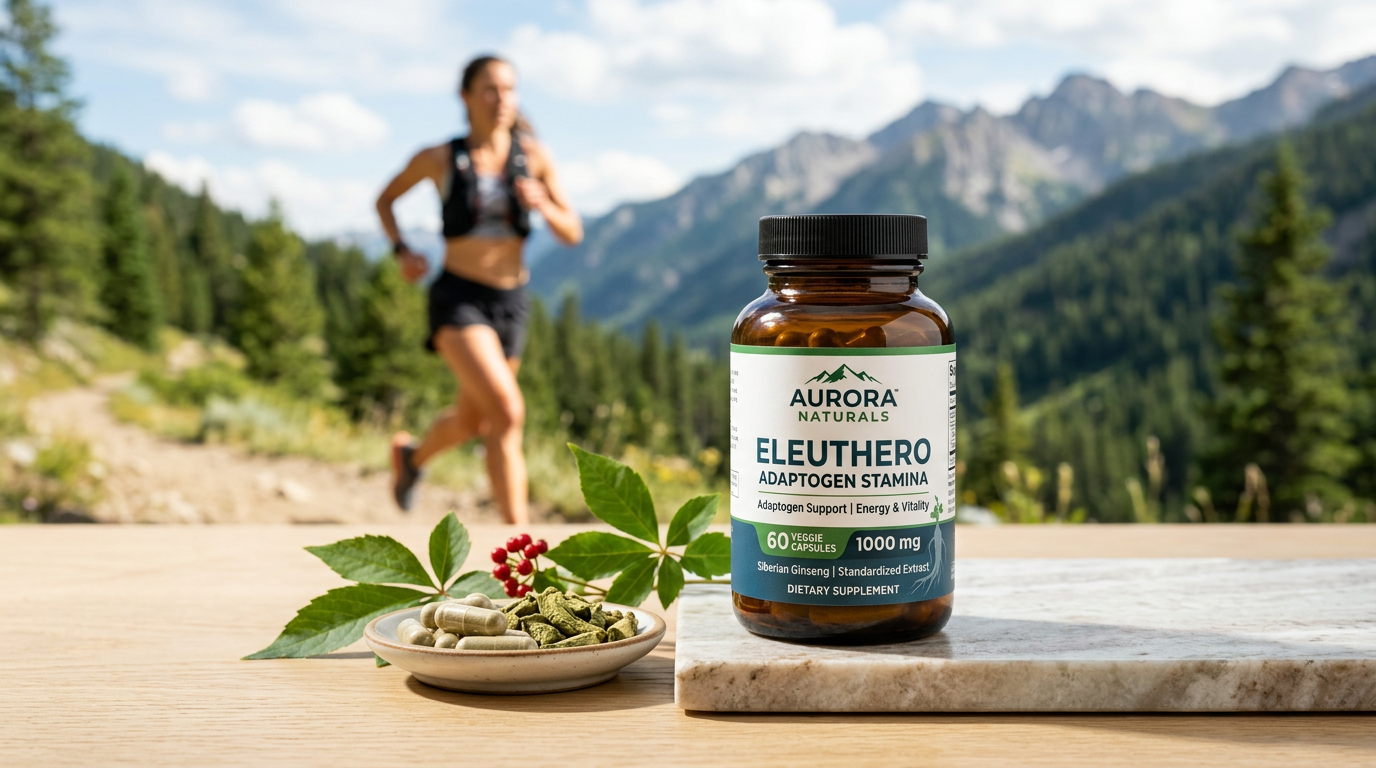
What Is Eleuthero?
Eleuthero (Eleutherococcus senticosus), also known as Siberian ginseng, is a woody shrub native to Northeast Asia. Its root and root bark have been used in traditional medicine for centuries to support energy, stamina, and resistance to stress. Unlike true ginseng (Panax ginseng), eleuthero contains different active compounds—eleutherosides and polysaccharides—but is often grouped with adaptogens: substances thought to help the body adapt to physical and mental stress. As a yoga and wellness coach, I find eleuthero is one of the best-studied adaptogens for sustained energy and endurance without the sharp stimulant effect of caffeine.
Evidence for Stamina and Performance
Human studies on eleuthero have focused on endurance, work capacity, and recovery. Some trials report improved exercise performance, reduced fatigue, or better recovery after intense exertion when eleuthero extract is taken for several weeks. Results are mixed: not every study shows benefit, and effect sizes are often modest. Factors that may influence outcomes include the extract used (standardised vs. non-standardised), dose, duration of use, and the type of stress or exercise. Soviet-era research suggested benefits for workers and athletes in demanding conditions; more recent Western trials are fewer and sometimes underpowered. Overall, eleuthero is promising for stamina and stress resilience but not a guaranteed performance booster—individual response varies.
Adaptogenic and Stress-Support Effects
Adaptogens are thought to modulate the stress response (e.g. HPA axis) rather than stimulate it directly. Eleuthero has been studied for its effects on fatigue, concentration, and well-being under stress. Some people report feeling more steady energy and better recovery when taking eleuthero consistently; others notice little change. Quality of the product (species, part of plant, extraction method) matters. Use eleuthero as part of a broader approach: sleep, nutrition, and stress management remain the foundation; adaptogens can support but not replace them.
Dosing and Timing
Typical doses in studies and traditional use range from about 300 mg to 1,200 mg of dry extract per day, often in two or three divided doses. Standardised extracts (e.g. to eleutherosides) allow more consistent dosing; follow the product label. Many practitioners suggest taking eleuthero in the morning or early afternoon to avoid any slight stimulating effect near bedtime, though it is generally less stimulating than caffeine. Build up over a few days if you are new to it; give it at least two to four weeks of consistent use before judging effect. Do not exceed recommended doses; more is not necessarily better and may increase the risk of side effects.
Forms and Quality
Eleuthero is available as capsules, tablets, liquid extracts (tinctures), and dried root for tea. Standardised extracts (e.g. 0.8% eleutherosides) provide predictable potency. Choose products from reputable brands that state the species (Eleutherococcus senticosus) and the part used (root). Avoid confusion with other "ginseng" products—Siberian ginseng is eleuthero, not Panax. Third-party testing (e.g. ConsumerLab, USP) when available adds assurance. You can compare quality options in the eleuthero category on iHerb.
Safety and Interactions
Eleuthero is generally well tolerated at recommended doses. Possible side effects include mild digestive upset, drowsiness in some people, or slight agitation in others. It may affect blood sugar and blood pressure; people with diabetes or hypertension should monitor levels and discuss use with a doctor. Because of possible stimulant-like effects, it is often advised to avoid eleuthero (or use with caution) with digoxin, sedatives, or other drugs that affect the heart or central nervous system—check with your pharmacist or doctor if you take prescription medicines. Pregnancy and breastfeeding: data are limited; many sources recommend avoiding eleuthero unless under professional guidance. Do not use in place of medical care for chronic fatigue, anxiety, or depression; see a healthcare provider for persistent symptoms.
Combining with Lifestyle and Other Supplements
Eleuthero works best as part of a healthy routine. Adequate sleep, balanced nutrition, and regular movement support stamina and recovery; adaptogens can add a layer of support during demanding periods. Some people combine eleuthero with other adaptogens (e.g. rhodiola, ashwagandha) on a rotating or low-dose schedule; evidence for combinations is limited, so introduce one at a time and monitor how you feel. Avoid stacking multiple stimulants or high-dose adaptogens without a clear plan.
Who Might Consider Eleuthero
Adults looking for non-caffeine support for stamina, endurance, or stress resilience may consider a well-characterised eleuthero product. It may be useful for athletes in heavy training, people in demanding jobs, or those recovering from periods of high stress—always in addition to rest, nutrition, and professional care when needed. It is not suitable for acute illness, severe fatigue of unknown cause, or as a substitute for diagnosis or treatment. If you have a medical condition or take medications, consult your doctor before starting eleuthero.
Takeaways
- Eleuthero (Siberian ginseng) is an adaptogen used for stamina, energy, and stress support; evidence is promising but mixed.
- Dosing: typical range 300–1,200 mg dry extract per day in divided doses; use standardised products and follow the label.
- Quality: choose Eleutherococcus senticosus root extract from reputable brands; avoid confusion with Panax ginseng.
- Safety: generally well tolerated; caution with diabetes, hypertension, and certain medications; avoid in pregnancy unless advised.
- Use as part of a healthy lifestyle; not a replacement for sleep, nutrition, or medical care.
Evidence and Practical Tips
Research in this area has grown; we summarize what is well supported and what remains uncertain. Quality matters: choose products from reputable brands with clear labeling and, when available, third-party testing. Start with the lowest effective dose and give any new supplement several weeks of consistent use before judging effect. Individual response varies with genetics, diet, sleep, and lifestyle. Supplements are not a substitute for a varied diet, adequate sleep, and regular activity. If you are pregnant, breastfeeding, or have a chronic condition, talk to your doctor before starting any new supplement. When in doubt, a short conversation with a doctor or dietitian can clarify whether a supplement is right for you. Compare quality options on iHerb.
Individual Response and Safety
Individual response to supplements varies. Some people notice benefits within a few weeks; others need longer or may not notice a clear effect. Genetics, diet, stress, and medication use all play a role. If you take multiple supplements, be aware of possible interactions and avoid exceeding upper limits for vitamins and minerals. Reading labels and staying within recommended doses is essential. When combining herbs or new ingredients, introduce one at a time so you can identify any adverse reactions. A balanced approach—sleep, nutrition, movement, and stress management—remains the foundation; supplements can support but not replace these habits.