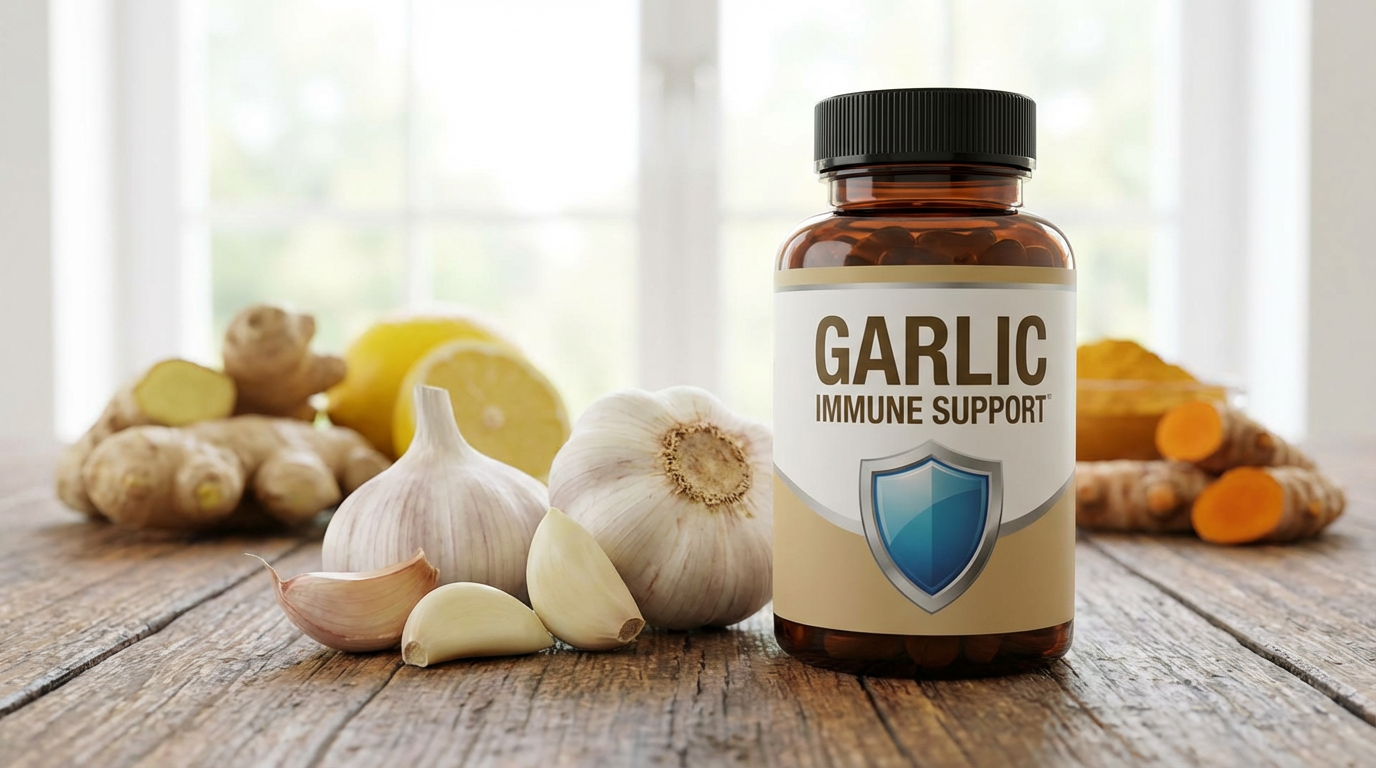
Garlic (Allium sativum) has been used for centuries in food and traditional medicine. Its sulfur compounds, especially allicin (formed when garlic is crushed or cut), are thought to support immune function and have antimicrobial properties. As a dietitian and health coach, I often get questions about whether garlic really helps the immune system, what form and dose to use, and how it fits with a healthy lifestyle. This guide covers what the evidence shows, the main forms (raw, aged extract, supplements), practical dosing, and safety so you can use garlic sensibly. For product options you can browse garlic supplements and immune support on iHerb.
What Is Garlic and How Might It Support Immunity?
Garlic contains organosulfur compounds; when raw garlic is chopped or crushed, the enzyme alliinase converts alliin into allicin, which is unstable and breaks down into other sulfur-containing molecules. These compounds have been studied for their effects on immune cells, inflammation, and certain bacteria and viruses in the lab; human data are more limited. Some trials suggest that garlic supplementation may reduce the frequency or duration of common colds, though results are not consistent and study quality varies. Garlic is not a substitute for vaccination, handwashing, or other evidence-based measures to prevent infection. It can be part of a balanced diet and, if you choose to supplement, used as a complementary support.
Forms of Garlic
Raw garlic: Crushing or chopping fresh cloves releases allicin. Cooking reduces allicin; if you want maximum allicin, use raw (e.g. in dressings or spread on bread), but be aware raw garlic can irritate the gut and cause breath odour. Aged garlic extract (AGE): Garlic is aged for months, which converts harsh compounds into more stable, odourless compounds (e.g. S-allyl cysteine). AGE is well studied for cardiovascular and immune endpoints and is often better tolerated. Garlic oil: Oil macerates may contain allicin-derived compounds; standardisation varies. Dried garlic (powder, tablets): May be standardised to allicin potential; check the label for “allicin yield” or equivalent. Choose a form that fits your tolerance and goals; for immune support, aged garlic extract has the most human data.
What the Evidence Shows
Meta-analyses and individual trials have looked at garlic for cold prevention and immune markers. Some find a modest reduction in cold frequency or duration with garlic supplements (e.g. aged garlic or allicin-standardised preparations); others find no significant effect. Differences may be due to formulation, dose, duration, and population. Immune markers (e.g. natural killer cell activity) have been studied in a few small trials with mixed results. Overall, evidence is promising but not strong enough to say garlic “prevents” colds; it may support resilience in some people when used consistently. Do not rely on garlic alone during flu season or instead of vaccines.
Dosage and Timing
Doses in studies vary. For aged garlic extract, common doses are 1–2 standardised tablets or capsules (often 300–600 mg AGE) once or twice daily. For allicin-standardised garlic powder, studies often use 180–900 mg per day (providing a few milligrams of allicin or allicin potential). Food use: 1–2 cloves per day is a typical culinary amount; more may cause digestive upset or odour. Consistency matters more than a single large dose; use daily during cold season if you choose to supplement. Take with food to reduce stomach irritation. Do not exceed the dose on the product label unless under professional guidance.
Safety and Side Effects
Garlic is generally well tolerated in food amounts and at standard supplement doses. Possible side effects include breath and body odour, digestive upset (heartburn, gas), and allergic reactions in people sensitive to Allium species. Garlic can thin the blood and may increase bleeding risk; if you take anticoagulants (e.g. warfarin), antiplatelet drugs (e.g. aspirin, clopidogrel), or have a bleeding disorder, use garlic supplements only with medical approval. Stop high-dose garlic before surgery as advised by your surgeon. Garlic may interact with some HIV and other medications; if you take prescription drugs, check with your doctor or pharmacist. Pregnancy and breastfeeding: food amounts are generally considered safe; high-dose supplements are not well studied—use with caution or avoid unless under professional care.
Garlic and Diet
Including garlic in meals adds flavour and potential health benefits without the cost of supplements. Roasted, sautéed, or raw (in moderation) garlic can be part of a Mediterranean-style or other balanced diet. If you prefer a standardised dose or do not like the taste or odour, aged garlic or other supplements are an option. Remember that no single food or supplement “boosts” immunity in a dramatic way; a varied diet, adequate sleep, stress management, and vaccination (where applicable) form the foundation.
Who Might Consider Garlic
Adults who want to add a traditional, generally safe option to their routine during cold season may consider garlic in food or supplement form. People on blood thinners or with bleeding disorders should get medical clearance before using garlic supplements. If you have a sensitive stomach or reflux, start with small amounts or choose aged garlic. Do not use garlic instead of prescribed treatment for infections or immune conditions.
Practical Tips
- Form: Aged garlic extract is well studied and odourless; allicin-standardised powder is another option.
- Dose: Follow the product label; typical AGE dose 300–600 mg once or twice daily.
- Timing: Use daily during cold season; take with food.
- Safety: Avoid or limit if on blood thinners; stop before surgery; discuss with your doctor if on other medications.
- Diet first: Use garlic in cooking; add supplements only if you want a standardised dose.
FAQ
Does garlic prevent colds?
Evidence is mixed. Some studies suggest a modest benefit in reducing frequency or duration; garlic is not a guaranteed prevention and does not replace hygiene or vaccination.
What is the best form of garlic for immune support?
Aged garlic extract has the most human research and is often better tolerated. Allicin-standardised products are also used in trials.
Can I take garlic with blood thinners?
Garlic can affect clotting. If you take anticoagulants or antiplatelet drugs, do not use garlic supplements without your doctor's approval.
Key Takeaways
- Garlic has traditional and some research support for immune and antimicrobial effects; human evidence is promising but inconsistent.
- Forms: raw (allicin, but odour and gut irritation), aged garlic extract (well studied, odourless), powder/tablets (check standardisation).
- Dose: follow label; typical AGE 300–600 mg once or twice daily; use consistently during cold season.
- Safety: generally well tolerated; caution with blood thinners, before surgery, and with certain medications.
- Use as part of a balanced diet and lifestyle; do not replace vaccination or medical care. Compare garlic and vitamin C or other immune supports on iHerb.