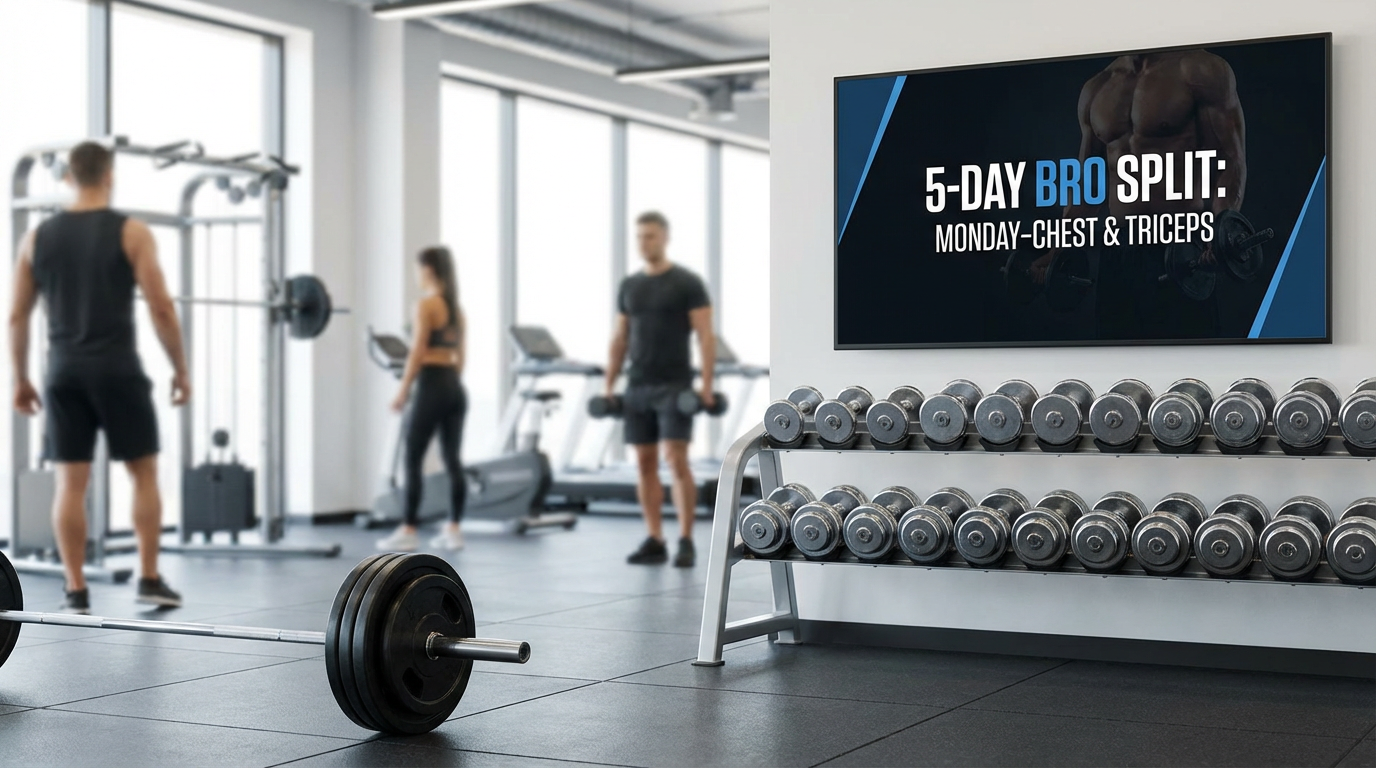
What Is a 5-Day Bro Split?
A 5-day bro split is a bodybuilding-style programme where you train one major muscle group per day across five sessions per week. Typical layouts are: chest, back, shoulders, arms (biceps and triceps together), legs; or chest, back, shoulders, legs, arms. Each muscle group is hit once per week with a high volume of sets and exercises for that day. The approach became popular in bodybuilding and gym culture because it allows long, focused sessions on each body part and plenty of rest between training the same muscle again. Understanding its structure, benefits, and limitations helps you decide if it fits your goals and recovery.
Who It Is For
This split suits lifters who can train five days per week, recover well, and want to prioritise muscle size and pump. It is often used by intermediate and advanced bodybuilders or enthusiasts who enjoy training one body part per day and have the time for longer sessions. Beginners often do better with full-body or upper/lower splits so they practise main lifts more frequently; once you have a solid base and can handle volume, a 5-day split can be an option. If recovery is limited (sleep, stress, or life demands), fewer days or lower volume per session may be smarter.
Structure of a Typical Week
Example order: Day 1 Chest, Day 2 Back, Day 3 Shoulders, Day 4 Legs, Day 5 Arms, then two rest days. Some people put legs in the middle of the week or alternate the order to fit recovery (e.g. legs after a rest day). Each session might last 45–75 minutes depending on exercises and rest. You typically do 4–8 exercises per day, with 3–4 sets each, in the 8–15 rep range for hypertrophy. Compound moves first (e.g. bench on chest day, rows on back day, squat or leg press on leg day), then isolation work to finish the muscle group.
Volume and Sets Per Muscle Group
Because each group is trained only once per week, you pack in more sets per session: often 12–20+ working sets for the target muscle in that day. For example, chest day might include bench press, incline press, flyes, and maybe dips or cable work—totalling 15–18 sets for chest. That can work if you recover well, but for many people 10–16 sets per muscle per session is enough; more is not always better and can lead to junk volume or overtraining. Track how you feel and how your strength and size respond; reduce sets if you are chronically fatigued or not recovering.
Exercise Selection and Order
Start with compound movements that allow the most load and coordination: bench and incline for chest, rows and pulldowns for back, overhead press and lateral raises for shoulders, squat and leg press for legs, and barbell or dumbbell curls and triceps work for arms. Then add isolation or machine work to target specific areas or get a pump. Rotate variations every few weeks (e.g. dumbbell bench instead of barbell, or front squat instead of back squat) to keep progress and avoid overuse. Warm up properly and do not skip the big lifts for the sake of more isolation.
Recovery and Rest Days
With one muscle group per day, you get about six full days before training the same group again (e.g. chest Monday, next chest next Monday). That can be enough for recovery if volume and intensity are managed. Use your two rest days for light activity, stretching, or complete rest; avoid turning them into extra heavy sessions. Sleep and nutrition are critical: aim for 7–9 hours of sleep and adequate protein (e.g. 1.6–2.2 g per kg) and calories to support growth and recovery. Supplements like protein and creatine can support goals but do not replace diet and sleep. Browse sports nutrition on iHerb for options.
Pros and Cons
Pros: focused, long sessions per body part; easy to remember (one theme per day); plenty of recovery between same muscle; can suit those who like variety and pump. Cons: each muscle is stimulated only once per week, which may be less than optimal for some lifters compared to twice-weekly frequency; if you miss a day, that body part gets no work that week; sessions can become very long if you add too much volume. Whether it is optimal depends on your recovery, goals, and preference; many people make good progress on a well-run 5-day bro split.
Common Mistakes
Doing too many sets per session leads to fatigue and diminishing returns; cap total working sets per muscle per day. Neglecting legs or back in favour of chest and arms creates imbalance and posture issues. Skipping compound lifts and only doing isolation reduces strength and overall development. Not deloading: after 4–6 weeks of hard training, take a light week (fewer sets or lower weight) so you can sustain progress. Finally, do not copy someone else's exact programme without adjusting for your recovery and experience level.
When to Consider a Different Split
If you cannot recover from five days, try a 4-day upper/lower or 3-day full-body. If you want to prioritise strength on the main lifts, a programme with more frequent practice of squat, bench, deadlift, and press (e.g. 5/3/1 or upper/lower) may be better. If you enjoy the bro split and are making progress, you can keep running it and periodise intensity and volume (e.g. a strength block with heavier loads and fewer reps, then a hypertrophy block with more sets and higher reps).
Summary
- A 5-day bro split trains one major muscle group per day across five sessions.
- Suits intermediate and advanced lifters who recover well and want high volume per body part.
- Structure each day with compounds first, then isolation; 10–20 sets per muscle per session is a common range.
- Prioritise recovery: two rest days, sleep, protein, and calories; use supplements to complement the basics.
- Avoid excess volume, imbalance, and skipping deloads; adjust the split if recovery or goals change.