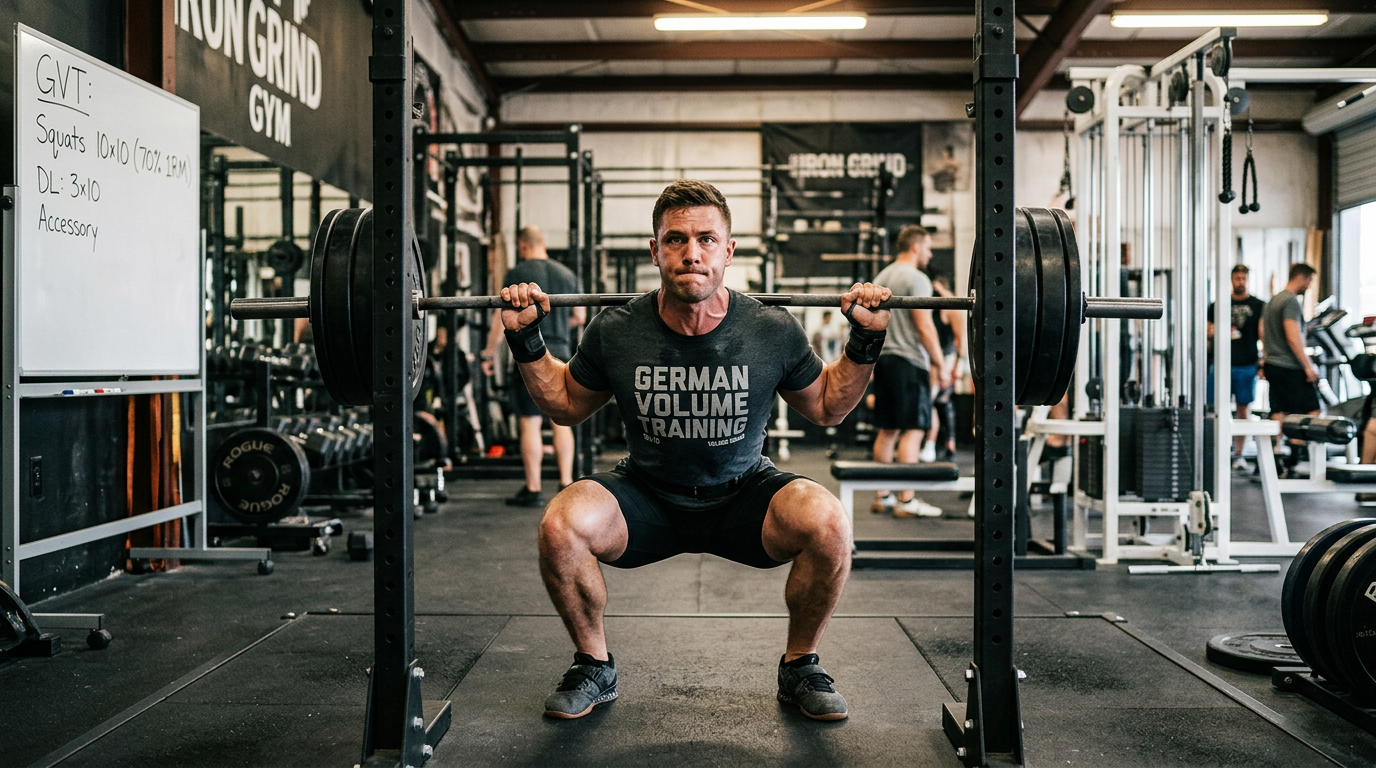
What Is German Volume Training?
German Volume Training (GVT) is a high-volume protocol: 10 sets of 10 reps on one or two exercises per muscle group, with short rest (60–90 seconds). It became popular in bodybuilding and strength circles for its simplicity and the belief that the sheer volume drives hypertrophy. Research on training volume suggests that higher set counts can increase muscle growth when recovery allows; GVT pushes that idea to an extreme. As a bodybuilding coach, I use GVT-style blocks with intermediate and advanced lifters who can recover from the load—not as a year-round programme but as a 4–6 week block. This guide covers how GVT works, how to programme it, recovery and nutrition, and when to use it. For training support see protein and sports nutrition on iHerb.
The Classic GVT Structure
Classic GVT: pick one compound exercise per muscle group (e.g. bench press for chest, back squat for quads, barbell row for back) and perform 10 sets of 10 reps with 60–90 seconds rest. Weight is moderate—you should be able to complete all 10 sets; if you fail before set 10, the weight is too heavy. Many programmes pair two exercises (e.g. bench and squat, or two opposing muscle groups) in a session and alternate them: set 1 of exercise A, rest, set 1 of exercise B, rest, set 2 of A, and so on. That spreads fatigue and keeps session length manageable. Rest periods are strict: 60–90 seconds. Going longer reduces the metabolic stress that is part of the protocol; going shorter may make completion impossible.
Who GVT Suits
GVT is demanding. It suits intermediate and advanced lifters who have a base of strength and technique and can recover from high volume. Beginners are better off with lower volume and progressive overload to build a foundation. If you have joint issues or are in a calorie deficit, GVT may be too much—consider a reduced version (e.g. 6×10 or 8×8) or a different block. Use GVT for 4–6 weeks, then switch to a lower-volume or strength-focused phase. Do not run it indefinitely; recovery and variety matter for long-term progress.
Exercise Selection
GVT is typically done with compound movements: squat, leg press, bench press, overhead press, barbell or dumbbell row, lat pulldown, deadlift or Romanian deadlift. Machines can work (leg press, chest press, cable row) and may be easier on joints when fatigue is high. Choose one main exercise per muscle group per day; adding a second exercise with 10×10 in the same session is possible but very taxing. Many lifters do one 10×10 exercise per session and fill the rest of the session with lighter assistance (2–3 sets each) or leave it at that. Quality of movement matters: as fatigue builds, form must stay safe—if it degrades, reduce weight or stop the set.
Weight and Progression
Start with a weight you can do for 10×10 with 1–2 reps in reserve on the first few sets; the last sets will be hard. If you cannot complete 10×10, lower the weight next session. Progression: when 10×10 is comfortable, add a small amount of weight (e.g. 2.5 kg) and repeat. Do not jump weight aggressively; GVT is already high fatigue. Tracking each set (reps completed) helps: aim to match or slightly beat the previous week. After 4–6 weeks, move to a different block (e.g. lower volume, higher intensity) and return to GVT later if desired.
Recovery and Nutrition
GVT creates a lot of fatigue. Recovery is non-negotiable: 7–9 hours sleep, adequate protein (e.g. 1.8–2.2 g per kg body weight), and enough total calories to support repair. Many lifters need to eat at maintenance or a slight surplus during a GVT block; a large deficit will make recovery difficult and may increase injury risk. Hydration and meal timing around training can help. Creatine and protein support recovery as part of a balanced diet; they do not replace sleep and calories. If you feel run down, miss sessions or lose sleep, consider shortening the GVT block or reducing to 6×10 or 8×8.
Frequency and Splits
Because each session is demanding, frequency is often 3–4 days per week. A common split: Day 1 chest/back (e.g. bench 10×10, row 10×10), Day 2 legs (squat or leg press 10×10), Day 3 rest or light activity, Day 4 arms/shoulders (e.g. press 10×10, curl 10×10), Day 5 rest. Another option is upper/lower: upper 10×10 bench and row, lower 10×10 squat and RDL, with 2–3 days between same muscle group. Do not train the same muscle group on consecutive days; recovery between sessions is critical.
Common Mistakes
Starting too heavy: you cannot complete 10×10 and the protocol loses its structure. Resting too long: rest must stay 60–90 s to maintain the stimulus. Running GVT for months: 4–6 weeks is enough; then switch. Ignoring recovery: poor sleep and low calories make GVT unsustainable and risky. Using GVT when already fatigued or in a cut: consider a lighter block first. Sacrificing form for reps: if the last sets become dangerous, reduce weight or stop.
When to Use GVT
Use GVT when you want a dedicated high-volume block for hypertrophy, have the recovery capacity (sleep, nutrition, no major stress), and are not in an aggressive cut. It can break plateaus and add variety after months of lower-volume training. Do not use it as a first programme; build a base with standard volume first. After a GVT block, take a deload week (reduce volume and load) before starting the next phase.
Summary
- GVT: 10 sets of 10 reps, 60–90 s rest, one or two exercises per session; moderate weight.
- Who: intermediate and advanced lifters with good recovery; run 4–6 weeks, then change block.
- Recovery: 7–9 h sleep, sufficient protein and calories; do not run GVT in a large deficit.
- Progression: add weight when 10×10 is complete; track sets and reduce weight if you miss reps.
- Supplements (protein, creatine) support recovery; they do not replace sleep and nutrition.
German Volume Training is a powerful tool for hypertrophy when used for a limited block and with attention to recovery. Use it wisely and follow with a deload and a different training phase.