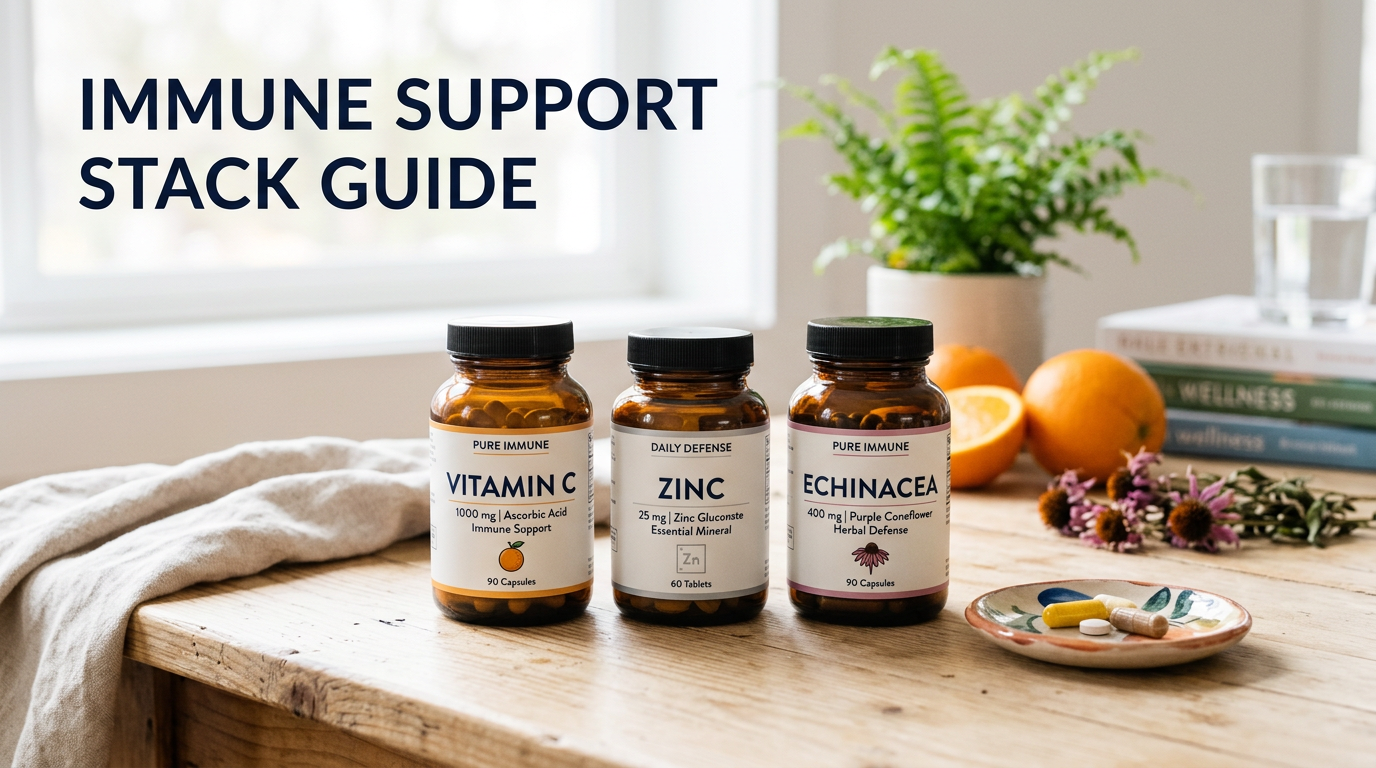
An immune support stack is a combination of supplements and habits used to support normal immune function. No stack replaces sleep, a balanced diet, or medical care when you are ill. This guide covers evidence-based options—vitamin D, zinc, vitamin C, and others—and how to use them sensibly. The goal is to fill real gaps in diet or lifestyle with targeted, evidence-based choices rather than to pile on unnecessary products.
What Is an Immune Support Stack?
Stacks can include vitamins, minerals, herbs, and probiotics, chosen for their role in immune regulation or resistance to infection. What matters is that each component has some support from research and that you use doses that match the evidence. More is not better: excess vitamin D, zinc, or other nutrients can cause harm. A sensible stack is built on a foundation of diet, sleep, stress management, and hygiene; supplements are added only where they add value.
Foundation: Diet and Lifestyle
Before adding supplements, ensure adequate energy intake, protein, and micronutrients from food. Sleep, stress management, and hygiene (e.g. hand washing) strongly influence immune outcomes. Supplements are supplementary; they can help when diet or sun exposure is insufficient but do not replace a healthy lifestyle. A diet rich in vegetables, fruits, lean protein, and wholegrains provides vitamins, minerals, and antioxidants that support immune function. Low energy availability or restrictive diets can weaken defences; address those first. Regular moderate activity supports immunity; very intense or prolonged exercise without recovery can temporarily increase susceptibility—balance is key.
Vitamin D
Vitamin D is involved in immune regulation. Many people have low or suboptimal levels, especially in winter or when spending little time outdoors. Typical supplemental doses range from 1,000 to 2,000 IU daily for maintenance; higher doses may be used short-term if deficient, under medical guidance. Vitamin D on iHerb is available in various strengths. Do not exceed upper limits without a doctor's advice. Blood testing can clarify your status; if you are deficient, your doctor may recommend a short-term loading dose before maintenance. Vitamin D3 (cholecalciferol) is the form most commonly used in supplements and is well absorbed when taken with a meal containing fat.
Zinc
Zinc supports immune function and wound healing. Dietary sources include meat, shellfish, legumes, and seeds. Supplementation (e.g. 15–30 mg elemental zinc) is sometimes used short-term during illness; long-term high doses can cause copper deficiency and should be avoided unless prescribed. Use forms that are well absorbed (e.g. zinc citrate, gluconate) and take with food to reduce stomach upset. Zinc lozenges are sometimes used at the first sign of a cold; evidence is mixed but some studies suggest a modest shortening of duration when used as directed. Do not use high-dose zinc indefinitely; it can interfere with copper absorption and cause other imbalances.
Vitamin C
Vitamin C is essential for immune function; deficiency increases infection risk. Most people get enough from diet (citrus, peppers, broccoli). Supplemental vitamin C (e.g. 500–1,000 mg daily) is often used during stress or illness; evidence for preventing colds in the general population is mixed. Vitamin C on iHerb is widely available. High doses can cause digestive upset; stay within recommended limits. Mega-doses (several grams per day) have not been shown to prevent colds reliably and can cause diarrhoea or kidney stones in susceptible people. A balanced intake from food plus a modest supplement when needed is a reasonable approach.
Other Options: Elderberry, Echinacea
Elderberry and echinacea are sometimes used for immune support. Some studies suggest elderberry may shorten cold duration when taken at onset; evidence is not conclusive. Echinacea results are mixed. If you try them, choose standardised products and use as directed. They are not a substitute for vaccination or medical treatment. Other herbs (astragalus, andrographis) appear in immune formulas; evidence is limited and quality varies. Always check for drug interactions and use one new supplement at a time so you can assess tolerance.
Probiotics and Gut-Immune Link
The gut and immune system are closely linked. Some probiotic strains may reduce the incidence or duration of upper respiratory infections in certain populations; results depend on strain and study. If you add a probiotic, choose a product with studied strains (e.g. Lactobacillus, Bifidobacterium) and use it consistently for at least 4–8 weeks. Probiotics on iHerb offer a range of options. Probiotics do not replace a fibre-rich diet or medical treatment for infection. People with serious immune compromise should use probiotics only under medical guidance.
How to Build Your Stack
Start with the foundation: diet, sleep, stress, hygiene. Then identify gaps. If you have low sun exposure or tested low for vitamin D, add vitamin D at a maintenance dose. If you often get colds and want to try zinc at onset, use a studied dose (e.g. 15–30 mg elemental) for a short period. Add one supplement at a time and give it several weeks before adding another; that way you can tell what helps and what causes side effects. Do not stack many new products at once. Keep a simple log of what you take and how you feel; it helps when reviewing with a healthcare provider.
Dosing Summary
- Vitamin D: 1,000–2,000 IU daily for maintenance when replete; higher only if deficient and under guidance.
- Zinc: 15–30 mg elemental short-term at cold onset; avoid long-term high dose.
- Vitamin C: 200–500 mg daily if supplementing; more is not proven better.
- Probiotics: As per product label for studied strains; use consistently 4–8+ weeks.
- Elderberry / echinacea: Per product directions; standardised extracts preferred.
Safety and Interactions
More is not better. Exceeding upper limits for vitamin D or zinc can cause toxicity or deficiency of other nutrients (e.g. copper with high zinc). If you take medications—especially immunosuppressants, blood thinners, or drugs that affect absorption—check with your doctor or pharmacist before adding supplements. Pregnancy, breastfeeding, and certain health conditions require extra caution; when in doubt, get professional advice. Store supplements in a cool, dry place and check expiry dates. Quality varies by brand; choose reputable sources. Vitamins and probiotics on iHerb can be compared to find formulations that suit your needs.
When to See a Doctor
Do not rely on a stack alone if you have recurrent infections, prolonged fatigue, fever, or symptoms that do not improve. A doctor can rule out underlying conditions (e.g. anaemia, thyroid issues, immunodeficiency) and recommend tests (e.g. vitamin D, B12, iron) if needed. Vaccination remains important for flu and other preventable infections. If you have an autoimmune condition or take immunosuppressants, any supplement stack should be discussed with your healthcare provider. Supplements support; they do not replace diagnosis or treatment.
FAQ
Can I take vitamin D and zinc together?
Yes. They support different aspects of immune function. Take zinc with food; vitamin D is better absorbed with a fat-containing meal.
How long before I see an effect from a probiotic?
Many trials run 4–8 weeks or longer. Give a studied strain at least 4–8 weeks of consistent use before judging effect.
Do I need a multivitamin for immune support?
Not necessarily. If your diet is varied and you are not deficient, targeted supplements (e.g. vitamin D only) may be enough. A multivitamin can help if intake is consistently low in several nutrients; avoid megadose formulations.
What if I still get sick often?
See a doctor to rule out underlying causes. Then review sleep, stress, diet, and hygiene; optimise those before adding more supplements.
Can I combine vitamin D, zinc, and vitamin C in one stack?
Yes, in sensible doses. Many people take vitamin D daily (e.g. 1,000–2,000 IU), and add zinc only short-term at cold onset (15–30 mg elemental). Vitamin C at 200–500 mg daily is often combined with vitamin D. Just ensure you do not exceed upper limits for any nutrient and that you are not getting large doses of the same thing from a multivitamin and a single-nutrient supplement. If in doubt, list everything you take and ask your doctor or pharmacist to check.
Tracking and Revisiting Your Stack
Keep a simple list of what you take, the dose, and when you started. Note any changes in how you feel (e.g. fewer colds, better energy) or any side effects. This makes it easier to decide what to keep, drop, or adjust when you review with a healthcare provider or at the change of season. Do not assume that more supplements are better; often one or two well-chosen products plus a solid foundation of diet and lifestyle yield the best result. Revisit your stack every few months or when your situation changes significantly.
Product Quality and What to Look For
Supplements are not all equal. Look for products that state the form and dose of the active ingredient (e.g. vitamin D3, elemental zinc per serving). For probiotics, choose brands that list the strain (e.g. Lactobacillus rhamnosus GG) and colony-forming units (CFU); studied strains are more likely to have evidence behind them. Third-party testing (e.g. for purity and label accuracy) is a plus. Avoid products that make dramatic or unproven claims. Store bottles in a cool, dry place and use before the expiry date. If you take multiple products, check that you are not doubling up on the same nutrient from different supplements and exceeding safe upper limits.
Seasonal and Lifestyle Adjustments
Your needs may change with the season or with life events. In winter, or if you work indoors and get little sun, vitamin D is often a priority. During high-stress periods or after travel, sleep and recovery matter as much as any supplement. If you start a new job, move, or change your diet significantly, reassess your stack after a few weeks. There is no single stack that fits everyone year-round; flexibility and periodic review help you avoid taking things you no longer need and add what you do.
Red Flags: When Not to Rely on a Stack
Do not use a supplement stack instead of seeing a doctor if you have unexplained fatigue, recurrent infections, fever that does not resolve, weight loss, or other concerning symptoms. Immune support stacks are for general wellness and filling dietary or lifestyle gaps; they are not a substitute for diagnosis or treatment of illness. If you have an autoimmune condition, cancer, or are on immunosuppressive therapy, your doctor or specialist should guide any supplement use. Similarly, if you are planning surgery or have bleeding or kidney issues, certain supplements (e.g. high-dose vitamin E, some herbs) may need to be adjusted or avoided. When in doubt, ask. Immune support supplements are for general wellness and filling gaps; they do not treat infection, autoimmune disease, or immunodeficiency. If you are on prescription medication, especially immunosuppressants or drugs that affect blood clotting or absorption, always check with your doctor before adding new supplements. Children, pregnant or breastfeeding women, and people with chronic conditions should get individualised advice before starting or changing a stack.
Summary
- Base: diet, sleep, stress management, and hygiene.
- Vitamin D and zinc are commonly lacking; supplement when status is low or intake insufficient.
- Vitamin C may support during stress or illness; avoid megadoses.
- Discuss any stack with a healthcare provider, especially if you have conditions or take medications.
- Add one supplement at a time; give it several weeks before adding another.
- Revisit your stack periodically; needs change with season, diet, and lifestyle.
An immune support stack works best when it fills real gaps and is used in line with evidence and professional advice. Start with the foundation, identify your gaps, and choose a few evidence-based supplements at sensible doses. Track what you take and how you feel, and revisit your stack periodically with your healthcare provider. Quality and consistency matter more than the number of products in your stack. There is no single best stack for everyone; your age, diet, sun exposure, health status, and goals all influence what, if anything, to add. When you keep the foundation strong and add only what you need, an immune support stack can be a useful part of your overall approach to staying well. Revisit it every few months and adjust as your life and diet change.