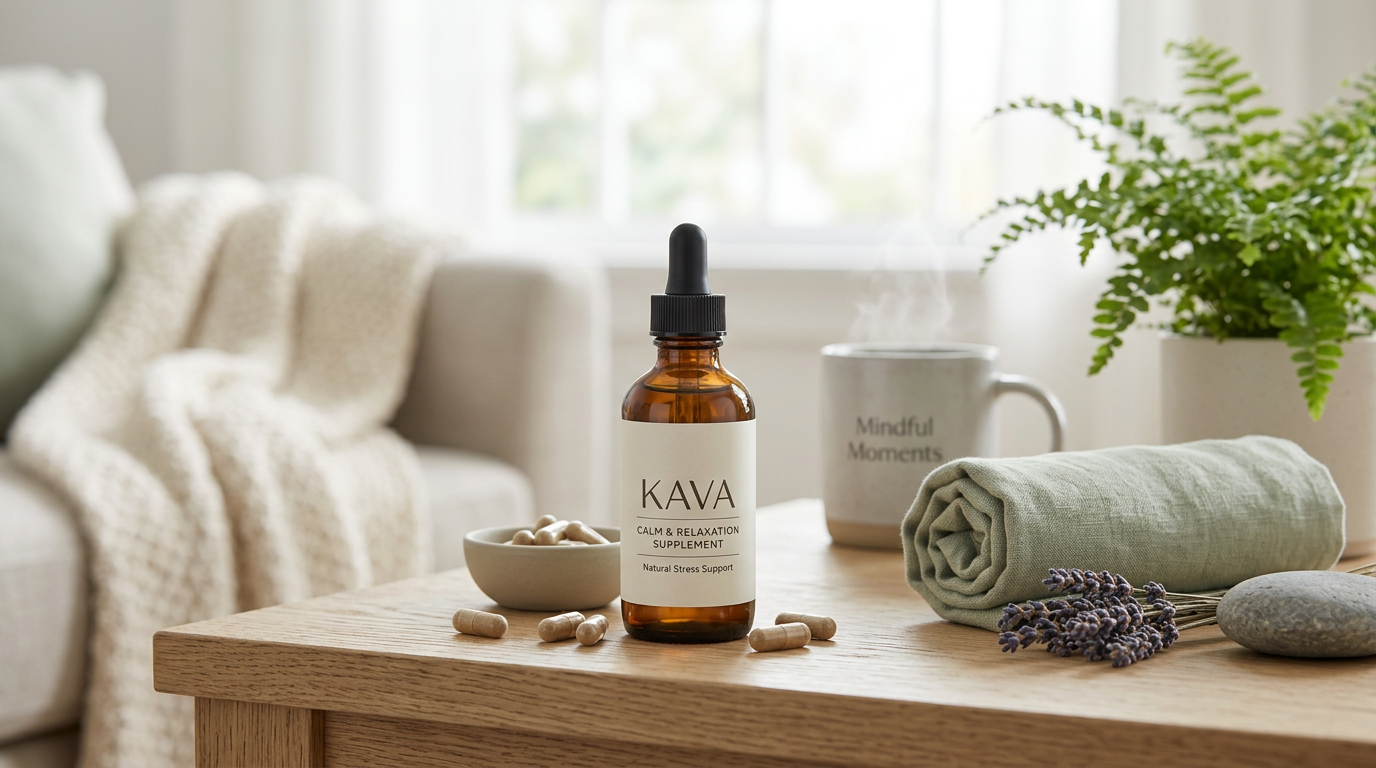
Kava (Piper methysticum) is a traditional Pacific Islander root preparation long used for relaxation, social bonding, and easing anxiety. In recent decades it has gained attention in the West as a natural option for stress relief and mild anxiety. This guide covers what kava is, what the evidence says, how to dose and time it safely, important safety and liver considerations, who should avoid it, potential interactions, and practical takeaways. For product options you can browse kava and stress relief formulas on iHerb.
What is kava?
Kava is made from the roots of Piper methysticum, a shrub native to the Pacific Islands. The name "kava" is from the Polynesian and Melanesian languages and refers both to the plant and the beverage. Cultivation and use span Fiji, Vanuatu, Samoa, Tonga, Hawaii, and other Pacific regions, where it has been part of social and ceremonial life for centuries. When prepared traditionally, the root is chewed, ground, or pounded and then steeped or kneaded in cold water; the liquid is then strained and consumed. Modern supplements typically provide standardized extracts so users can know how much kavalactone they are getting per dose. The six major kavalactones (e.g. kavain, dihydrokavain, yangonin) are thought to contribute to the overall effect, though the exact mechanisms are still under study. Kava is not a stimulant and is not the same as coffee or tea; its effects are generally calming rather than energizing. Traditional preparation involves grinding or pounding the root and extracting it in water; the resulting beverage is used in ceremonies and social gatherings. The active compounds are kavalactones (kavapyrones), a group of lipid-soluble molecules that are thought to support relaxation and mood without the same sedating or cognitively impairing effects as alcohol. Commercial products include dried root for traditional preparation, water-based extracts (often standardized to kavalactone content), and in some markets ethanol-based extracts. Quality and composition vary widely; choosing water-based or ethanol-based extracts from reputable sources and avoiding acetone or other non-traditional solvents is important for safety, as discussed below. Kava is not the same as kava kava in some older literature; both terms usually refer to Piper methysticum. The plant has a long history of use, but modern use in supplement form requires attention to dose, product type, and individual health factors.
Evidence for stress and relaxation
Clinical research on kava has focused mainly on anxiety. Early systematic reviews suggested benefit for generalized anxiety disorder (GAD); later work has been more mixed, with some trials showing significant improvement in anxiety scores and others finding no clear difference versus placebo. Duration of trials has varied from a few weeks to several months. Participant numbers in individual trials are often modest, so meta-analyses help pool evidence. Overall, the weight of evidence supports that standardized kava extracts can reduce anxiety symptoms in some adults when used at typical doses; the magnitude of benefit is generally moderate rather than large. For general "stress" rather than diagnosed anxiety, direct trial data are scarcer; many people report subjective relaxation and improved sleep quality, but these outcomes are harder to measure in standardized ways. Anecdotal reports and traditional use support a role for kava in promoting calm and sociability; combining this with the clinical anxiety data gives a reasonable basis for trying kava for stress and mild anxiety, with appropriate product choice and dosing. Several randomized controlled trials and meta-analyses suggest that kava extracts can reduce symptoms of generalized anxiety when compared with placebo, with effect sizes that are modest but meaningful for some people. Results are not uniform across all trials; some show clear benefit, others show minimal or no difference. Factors such as extract type, kavalactone dose, duration of use, and population studied may explain some of the variation. Evidence specifically for "stress" (a broader concept than diagnosed anxiety) is less standardized; many people use kava for general relaxation and situational stress, and the anxiety literature is often cited in that context. Kava does not appear to cause the same dependency or withdrawal issues as benzodiazepines, which is one reason it interests people seeking alternatives. Overall, kava is a plausible option for mild to moderate anxiety and relaxation support when used with appropriate dosing and product choice; it is not a replacement for professional care in severe or persistent anxiety or depression.
Dosing: 50–250 mg kavalactones
Dosing is typically expressed in terms of kavalactones (total kavapyrones), not raw root weight. A common range supported by studies and guidelines is about 50–250 mg kavalactones per day, often split into one or two doses. Some trials use the higher end of this range (e.g. 150–250 mg/day) for anxiety; lower amounts may be used for mild relaxation. Start at the lower end (e.g. 50–70 mg kavalactones) and only increase if needed and well tolerated. Do not exceed recommended product doses or the upper end of the evidence-based range without professional guidance. Raw root equivalents are harder to compare across products; stick to labeled kavalactone content when possible. "Standardized" extracts usually state total kavalactones per serving—use that to stay within the 50–250 mg daily range. More is not better; higher doses have been associated with greater risk of side effects and liver concerns in some reports. If you use kava, keep a consistent daily dose within this range rather than occasionally taking very high amounts.
Timing
Many people take kava in the evening or an hour or two before situations where they want to feel calmer. It can cause mild drowsiness in some users, so taking it before driving or operating machinery is not recommended until you know how you respond. Splitting the dose (e.g. half in the afternoon and half in the evening) is an option if a single dose feels too strong or if you want more even coverage. There is no strong evidence that a specific time of day is required for efficacy; choose a time that fits your schedule and avoids interference with activities that need full alertness. Consistency from day to day may matter more than the exact clock time. Do not combine kava with alcohol or sedating medications; timing should also account for other substances that affect the central nervous system.
Safety and liver: use only water or ethanol extracts
Liver safety is the most serious concern with kava. Cases of serious liver injury (including hepatitis and liver failure) have been reported, mainly in association with certain extract types and possibly with very high or long-term use. Regulatory actions in some countries have focused on non-traditional extracts (e.g. acetone or other organic solvents). Current guidance from health authorities and expert reviews generally emphasizes using only water-based or ethanol-based kava extracts, at recommended doses, and for limited duration. Avoid products that use acetone or other non-water, non-ethanol solvents. Do not use kava with alcohol; alcohol increases liver load and may add to risk. If you have existing liver disease, elevated liver enzymes, or take medications that affect the liver, avoid kava unless a doctor has explicitly approved it. Some guidelines suggest periodic liver enzyme checks if you use kava regularly; discuss with your doctor. Discontinue kava and seek medical attention if you develop symptoms such as unusual fatigue, dark urine, yellowing of skin or eyes, or loss of appetite. The majority of traditional kava use in the Pacific has been with water extraction and has not shown the same pattern of severe liver toxicity as some commercial extract products; hence the strong recommendation to use only water or ethanol extracts and to avoid unknown or non-standard preparations.
Who should avoid kava
Do not use kava if you are pregnant or breastfeeding; safety data are insufficient. Avoid kava if you have known liver disease or elevated liver enzymes, or if you take drugs that are hepatotoxic or heavily metabolized by the liver. People with Parkinson's disease or other conditions affected by dopamine should avoid kava unless a specialist approves it, as kavalactones may affect dopaminergic pathways. Do not use kava before driving or activities requiring full alertness until you know your response. Avoid kava if you are allergic to it or to plants in the Piperaceae family. Children and adolescents should not use kava unless under specialist care. If you have a history of depression or mood disorders, use kava only with medical guidance, as it is not a treatment for depression and may interact with mood. Anyone taking prescription or over-the-counter medications, especially sedatives, anxiolytics, or liver-metabolized drugs, should check for interactions and get a doctor's approval before starting kava.
Interactions
Kava may enhance the effects of central nervous system depressants, including alcohol, benzodiazepines, barbiturates, and other sedatives or anxiolytics; combining these can increase drowsiness and risk. Do not use kava with alcohol. Kava can affect liver enzymes (e.g. CYP450) and may alter the metabolism of drugs that depend on these pathways; if you take any prescription or regular over-the-counter medicines, ask your doctor or pharmacist about potential interactions. Kava may have additive effects with other relaxants or sleep aids. If you are scheduled for surgery, inform your clinician that you use kava; it may need to be stopped ahead of time. Always disclose kava use to your healthcare providers so they can consider it in the context of your full medication and health picture.
FAQ
Is kava safe for daily use?
When used at evidence-based doses (50–250 mg kavalactones/day), with water or ethanol extracts only, and in people without liver or other contraindications, short-term use is often considered acceptable. Long-term daily use is less well studied; many guidelines suggest limited duration and periodic review with a doctor, including liver checks.
Can I drink alcohol with kava?
No. Do not combine kava with alcohol. Alcohol increases liver load and may increase the risk of liver injury when used with kava.
How long until I feel effects?
Effects may be noticed within about 30–60 minutes to a few hours depending on product and dose. Do not increase dose to speed up effects; stay within the recommended range.
Does kava cause dependency?
Kava has not been shown to cause the same dependency or withdrawal as benzodiazepines. Still, use it at recommended doses and for limited periods unless your doctor advises otherwise.
What if I have anxiety and take prescription medication?
Do not replace or add kava to prescription anxiety or mood medication without your doctor's approval. Kava can interact with these drugs; a clinician can help you decide if kava is appropriate and how to use it safely.
Key takeaways
- Kava (Piper methysticum) is used for relaxation and mild anxiety; evidence supports modest benefits in some trials.
- Dose in the range of 50–250 mg kavalactones per day; start low and do not exceed the upper end without professional guidance.
- Use only water-based or ethanol-based extracts; avoid acetone or other non-traditional solvent extracts.
- Do not use kava with alcohol; avoid it if you have liver disease or take hepatotoxic or sedating medications.
- Who should avoid: pregnancy, breastfeeding, liver disease, Parkinson's, and use before driving or high-risk activities until you know your response.
- Check interactions with prescription and OTC drugs; disclose kava use to your healthcare providers.
Quality control and product selection matter. Look for brands that specify total kavalactones per serving and state that the extract is water-based or ethanol-based. Avoid products that do not list kavalactone content or that use unspecified "kava extract" without extraction method. Consumer reviews and third-party testing (e.g. NSF, USP) can help identify reliable products. Store kava in a cool, dry place and use before the expiration date. If you experience any digestive upset, skin reactions (e.g. temporary dry or flaky skin with heavy use in some reports), or changes in mood or alertness, consider lowering the dose or stopping and consulting a healthcare provider. Kava can be a useful option for stress and relaxation when used responsibly: choose water or ethanol extracts, stay within 50–250 mg kavalactones per day, avoid alcohol and contraindicated conditions, and do not use it as a substitute for professional care when anxiety or stress are severe or persistent. Quality matters—choose products from reputable brands that clearly state kavalactone content and extraction method. Track how you feel and any side effects; if you notice anything unusual, especially related to liver (fatigue, dark urine, jaundice), stop and see a doctor. Many people find that combining kava with good sleep, stress management, and exercise supports overall well-being better than supplements alone. If you are considering kava for the first time, start with a low dose and give it a few days to assess tolerance before increasing. Keep use to the minimum effective dose and limited duration unless your doctor recommends otherwise. Finally, remember that kava is one tool among many; lifestyle, therapy, and medical treatment remain the foundation for serious or chronic anxiety or stress. Use this guide as a starting point and always personalize your choices with your healthcare provider. For a wide selection of kava and stress-support products you can compare kava and stress relief formulas on iHerb.