What This Program Is
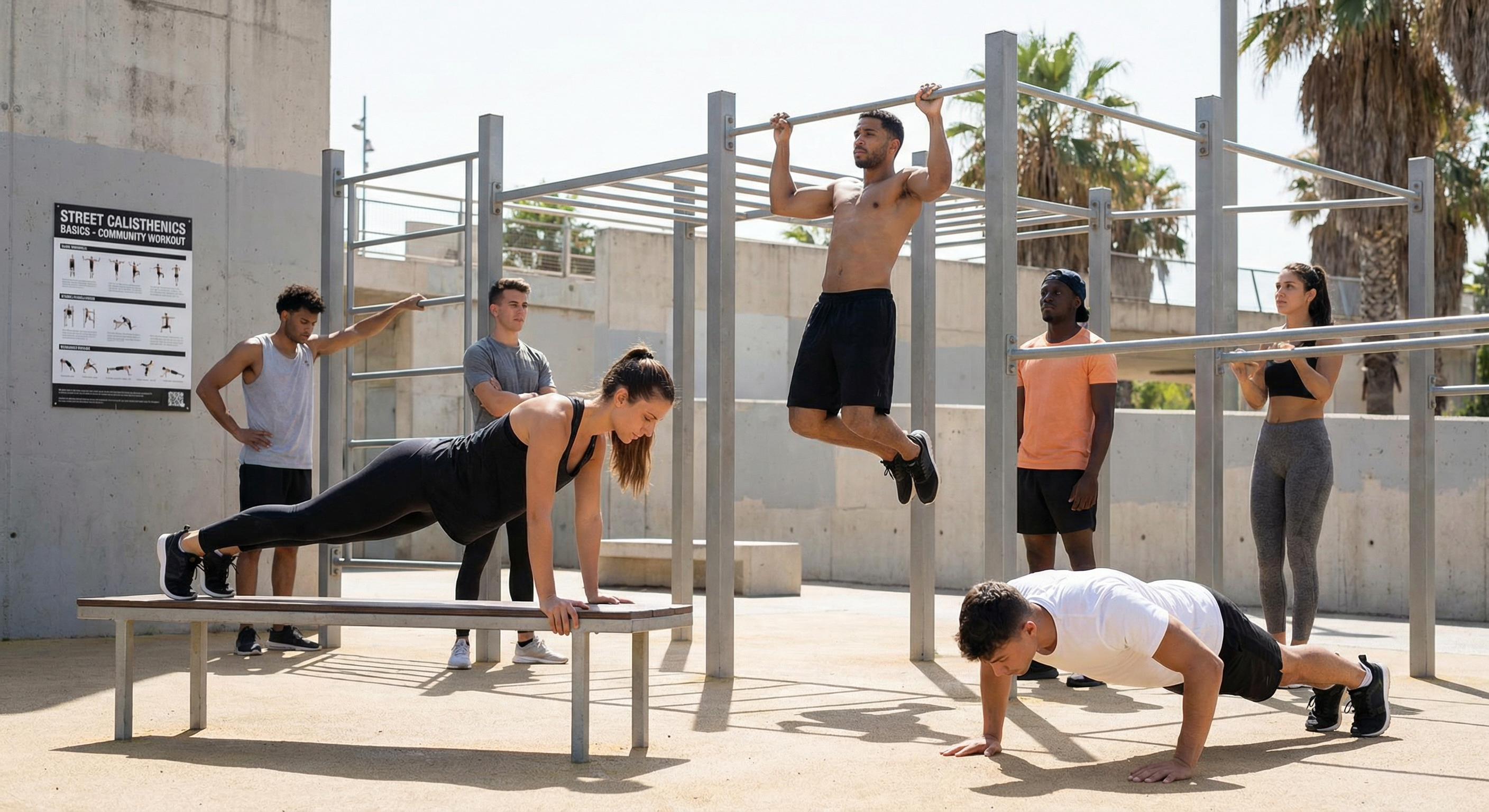
Street calisthenics basics is a four-week programme for building strength with bodyweight exercises outdoors or in any space with minimal equipment. You will train three times per week, focusing on push-ups, squats, and progressions toward pull-ups and dips. The programme is suitable for beginners who can do at least a few push-ups and bodyweight squats; you will progress by adding reps, improving form, or using harder variations over time.
Why Calisthenics
Calisthenics use your body as the main load. You need little or no equipment, so you can train in a park, at home, or on the road. Push-ups, squats, pull-ups, and dips build real-world strength and translate well to daily life and other sports. Progressions (e.g. incline push-ups to full push-ups, or band-assisted pull-ups to full pull-ups) let you adapt the programme to your current level and advance steadily.
Weeks 1–2: Basics
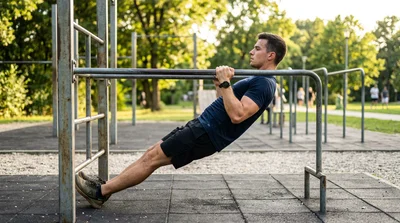
In the first two weeks, establish the movement patterns. For pushing: start with push-ups (on knees or against a wall/bench if needed) or incline push-ups; aim for 2–3 sets of 8–15 reps with good form — chest nearly touching the floor at the bottom, full lockout at the top. For legs: bodyweight squats, 2–3 sets of 10–15 reps; go as deep as comfort and mobility allow. For pulling: if you have a bar or rings, use a band for assisted pull-ups or do horizontal rows (e.g. under a table or low bar); 2–3 sets of 6–12 reps. Add a short core circuit (e.g. planks, dead bugs) if you have time. Rest at least one day between sessions.
Weeks 3–4: Progressions
In weeks three and four, progress by increasing difficulty or volume. For push-ups: move to full push-ups from the floor if you have not already, or add reps; you can try diamond or close-hand push-ups for variety. For squats: add reps, add a pause at the bottom, or try single-leg progressions (e.g. assisted pistol or split squats). For pulling: reduce band assistance on pull-ups or increase rows; if you have no bar, continue with rows and add isometric holds (e.g. top of pull-up position with a band). Introduce dips if you have parallel bars or a sturdy surface — start with support holds or negative dips if full dips are too hard. Keep three sessions per week and at least one rest day between.
Warm-Up and Cool-Down
Warm up with 5–10 minutes of light movement: arm circles, leg swings, cat-cow, and a few reps of each exercise with no or light load. Cool down with stretching for the chest, shoulders, legs, and back; hold stretches for 20–30 seconds and breathe steadily. This reduces stiffness and supports recovery.
Recovery and Consistency
Recovery is part of the programme. Sleep well, eat enough to support your activity, and do not add heavy extra training on rest days until you are used to the volume. If you feel joint pain or excessive fatigue, reduce volume or regress a progression and build back up. Consistency over four weeks matters more than maxing out every session.
Summary
- Weeks 1–2: Push-ups, squats, and rows (or assisted pull-ups); 2–3 sets per exercise, 3 days per week.
- Weeks 3–4: Progress by adding reps, harder variations, or introducing dips and pull-up progressions.
- Equipment: Minimal — bar or rings for pulling, optional bands; parallel bars or sturdy surface for dips.
- Recovery: Rest between sessions; warm up and cool down every time.
Street calisthenics basics gives you a clear four-week path to building strength with push-ups, squats, and progressions toward pull-ups and dips, with minimal equipment and maximum flexibility in where you train.
Evidence and Practical Tips
Research in this area has grown; we summarize what is well supported and what remains uncertain. Quality matters: choose products from reputable brands. Start with the lowest effective dose and give any new supplement at least four to six weeks of consistent use before judging effect. Supplements are not a substitute for a varied diet, adequate sleep, and regular physical activity. When in doubt, consult a doctor or dietitian. Store supplements in a cool, dry place away from direct sunlight. Individual response varies; consistency and patience often matter more than quick fixes.
Evidence and Practical Tips
Research in this area has grown; we summarize what is well supported and what remains uncertain. Quality matters: choose products from reputable brands. Start with the lowest effective dose and give any new supplement at least four to six weeks of consistent use before judging effect. Supplements are not a substitute for a varied diet, adequate sleep, and regular physical activity. When in doubt, consult a doctor or dietitian. Store supplements in a cool, dry place away from direct sunlight. Individual response varies; consistency and patience often matter more than quick fixes.
Evidence and Practical Tips
Research in this area has grown; we summarize what is well supported and what remains uncertain. Quality matters: choose products from reputable brands. Start with the lowest effective dose and give any new supplement at least four to six weeks of consistent use before judging effect. Supplements are not a substitute for a varied diet, adequate sleep, and regular physical activity. When in doubt, consult a doctor or dietitian. Store supplements in a cool, dry place away from direct sunlight. Individual response varies; consistency and patience often matter more than quick fixes.
Compare quality supplements at Compare options on iHerb.