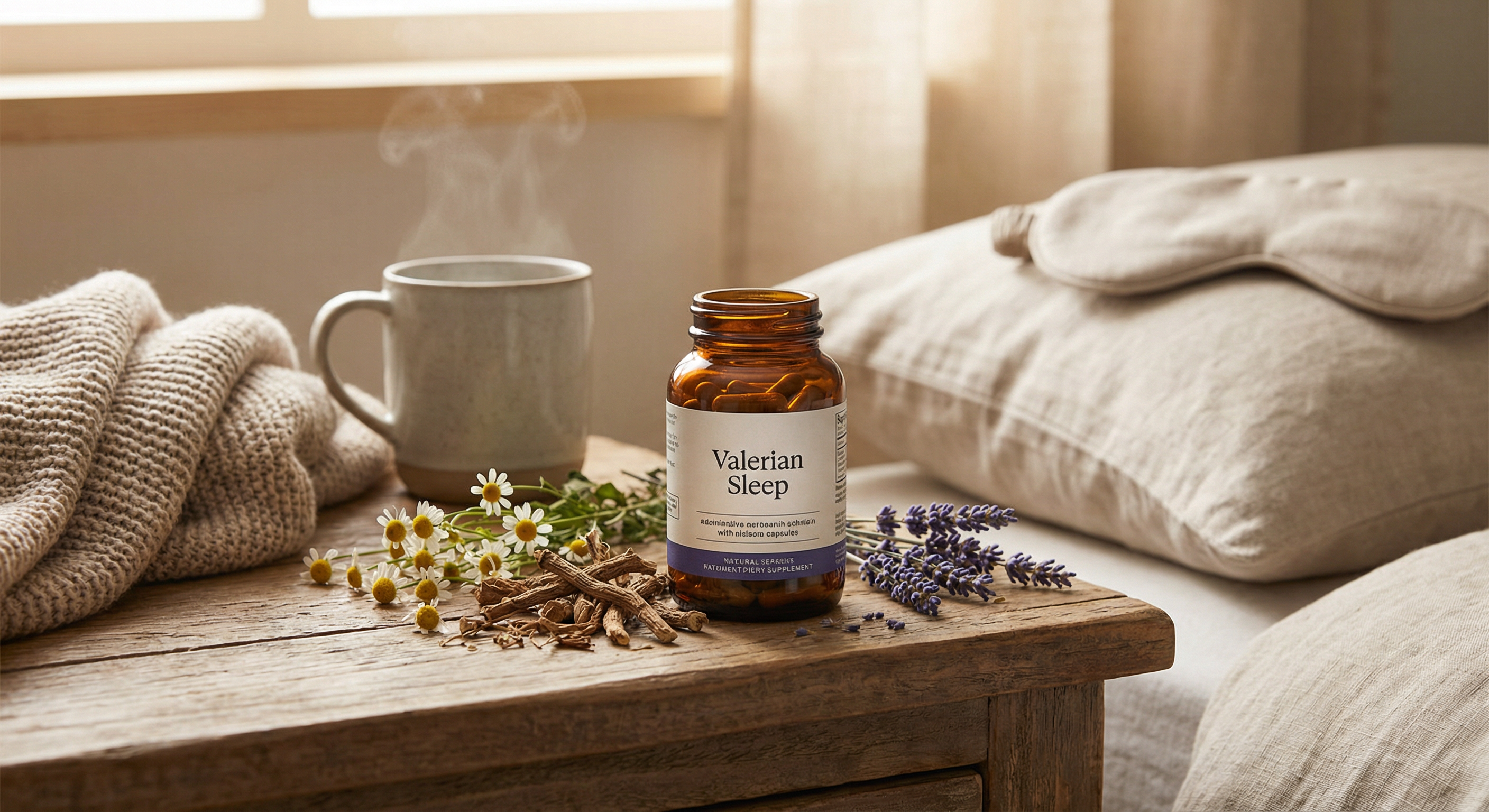
What Is Valerian?
Valerian (Valeriana officinalis) is a perennial plant whose root has been used for centuries to support sleep and relaxation. Its active constituents include valerenic acid, valepotriates, and other compounds that may interact with GABA and other pathways involved in calming the nervous system. As an herbalist or integrative health practitioner, I note that valerian is one of the most commonly used herbs for insomnia and restlessness, though clinical evidence is mixed: some trials show improved sleep quality, latency, or subjective ratings; others show little or no difference versus placebo. Individual response varies; valerian is generally considered safe for short-term use when used at standard doses.
What the Research Suggests
Meta-analyses and systematic reviews have found that valerian may improve subjective sleep quality and reduce the time to fall asleep in some people, but effects are often modest and not consistently significant across all studies. Most trials use valerian root extract (e.g. 300–600 mg) or dried root (often as tea or capsule) taken 30–60 minutes before bed. Duration in studies is typically a few days to several weeks. Valerian does not appear to cause the next-day sedation or dependency associated with some prescription sleep aids, which makes it attractive to people seeking a gentler option. It is not a substitute for treating underlying sleep disorders (e.g. sleep apnoea) or for good sleep hygiene—use it alongside a consistent schedule, limited screens before bed, and a dark, quiet environment.
Forms and Dosing
Common forms include standardised root extract (often 300–600 mg per dose), dried root in capsules, and valerian tea. Liquid tinctures are also available. Take valerian about 30–60 minutes before bedtime; effects may build over several days of consistent use. Typical doses in studies: 300–600 mg of extract or the equivalent in dried root. Do not exceed product recommendations; higher doses have not been shown to improve efficacy and may increase the chance of morning grogginess or digestive upset. Use for a limited period (e.g. 2–4 weeks) unless your healthcare provider advises otherwise; if sleep problems persist, seek evaluation for underlying causes.
Safety and Interactions
Valerian is generally well tolerated. Possible side effects include headache, digestive upset, and morning drowsiness in some people. It should not be combined with alcohol or sedative drugs (e.g. benzodiazepines, sleep medications) without medical advice, as it may add to sedative effects. Data on pregnancy and breastfeeding are limited; many practitioners recommend avoiding valerian during pregnancy and when nursing unless under professional guidance. Long-term safety data are sparse; avoid driving or operating machinery until you know how valerian affects you. If you take any prescription or over-the-counter sleep or anxiety medications, discuss valerian with your doctor before use.
Who Might Consider Valerian
Adults with occasional difficulty falling asleep or mild restlessness at night may try valerian as part of a sleep-friendly routine. It is less suitable for people with severe or chronic insomnia without a healthcare plan, or for those with liver disease (valerian has been associated with rare hepatotoxicity in case reports). Improve sleep habits first: fixed wake and bed times, reduced caffeine and screens in the evening, and a cool, dark bedroom. If you rely on valerian nightly for more than a few weeks, consider a review with a doctor or sleep specialist to rule out sleep apnoea, restless legs, or other conditions that need different treatment.
Takeaways
- Valerian root is a traditional herb for sleep and relaxation; evidence for improved sleep is modest and variable.
- Dose: often 300–600 mg extract (or equivalent) 30–60 minutes before bed; allow several days for effect.
- Safety: generally well tolerated; do not combine with alcohol or sedatives; avoid in pregnancy/nursing unless advised; discuss with your doctor if on sleep or anxiety medications.
- Use alongside good sleep hygiene; not a replacement for treating underlying sleep disorders.
- If sleep problems persist, seek evaluation for causes such as apnoea or restless legs.
Valerian can be a gentle option for occasional sleep support when used appropriately and in context of a healthy sleep routine.
Evidence and Practical Tips
Research on supplements has grown; quality matters: choose reputable brands and follow dosing. Give new supplements several weeks before judging effect. Supplements do not replace diet, sleep, or medical care. Consult a provider if you take medications or have health conditions. Compare options at iHerb and store in a cool, dry place; check expiry dates. Individual response varies; consistency and lifestyle remain the foundation.
Evidence and Practical Tips
Research on supplements has grown; quality matters: choose reputable brands and follow dosing. Give new supplements several weeks before judging effect. Supplements do not replace diet, sleep, or medical care. Consult a provider if you take medications or have health conditions. Compare options at iHerb and store in a cool, dry place; check expiry dates. Individual response varies; consistency and lifestyle remain the foundation.