What Is Vitamin K2?
Vitamin K2 is one of two main forms of vitamin K (the other is K1, found mainly in leafy greens and used for blood clotting). K2 is best known for helping direct calcium to the right places: into bones and teeth, and away from soft tissues like blood vessels. That makes it important for both bone strength and cardiovascular health. Your body can convert a small amount of K1 to K2, but most K2 comes from diet or supplements. As a Certified Nutrition Specialist or dietitian, I recommend considering K2 when you take vitamin D or want to support bone and artery health with evidence-based nutrition.
MK-4 vs MK-7: The Two Main Forms
Supplement labels often show K2 as MK-4 (menaquinone-4) or MK-7 (menaquinone-7). MK-4 has a shorter half-life and is often taken in higher doses (e.g. 1–2 mg); it is also found in some animal foods (egg yolk, butter, liver). MK-7 stays in the blood longer and is typically taken in smaller doses (e.g. 100–200 mcg); it is produced by bacteria in fermented foods (natto, some cheeses). Both forms support bone and cardiovascular health; MK-7 is more common in over-the-counter supplements because of its longer activity. Choose a reputable brand and follow the label.
Bone Health and Vitamin D
Vitamin K2 helps activate proteins that bind calcium into bone tissue. Without enough K2, calcium may not be used efficiently for bone building. Vitamin D helps your gut absorb calcium and supports bone turnover. Together, vitamin D and K2 work well for bone health: D gets calcium into the blood, and K2 helps put it into bone and keep it out of arteries. If you take vitamin D supplements, especially in higher doses, many experts suggest also getting enough K2 (from food or a supplement) to support balanced calcium use. This is especially relevant for older adults and postmenopausal women.
Heart and Artery Health
Calcium can build up in artery walls (vascular calcification), which is linked to a higher risk of heart disease. Vitamin K2 supports proteins that inhibit this calcification and keep calcium in bones instead. Observational studies have linked higher K2 intake to better cardiovascular outcomes; more research is needed to confirm cause and effect, but the mechanism fits with K2''s role in calcium distribution. K2 does not replace a heart-healthy diet, exercise, or medical care but can be part of a supportive approach.
Food Sources of Vitamin K2
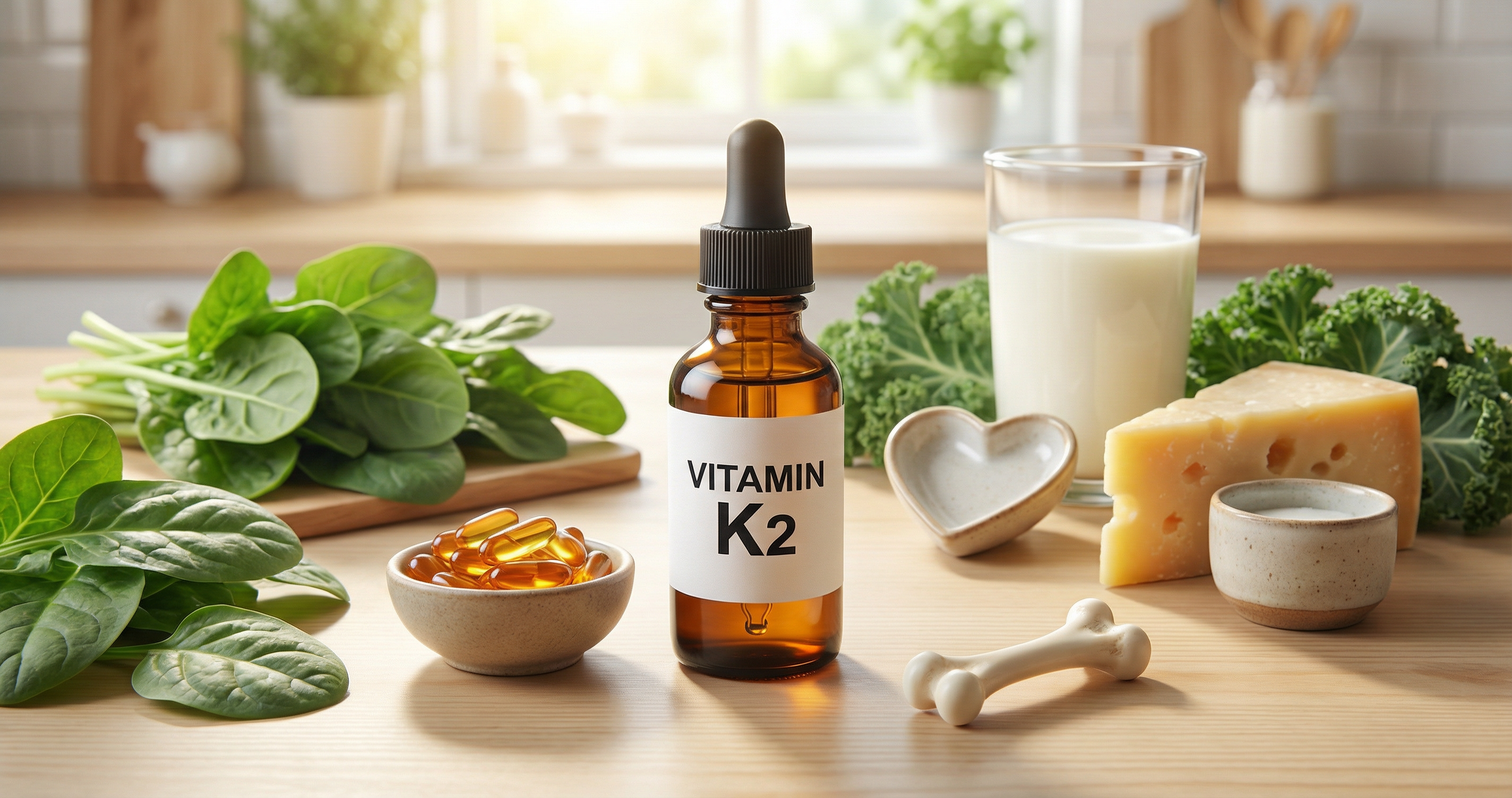
Rich sources include: natto (fermented soy; very high in MK-7), fermented cheeses (e.g. Gouda, Brie), egg yolk, butter, chicken liver, and fermented dairy (e.g. kefir). If you eat little of these, or avoid animal or fermented foods, a K2 supplement (often as MK-7) can help you reach a consistent intake. Dose typically ranges from 100–200 mcg MK-7 daily or 1–2 mg MK-4; follow the product label.
Who Might Benefit from a Supplement?
People who may benefit include: those on long-term or high-dose vitamin D; anyone aiming to support bone density (e.g. older adults, postmenopausal women); people who eat few K2-rich foods; and those who want to support cardiovascular health as part of a healthy lifestyle. Always talk to your doctor if you take blood thinners (see below), have a bone or heart condition, or are pregnant or breastfeeding.
Dosage and Safety
Typical supplemental doses are 100–200 mcg per day for MK-7 and 1–2 mg (1000–2000 mcg) per day for MK-4. Follow the product label. Vitamin K2 is generally well tolerated. Important: Vitamin K can interact with warfarin and other vitamin K antagonist blood thinners. If you take these, do not start or change a K2 supplement without your doctor''s approval; consistent K2 intake can be part of a stable warfarin regimen, but changes can affect your INR and require monitoring.
Takeaways
- Vitamin K2 helps direct calcium to bones and teeth and away from blood vessels, supporting bone and heart health.
- MK-4 and MK-7 are the main supplement forms; MK-7 has a longer half-life and is common in OTC products.
- Works with vitamin D: D supports calcium absorption; K2 supports its use in bone and helps limit artery calcification.
- Sources: natto, fermented cheese, egg yolk, butter, liver; or a K2 supplement (e.g. 100–200 mcg MK-7 daily).
- Safety: Check with your doctor if you take blood thinners (e.g. warfarin) or have bone or heart conditions.
Vitamin K2 is a useful part of bone and cardiovascular support when used wisely and with professional guidance where needed.