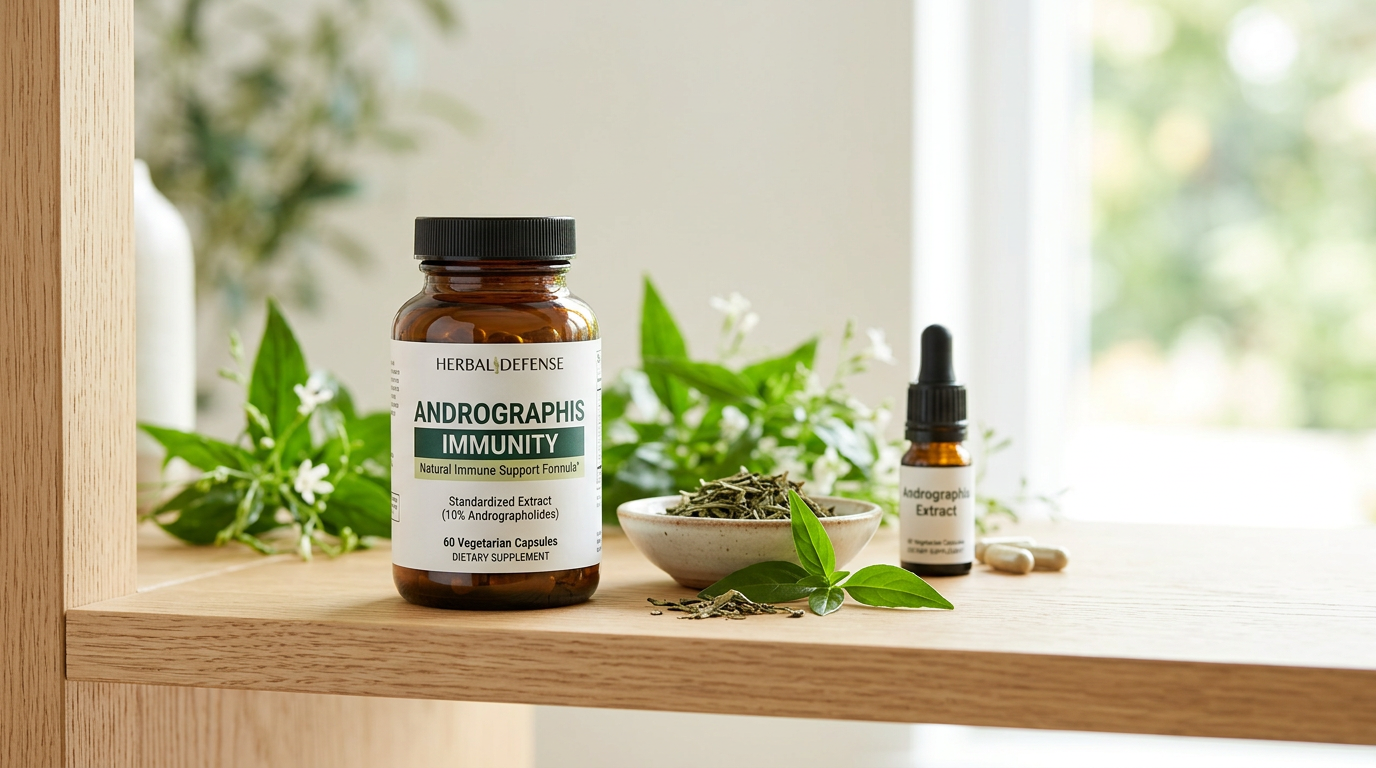
Andrographis (Andrographis paniculata) is an herb used in traditional systems for fever and respiratory symptoms. Today it is most often discussed as a short-term supplement for colds and upper respiratory infections, especially for symptom relief when taken early.
This guide explains what andrographis can realistically do, what the research suggests, how to use standardized extracts, and how to think about safety and interactions. It is not medical advice. If you have a chronic condition, are pregnant or breastfeeding, or take prescription medication, talk to a clinician before using immune-active herbs.
What andrographis is (and why it is used)
Andrographis is a bitter herb sometimes called the "king of bitters." The main active compounds are often described as andrographolides. Many supplements standardize to an andrographolide percentage so dosing is more consistent across brands.
People typically use andrographis for short-term support during:
- early cold symptoms (scratchy throat, stuffy nose, mild feverish feeling)
- travel season when exposure risk is higher
- high-output weeks when recovery is not ideal
Andrographis is not a substitute for sleep, nutrition, hydration, or medical evaluation when symptoms are severe.
What the evidence suggests (practical summary)
Clinical research on andrographis is mixed but generally points in one direction: when taken early, standardized extracts may help reduce the severity and duration of cold-like symptoms for some people. Effects tend to be modest, not dramatic.
Important context:
- Products differ: studies often use specific extracts and dosing regimens that may not match a random label.
- Timing matters: results are more likely when taken at the start of symptoms rather than late in the course.
- It is not a shield: do not treat supplements as guaranteed prevention.
If you get frequent infections, do not assume you simply need a stronger immune supplement. Consider sleep debt, stress, iron status, vitamin D status, and underlying conditions with a clinician.
Who may benefit the most
Andrographis tends to fit people who want a structured, short-term plan for acute symptoms, not a daily long-term supplement routine.
- Good fit: adults with early cold symptoms who want to try an evidence-informed herb for symptom relief.
- Less clear fit: people looking for chronic daily "immune boosting" without lifestyle basics.
- Not a fit without clinician input: pregnancy, breastfeeding, autoimmune disease, immunosuppressive medication, complex medication lists.
Dosing: how to think about standardized extracts
Because andrographis products vary, the best way to dose is to use the label information for a standardized extract, often expressed as a percentage of andrographolides. If the product does not list standardization, you cannot compare it well to the research.
General practical dosing principles:
- Follow the product label and choose products that specify standardization.
- Use short-term courses for acute symptoms rather than continuous daily use.
- Start at the lower end if you are sensitive or have a history of GI upset.
A common real-world pattern is to take andrographis for several days during an acute cold, then stop once symptoms improve. If symptoms worsen or do not improve, switch from self-care to medical evaluation.
When to start and how long to take it
Many protocols emphasize early use. If you decide to try andrographis, the most reasonable window is at the first sign of symptoms, then continue for a short course.
- Start: early, when symptoms are mild.
- Duration: short-term use during the acute phase.
- Stop: when symptoms resolve, or if side effects appear.
If you have high fever, shortness of breath, chest pain, severe sore throat, dehydration, or symptoms that persist or worsen, do not delay clinical care.
Stacking: what to combine and what to avoid
During a cold, the best "stack" is not a long supplement list. It is hydration, sleep, and simple symptom support.
Supportive basics
- Fluids and electrolytes: dehydration makes symptoms feel worse and prolongs fatigue.
- Protein and calories: under-eating can slow recovery.
- Sleep: the strongest immune support habit most people ignore.
- Gentle movement: light walking if tolerated, not intense training.
What to avoid
- Multiple new immune herbs at once: if you add five products and feel worse, you will not know why.
- Using stimulants to push through illness: it often delays recovery.
- Continuing intense training as if illness is not happening.
Side effects (what people notice)
Andrographis is often tolerated, but side effects can occur.
- GI upset: nausea, stomach discomfort, diarrhea, especially at higher doses.
- Headache: occasionally reported.
- Allergic reactions: rare, but possible with any herb.
- Fatigue or dizziness: stop if you feel clearly worse.
If you experience a rash, swelling, wheezing, or severe symptoms, treat it as urgent and seek care.
Safety and interactions (do not skip)
Herbs can interact with medication. Use extra caution if you take prescription drugs or have chronic conditions.
- Pregnancy and breastfeeding: avoid unless your clinician explicitly approves.
- Autoimmune disease: immune-active herbs may be inappropriate; discuss with a clinician.
- Immunosuppressive therapy: do not self-prescribe immune-modulating herbs.
- Blood pressure and blood sugar medication: discuss with a clinician if you use antihypertensives or diabetes medication.
- Blood thinners and surgery planning: discuss with a clinician; stop supplements before surgery as directed.
Also be cautious if you have liver disease or a history of supplement-related liver issues. Choose reputable brands and avoid combining many herbal products at once.
Quality checklist (how to choose a product)
- Standardized extract: lists andrographolide content or percentage.
- Transparent labeling: clear serving size and dose.
- Reputable manufacturing: third-party testing and quality control where possible.
- Realistic claims: symptom support, not guaranteed prevention.
FAQ
Is andrographis an everyday immune supplement?
Most people use it short-term for acute symptoms, not as a daily year-round supplement. If you want daily immune support, focus first on sleep, nutrition, and stress management, and use supplements only when a clear need exists.
Can I take it at the same time as vitamin C or zinc?
Many people do, but avoid adding multiple new products at once. If you want to test andrographis, keep everything else stable so you can judge tolerance and effect.
Should I take it if I have a fever?
Mild fever can happen with colds, but high fever or worsening symptoms should trigger medical evaluation. Do not use supplements to delay care.
What is the simplest plan that still makes sense?
Start early, use a standardized extract short-term, and support recovery with sleep, fluids, and food. Stop if side effects appear or symptoms worsen.
Key takeaways
- Andrographis is best thought of as short-term support for early cold symptoms, not a daily immune shield.
- Use standardized extracts and follow label dosing for a short course.
- Sleep, hydration, and reduced training load are often more impactful than stacking many supplements.
- Use extra caution with pregnancy, autoimmune disease, and medications due to interaction risk.