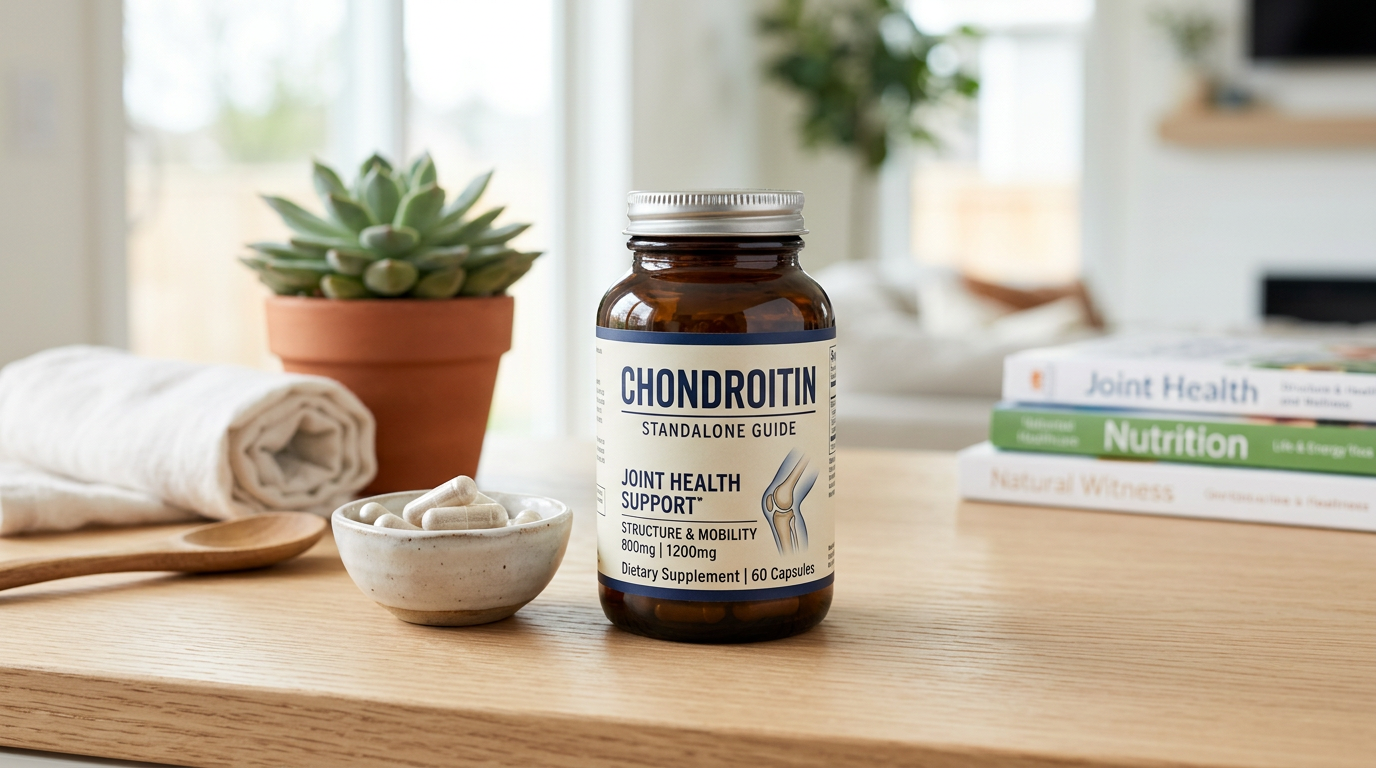
Chondroitin sulfate is a building block of cartilage and is widely used in supplements for joint comfort and mobility. Many products combine it with glucosamine, but chondroitin is also available on its own. As a sport medicine perspective, the key questions are: what does the evidence say, how to dose chondroitin when taken alone, and who might benefit. This guide covers the research, practical dosing and timing, how it compares to combination products, and when to see a doctor. For product options you can browse chondroitin supplements and joint support on iHerb.
What chondroitin is and how it may work
Chondroitin sulfate is a major component of cartilage and other connective tissues. In supplements it is usually sourced from animal cartilage (e.g. bovine or shark) or produced synthetically. It is thought to support joint health by helping maintain cartilage structure, supporting lubrication, and possibly modulating inflammation. Evidence from human studies is mixed: some trials show benefits for joint comfort and function, especially in knee osteoarthritis, while others show little or no effect. Differences in product quality, dose, and study design likely explain part of this variation.
Chondroitin alone vs. glucosamine–chondroitin combinations
Many joint supplements pair chondroitin with glucosamine. Both are building blocks of cartilage, and some guidelines and trials have used the combination. Taking chondroitin alone is still common and may be preferred if you want to avoid glucosamine (e.g. shellfish allergy or preference for a single ingredient). Head-to-head data comparing standalone chondroitin with combination products are limited; some people respond better to one or the other. If you try chondroitin alone, give it at least 2–3 months at an adequate dose before judging effect.
Evidence: what the research suggests
Meta-analyses and guidelines have reached different conclusions. Some suggest a small to moderate benefit of chondroitin for pain and function in knee osteoarthritis; others find limited or inconsistent evidence. High-quality, large trials are fewer than for some drugs, and results can depend on the specific product and outcome measured. In practice, chondroitin is generally safe and may help some individuals; it is not a replacement for weight management, exercise, or prescribed treatments when those are indicated.
Dosing chondroitin standalone
Typical doses in studies and on labels range from about 800 mg to 1,200 mg per day, often split into two doses. Quality and bioavailability vary by product: look for well-known brands and, when possible, forms that have been used in clinical trials. Taking chondroitin with food may improve tolerance. Consistency matters: use the same dose daily for at least 2–3 months before deciding whether it helps your joints.
Who might benefit and who should be cautious
Chondroitin is often tried by people with mild to moderate joint discomfort or early osteoarthritis who want to support joint health alongside diet and exercise. It is not a substitute for medical evaluation: persistent pain, swelling, or loss of function should be assessed by a doctor. People with bleeding disorders, on anticoagulants, or with shellfish or other relevant allergies should check with a clinician before starting. Pregnancy and breastfeeding: evidence is limited; discuss with your doctor.
Combining with lifestyle and other supplements
Joint health is supported by healthy weight, regular movement, and strength training. Chondroitin fits as an add-on, not a replacement for these. Some people also use glucosamine, MSM, collagen, or omega-3s; if you add several supplements at once, it is harder to tell what is helping. Introduce one change at a time when possible.
Quality and labelling
Chondroitin products vary in source (bovine, shark, synthetic), purity, and molecular weight. Look for products that state the amount of chondroitin sulfate per serving clearly. Third-party testing (e.g. USP, NSF) can help assure identity and purity. Compare cost per serving and per gram of chondroitin when choosing.
When to see a doctor
See a doctor if you have severe or worsening joint pain, locking or giving way of the joint, significant swelling, or symptoms that limit daily activities. Chondroitin is a supplement for joint support, not a treatment for serious joint disease or injury. Physical therapy, exercise programmes, and sometimes medication or injections are part of standard care; supplements can complement but not replace those when they are needed.
Research in context
Clinical trials of chondroitin have used different products, doses, and durations, which makes it hard to compare results directly. Some studies use pharmaceutical-grade chondroitin and show modest benefits; others use over-the-counter products and find no clear effect. This suggests that product quality and dose matter. When you buy chondroitin, choose a brand that clearly states the amount of chondroitin sulfate per serving and consider brands that have been used in published studies or that carry third-party certification.
Practical checklist before you start
- Confirm the dose per serving and how many servings you need to reach 800–1,200 mg per day.
- Decide whether you want chondroitin alone or with glucosamine; if unsure, starting with chondroitin alone is reasonable.
- Plan to take it with food and at the same time(s) each day for at least 2–3 months.
- If you take blood thinners or have joint swelling or severe pain, talk to your doctor first.
- Keep up weight management and joint-friendly exercise; chondroitin works alongside these, not instead of them.
FAQ
How long until I notice an effect?
Many studies run for 3–6 months. Give chondroitin at least 2–3 months at a consistent dose before judging whether it helps you.
Can I take chondroitin with glucosamine?
Yes. If you prefer to try chondroitin alone first, you can add glucosamine later if needed, or use a combination product from the start.
Is chondroitin safe with blood thinners?
Chondroitin can theoretically affect clotting. If you take anticoagulants or have a bleeding disorder, discuss use with your doctor before starting.
Who may respond best
Trials often focus on knee osteoarthritis; results there are somewhat more consistent than for other joints. People with mild to moderate symptoms who also keep active and manage weight may be more likely to notice benefit. Chondroitin is not a cure for advanced joint damage; it may support comfort and function as part of a broader plan. Individual response varies: some people feel a clear difference, others do not. Keeping a simple log of pain and stiffness over 2–3 months can help you decide whether to continue.
Cartilage, aging, and load
Cartilage has limited ability to repair itself, and wear over time is common. Reducing excess load (e.g. through healthy weight and sensible activity) and keeping muscles strong helps protect joints. Chondroitin is thought to support the cartilage matrix and fluid in the joint; it does not reverse structural damage but may help maintain a better environment. Think of it as one part of a long-term approach rather than a short-term fix.
Forms: capsules, tablets, and liquids
Chondroitin is commonly sold as capsules or tablets; liquid and powder forms exist but are less common. Choose a form that fits your routine so you can take it consistently. Capsules and tablets are easy to take with meals; if you have trouble swallowing, look for smaller sizes or split doses. Storage in a cool, dry place helps maintain stability. Check the expiry date and use within the recommended period after opening.
Timing and consistency
There is no strong evidence that timing (morning vs evening) changes effectiveness. What matters more is taking the same total daily dose every day. Many people take chondroitin with breakfast and dinner to spread the dose and reduce any minor stomach upset. Set a reminder if needed; missing many days can make it harder to notice any benefit.
Realistic expectations
Chondroitin is not a quick fix. Effects, when they occur, are usually gradual: slightly less stiffness, easier movement, or less discomfort with activity. Some people notice little or no change; that does not mean the supplement is useless for everyone. If after 3 months you see no improvement, you can try a different product (e.g. different brand or combination with glucosamine) or focus more on exercise and weight management with your doctor or physiotherapist.
Interactions with medications
Chondroitin is structurally related to some anticoagulant drugs (e.g. heparin). Although dietary supplements usually contain much lower amounts, if you take blood thinners or have a bleeding disorder, discuss chondroitin with your doctor before starting. Also mention it if you are scheduled for surgery. There is no strong evidence of major interactions with common pain relievers or anti-inflammatories, but listing all supplements to your clinician is good practice.
Key takeaways
- Chondroitin sulfate is a cartilage component used in joint supplements; evidence for benefit is mixed but it is generally well tolerated.
- Dose: often 800–1,200 mg/day in divided doses; use for at least 2–3 months to assess effect.
- Can be used alone or with glucosamine; choose quality products and combine with weight management and exercise.
- Take consistently with food; discuss use with a doctor if you are on blood thinners or have severe joint symptoms.
- See a doctor for persistent or severe joint pain, swelling, or loss of function.
For product comparison see chondroitin and glucosamine categories on iHerb.