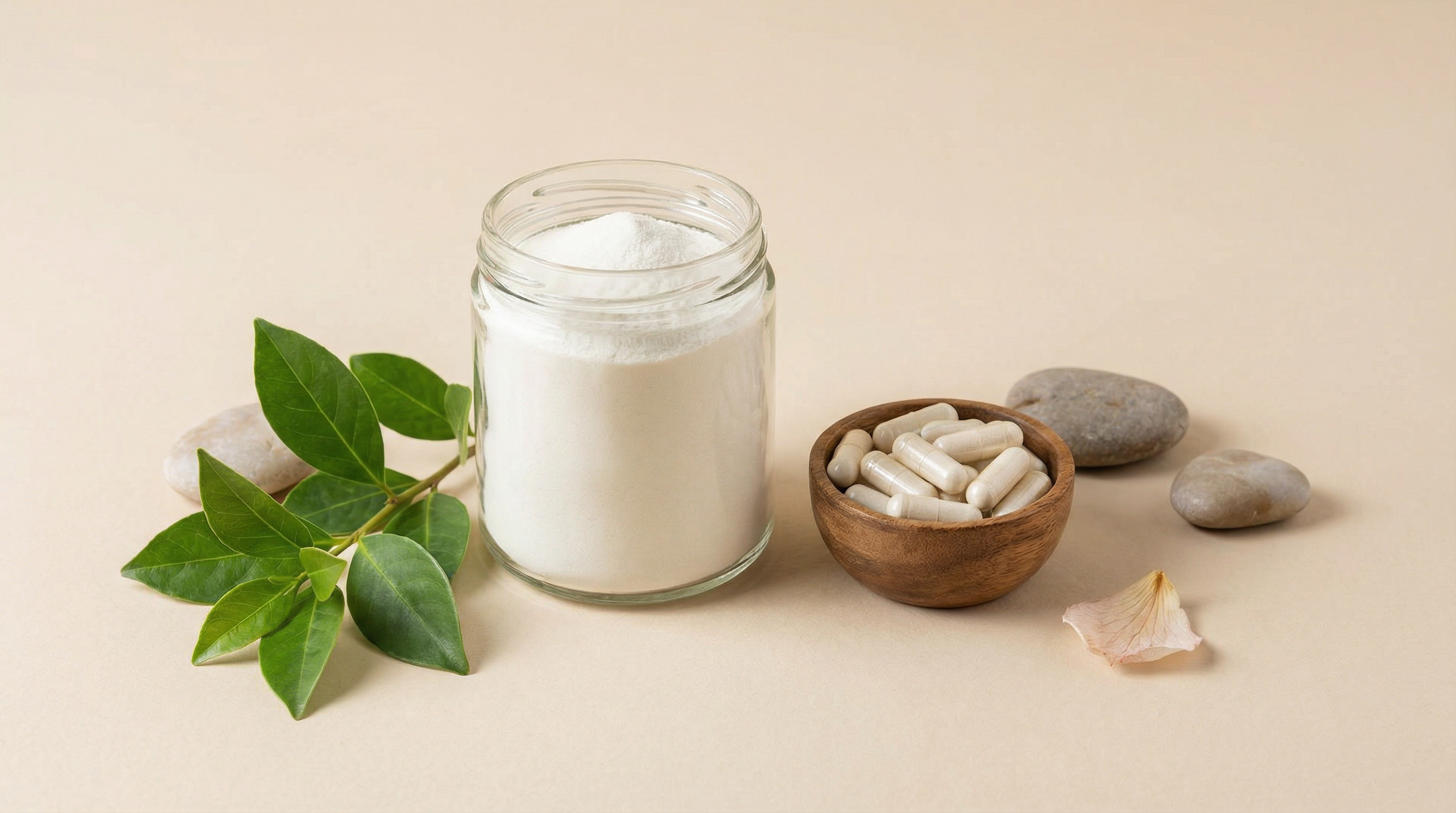
Collagen is the most abundant protein in your body. It forms the structure of your skin, bones, tendons, cartilage, and connective tissue. Your body makes collagen from amino acids, but production naturally declines with age. Supplementing with collagen or supporting its production through diet may help maintain skin and joint health. Collagen in supplements is usually hydrolysed for better absorption; powder is added to drinks or food. In this guide we cover types (I, II, III), evidence for skin and joints, dosing, and how to combine with vitamin C and lifestyle. For product options see joint support and vitamins on iHerb.
What Is Collagen?
Collagen is a structural protein that gives strength and elasticity to skin, tendons, ligaments, cartilage, and bones. The body synthesises it from amino acids (especially glycine, proline, hydroxyproline); vitamin C is needed for the process. With age, sun exposure, smoking, and poor nutrition, production can drop. Hydrolysed collagen (peptides) is broken into smaller pieces so it is absorbed more easily than native collagen; most supplements use this form. Typical doses in studies range from about 2.5 g to 15 g per day depending on the goal: skin hydration and elasticity, joint comfort, or general connective tissue support.
Types of Collagen: I, II, III
Type I is found in skin, bones, tendons, and ligaments and is the most common type in the body. Type II is in cartilage and is often used in joint-focused supplements; some products use undenatured type II (UC-II) in smaller doses. Type III often appears with type I in skin and blood vessels. Most hydrolysed supplements contain types I and III from bovine or marine sources; type II is used in specific joint formulas. Choosing a product depends on your main goal: skin and general support (I and III), or joints (I/III or type II formulations).
Evidence for Skin
Several studies suggest that collagen peptides may improve skin hydration, elasticity, and wrinkle depth when taken for 8–12 weeks or longer. Results vary by product, dose, and person. Doses in trials often range from 2.5 g to 10 g per day. Combining with vitamin C may support the body's own collagen synthesis. Collagen supplements do not replace good skincare, sun protection, or a balanced diet; they are one part of a broader approach to skin health.
Evidence for Joints
Research on collagen for joint comfort and function is mixed but promising. Some trials in active adults show reduced discomfort and improved mobility with hydrolysed collagen (often 8–12 g per day) over several months. The mechanism may involve supplying building blocks for cartilage and modulating inflammation. Type II (UC-II) products use lower doses and a different mechanism; evidence is still evolving. Collagen is not a substitute for medical treatment of joint disease or injury; it may support joint health as part of an active lifestyle and adequate nutrition.
Dosage and Timing
For skin: many studies use 2.5–10 g hydrolysed collagen daily. For joints: 8–12 g per day is common in trials. You can take it in one dose or split into two; timing is flexible. Taking collagen with vitamin C may improve utilisation. Consistency over 8–12 weeks is more important than a single high dose. Follow the product label and do not exceed recommended amounts without professional guidance.
Sources: Bovine, Marine, Chicken
Collagen supplements come from bovine hide (types I and III), pork skin, chicken cartilage (type II), or fish (marine). Marine collagen often has smaller peptides and may be well absorbed; bovine is the most widely available. There is no vegan collagen; vegans can support their own collagen production with adequate protein and vitamin C from diet and supplements. If you have allergies to fish or eggs, check the label (marine collagen, some capsules use gelatin).
Combining with Vitamin C and Other Nutrients
Vitamin C is required for collagen formation in the body; taking 50–200 mg with collagen is a common and sensible combination. Some products include vitamin C or other ingredients (e.g. hyaluronic acid for skin). For joints, glucosamine and chondroitin are often combined with collagen in multi-ingredient formulas; evidence is mixed, but such combinations may help some people. Introduce one new supplement at a time so you can tell what works for you.
Safety and Interactions
Collagen supplements are generally well tolerated. Allergic reactions to the source (fish, beef, egg) are possible in sensitive individuals. Quality matters: choose reputable brands, store in a cool dry place, and check the use-by date. If you are pregnant, breastfeeding, or have kidney or liver disease, talk to your doctor before using high-dose collagen. Collagen does not replace a balanced diet or medical care for joint or skin conditions.
Practical Tips
- Choose hydrolysed collagen (peptides) for better absorption.
- For skin: 2.5–10 g/day with vitamin C; allow 8–12 weeks to assess.
- For joints: 8–12 g/day is common in studies; consistency matters.
- Match the type to your goal: I and III for skin and general support; type II for joint-focused products.
- Combine with sun protection, hydration, and a diet rich in protein and vitamin C.
When to See a Doctor
Do not rely on supplements alone for persistent joint pain, swelling, or stiffness, or after an injury. Get a proper diagnosis and follow medical advice. Collagen can support joint and skin health as part of a healthy lifestyle but does not treat disease.
FAQ
How long until I see results?
For skin, many trials run 8–12 weeks; for joints, several months of consistent use are typical. Individual response varies.
Can I take collagen with protein powder?
Yes. Collagen does not replace high-leucine protein for muscle building but can be used alongside it for connective tissue and skin support.
What is the best type for joints?
Hydrolysed types I and III are widely studied; type II (e.g. UC-II) is used in specific joint products. Choose a product that matches the evidence for your goal.
Key Takeaways
- Collagen supports skin structure and joint comfort; types I and III are common for skin and general use; type II for joints.
- Typical doses: 2.5–10 g/day for skin, 8–12 g/day for joints; combine with vitamin C.
- Hydrolysed (peptide) form is better absorbed; allow 8–12 weeks to evaluate results.
- Use as part of a healthy diet, sun protection, and active lifestyle; see a doctor for ongoing pain or skin concerns.