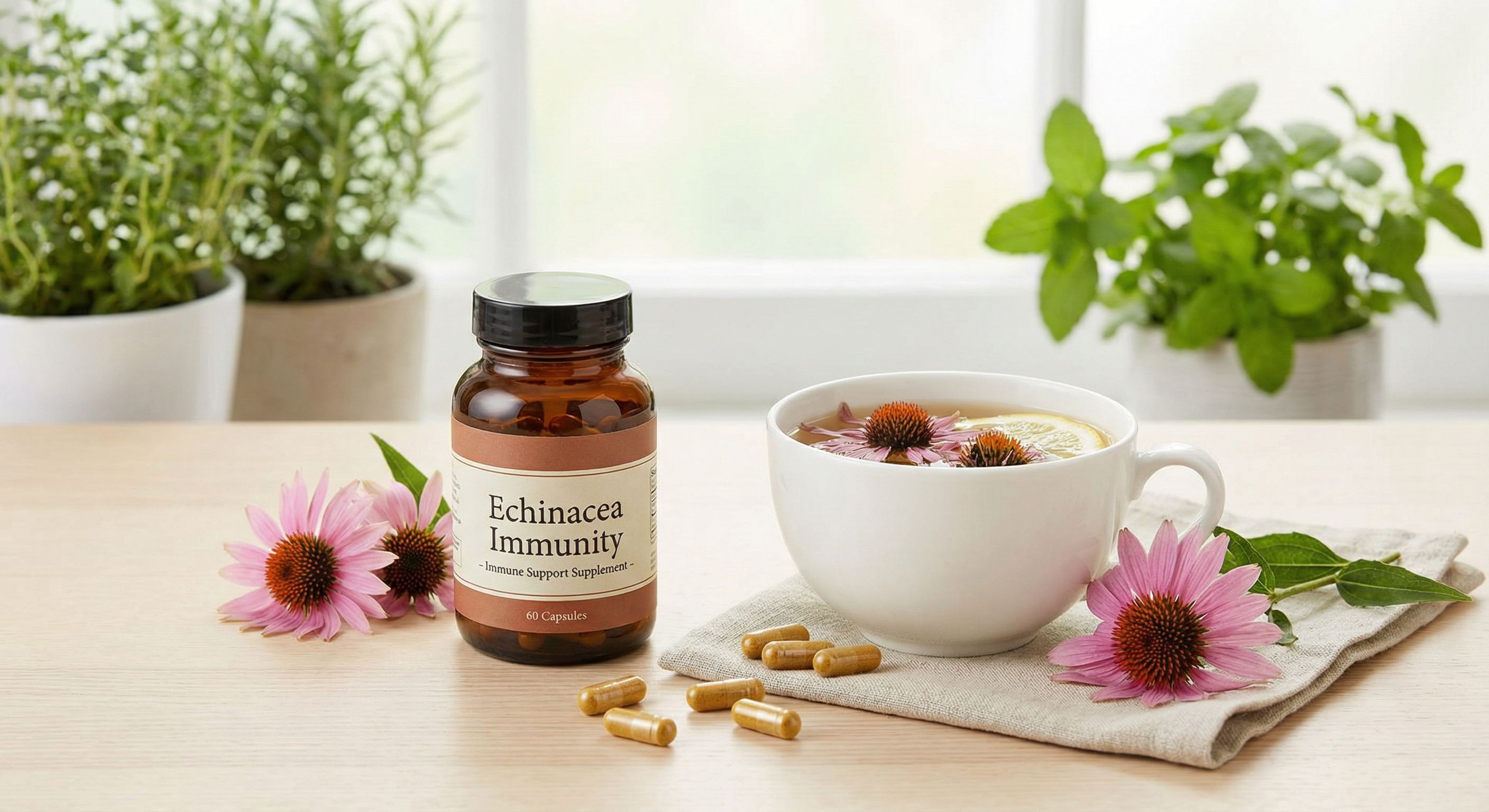
Echinacea is a group of North American perennial plants used in traditional herbal medicine for immune support and wound healing. The species most often studied and used in supplements are Echinacea purpurea (purple coneflower, aerial parts and root), E. angustifolia (narrow-leaved, often root), and E. pallida (pale coneflower). Different species and plant parts contain different profiles of compounds (alkamides, polysaccharides, caffeic acid derivatives, etc.), which may explain some of the variation in study results. As a dietitian or integrative health practitioner, I note that echinacea is widely used to support resistance to colds and upper respiratory infections, though clinical evidence is mixed: some trials suggest a modest reduction in cold duration or severity when taken at the first signs of illness; others show little or no benefit. Quality, species, and formulation matter. For product options, browse echinacea supplements and immune support formulas on iHerb.
What Is Echinacea?
Echinacea refers to several species of flowering plants native to North America. The three species most commonly used in supplements are E. purpurea, E. angustifolia, and E. pallida. Each has a distinct chemical profile: alkamides are more abundant in roots; polysaccharides and caffeic acid derivatives vary by species and plant part. Commercial products may use aerial parts (stems, leaves, flowers), root, or both; some use expressed juice from fresh E. purpurea, others use alcohol extracts or standardised extracts in capsules. This variation partly explains why clinical trial results are inconsistent—different studies use different preparations, doses, and durations.
What the Research Suggests
Meta-analyses have reached inconsistent conclusions: some find a small benefit of echinacea for preventing or shortening colds; others find no significant effect. Differences may be due to the species and part used (aerial vs. root), extraction method (juice, alcohol extract, etc.), dose, and timing (prevention vs. at onset of symptoms). There is more support for use at the first signs of a cold (e.g. sore throat, runny nose) rather than long-term daily prevention. Echinacea does not replace vaccination, handwashing, or other measures to reduce infection risk. It is not proven to treat serious infections; if symptoms worsen or you have a high fever, see a doctor. Most studies are short-term; long-term safety data are limited.
Forms and Dosing
Common forms include expressed juice from fresh E. purpurea aerial parts, alcohol (ethanol) extracts of root or aerial parts, and standardised extracts in capsules or tablets. Dosing varies by product: follow the label for the specific formulation. Typical study doses range from about 2–4 mL of expressed juice two to three times daily to 300–500 mg of standardised extract several times per day. For acute use at cold onset, many practitioners suggest starting as soon as symptoms appear and continuing for 7–10 days. Do not use echinacea continuously for long periods (e.g. months) without a break unless advised by a healthcare provider. Choose products from reputable brands that state the species and part used.
Safety and Interactions
Echinacea is generally well tolerated. Possible side effects include digestive upset, mild allergic reactions (especially in people allergic to plants in the daisy family, e.g. ragweed, chrysanthemums), and rash. Rare cases of more serious allergic reactions have been reported. Autoimmune conditions: because echinacea may stimulate immune activity, people with autoimmune diseases (e.g. multiple sclerosis, lupus, rheumatoid arthritis) are often advised to avoid it or use it only with medical supervision. Pregnancy and breastfeeding: data are limited; many sources recommend avoiding echinacea unless under professional guidance. It may interact with immunosuppressant drugs. Do not use if you have a known allergy to echinacea or related plants. If you take prescription medicines, discuss echinacea with your doctor before use.
Who Might Consider Echinacea
Adults who want to try a traditional herbal option at the first signs of a common cold may consider a well-characterised echinacea product, in addition to rest, fluids, and good hygiene. It is not suitable as a sole treatment for flu, COVID-19, or other serious infections. People with autoimmune disease, on immunosuppressants, or with plant allergies should avoid or use only with medical clearance. Do not give echinacea to young children without a paediatrician's advice. Supporting overall health—sleep, diet, stress management, and vaccination where applicable—remains the foundation of immune resilience.
Why Trial Results Vary
Clinical trials of echinacea have used different species, plant parts, extraction methods, and doses. Some trials used echinacea for prevention (daily for weeks or months); others for treatment at symptom onset. Outcomes measured include cold incidence, duration, and severity of symptoms. This heterogeneity makes it hard to draw a single conclusion. The weight of evidence suggests that if there is a benefit, it is more likely when echinacea is taken early in illness and when the product is well characterised. Choosing a product with a clear label (species, part, standardisation) and following dosing instructions improves the chance of a consistent experience.
Mechanisms and Active Compounds
Echinacea contains several classes of compounds that may contribute to its effects. Alkamides (alkylamides) are thought to support immune cell activity and may have anti-inflammatory properties. Polysaccharides have been studied for their effects on immune signalling. Caffeic acid derivatives, including echinacoside, are present in varying amounts depending on species and processing. Standardisation of extracts often targets one or more of these compound groups to ensure consistency between batches. Because raw materials and extraction methods differ, the biological activity of one product may not match another; this is another reason trial results vary and why choosing a well-labelled product matters.
Quality and Labelling
When buying echinacea, look for products that specify the species (e.g. Echinacea purpurea), the plant part (aerial parts, root, or both), and preferably the type of extract (e.g. standardised to a certain percentage of a marker compound). Reputable brands often undergo third-party testing for identity and purity. Avoid products that do not state the species or that make exaggerated claims about preventing or curing serious infections. Storage matters: keep echinacea in a cool, dry place and use before the expiry date to maintain potency.
Combining With Other Immune Support
Echinacea is often used alongside vitamin C, zinc, and adequate sleep as part of a broader approach to cold season. No single supplement replaces sleep, nutrition, handwashing, or vaccination. If you choose to use echinacea, do so as one element of a healthy routine. Avoid stacking many new supplements at once so you can tell what helps. If you have recurrent infections or prolonged symptoms, see a doctor to rule out underlying conditions.
When to See a Doctor
Do not rely on echinacea or any supplement alone if you have high fever, difficulty breathing, severe sore throat, or symptoms that worsen after a few days. Seek medical care for suspected flu, strep throat, or other serious infection. Echinacea is not a treatment for COVID-19 or other viral illnesses requiring medical management. Children, pregnant women, and people with chronic conditions should get professional advice before using echinacea.
FAQ
Can echinacea prevent colds?
Evidence for prevention is weaker than for use at symptom onset. Some people take it daily during cold season; the data are mixed. Prioritise sleep, hygiene, and vaccination; use echinacea as an optional addition if you and your doctor are comfortable.
How long can I take echinacea?
For acute use at cold onset, 7–10 days is typical. Long-term daily use is not well studied; many sources suggest taking breaks (e.g. not using continuously for more than 8–10 weeks) unless your healthcare provider advises otherwise.
Which form is best?
No single form is clearly superior across all studies. Choose a product that states the species (e.g. E. purpurea) and part used, from a reputable brand. Follow the label for dosing.
Takeaways
- Echinacea is used for immune support and colds; evidence is mixed—some trials show modest benefit when used at symptom onset.
- Species and form matter: E. purpurea (aerial/root), E. angustifolia, E. pallida; juice and extracts differ—follow product dosing.
- Timing: often used at first signs of a cold for 7–10 days rather than long-term daily prevention.
- Safety: generally well tolerated; caution in autoimmune disease, allergy to daisy family, pregnancy/nursing; discuss with your doctor if on immunosuppressants.
- Do not use instead of vaccination or medical care for serious illness; support immune health with lifestyle first.
Echinacea can be a reasonable option for adults at cold onset when used appropriately and with attention to quality and safety. Compare options at herbal supplements on iHerb and discuss your goals with a healthcare provider familiar with your history.