What Is Elderberry?
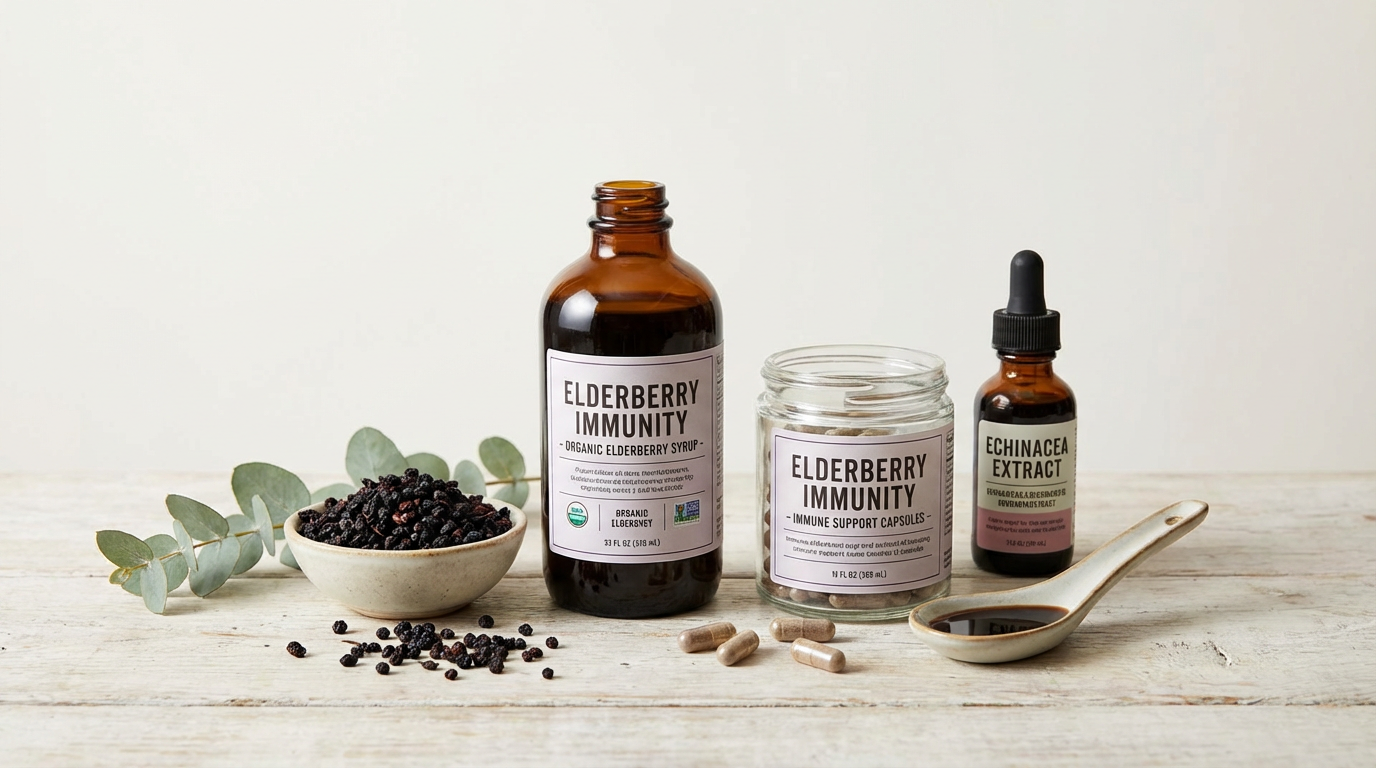
Elderberry is the dark purple fruit of the elder tree (Sambucus nigra). It has a long history in traditional medicine for colds and flu. The berries are rich in antioxidants (anthocyanins) and are typically cooked or processed before use, as raw berries can be toxic. Commercially available syrups, lozenges, and capsules are made from cooked or standardised extracts and are generally considered safe when used as directed.
What Does the Evidence Say?
Some studies suggest that elderberry may shorten the duration and severity of cold and flu symptoms when taken early in illness. Results are not uniform across all trials, and more research is needed to confirm optimal dosing and timing. Elderberry is not a substitute for vaccination (e.g. flu shot) or for medical treatment of serious infections. It is best viewed as a possible supportive option during cold season, alongside rest, fluids, and good hygiene.
How to Use Elderberry Safely
Follow product labels for dose and frequency. Syrups are often taken daily during cold season (e.g. 1–2 tablespoons) or at the first sign of symptoms. Capsules and lozenges vary; use as directed. Do not eat raw or unripe elderberries or use homemade preparations from unknown sources — stick to reputable brands that use properly processed berries. If you are pregnant, nursing, have autoimmune conditions, or take immunosuppressants, check with a healthcare provider before use.
Who Might Benefit?
Adults and older children looking for a natural option to support immunity during winter may try elderberry as part of a healthy lifestyle. It is not a magic bullet; sleep, nutrition, handwashing, and vaccination remain foundational. Use it as a short-term support during cold and flu season rather than year-round unless a practitioner advises otherwise.
Combining With Other Habits
Elderberry fits alongside vitamin D, zinc, and adequate sleep as part of a broader immune-support strategy. Avoid relying on supplements alone; a balanced diet, stress management, and physical activity all support immune function. If symptoms persist or worsen, see a doctor — elderberry does not replace professional care for serious illness.
Summary
- What it is: Berry (Sambucus nigra) used in syrups and supplements; use only processed products.
- Evidence: Some studies suggest benefit for cold/flu duration; more research needed.
- Use: Follow label; often taken daily in cold season or at symptom onset; avoid raw berries.
- Safety: Choose reputable brands; check with a doctor if pregnant, nursing, or on medications.
Elderberry for immune support is a reasonable option during cold season when used correctly and as part of a healthy routine.
Evidence and Practical Tips
Research on supplements has grown over the past decades. Most studies focus on specific doses and populations, so results are not always generalisable. Quality matters: choose products from reputable brands that disclose ingredients and dose per serving. Third-party testing (e.g. USP, NSF, ConsumerLab) when available adds assurance. Start with the lowest effective dose on the label and give any new supplement at least four to six weeks of consistent use before judging effect. Many factors influence how well a supplement works: your baseline status, diet, sleep, and lifestyle. Keeping a simple log of what you take and how you feel can help you and your provider decide whether to continue or adjust.
Supplements are not a substitute for a varied diet, adequate sleep, and regular physical activity. If you are pregnant, breastfeeding, or have a chronic condition, talk to your doctor before starting any new supplement. Do not use supplements to replace diagnosis or treatment for medical conditions. When in doubt, a short conversation with a doctor or dietitian can clarify whether a supplement is right for you. Store supplements in a cool, dry place away from direct sunlight and keep them out of reach of children.
Individual response varies. Some people notice benefits within a few weeks; others need longer. A balanced approach—sleep, nutrition, movement, and stress management—remains the foundation; supplements can support but not replace these habits.
Evidence and Practical Tips
Research on supplements has grown over the past decades. Most studies focus on specific doses and populations, so results are not always generalisable. Quality matters: choose products from reputable brands that disclose ingredients and dose per serving. Third-party testing (e.g. USP, NSF, ConsumerLab) when available adds assurance. Start with the lowest effective dose on the label and give any new supplement at least four to six weeks of consistent use before judging effect. Many factors influence how well a supplement works: your baseline status, diet, sleep, and lifestyle. Keeping a simple log of what you take and how you feel can help you and your provider decide whether to continue or adjust.
Supplements are not a substitute for a varied diet, adequate sleep, and regular physical activity. If you are pregnant, breastfeeding, or have a chronic condition, talk to your doctor before starting any new supplement. Do not use supplements to replace diagnosis or treatment for medical conditions. When in doubt, a short conversation with a doctor or dietitian can clarify whether a supplement is right for you. Store supplements in a cool, dry place away from direct sunlight and keep them out of reach of children.
Individual response varies. Some people notice benefits within a few weeks; others need longer. A balanced approach—sleep, nutrition, movement, and stress management—remains the foundation; supplements can support but not replace these habits.