EPA, Omega-3 and Mood
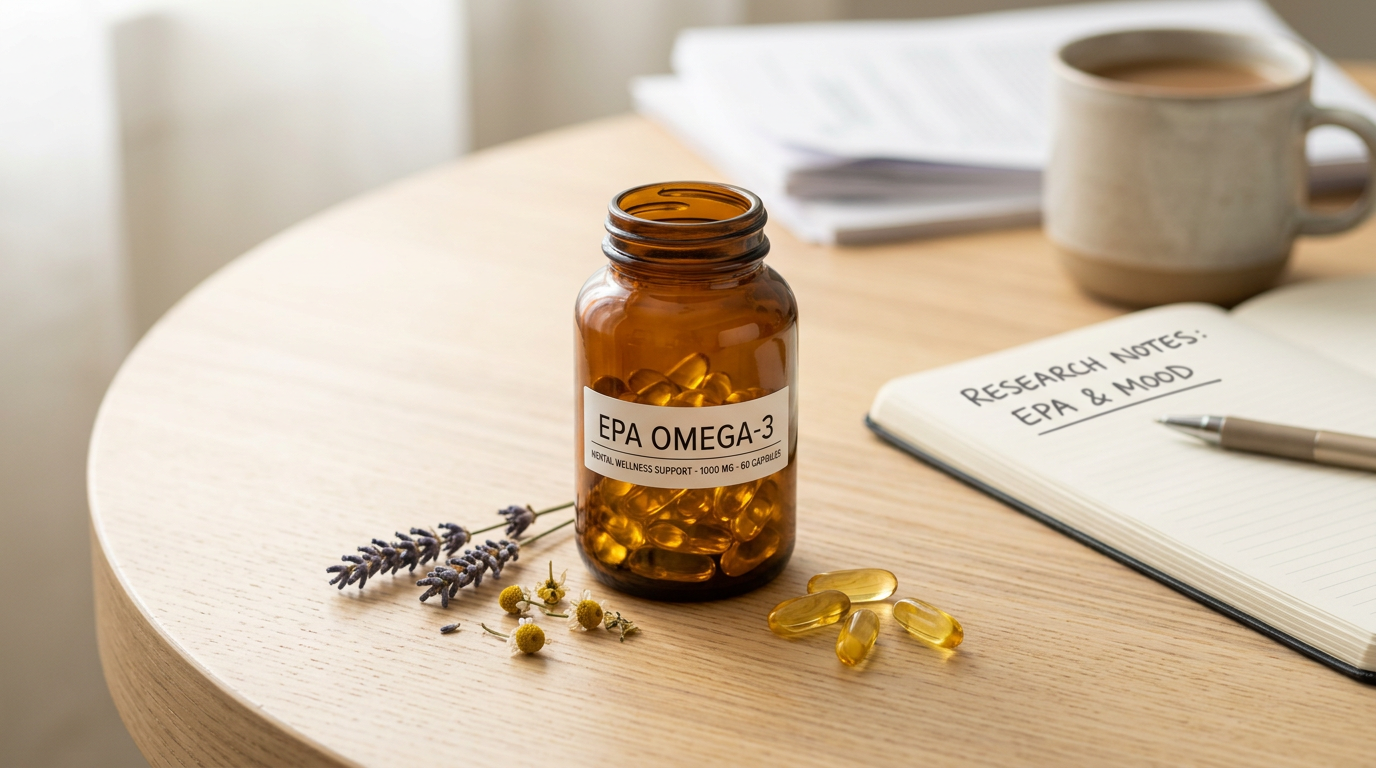
Eicosapentaenoic acid (EPA) is an omega-3 fatty acid found in fatty fish and fish oil supplements. Along with DHA (docosahexaenoic acid), EPA has been studied for a range of health effects, including cardiovascular and brain health. Some research has focused specifically on EPA and mood or depressive symptoms. This article summarises what the evidence suggests and what it does not: omega-3 is not a replacement for diagnosis or treatment of depression. Anyone with mood concerns or depression should seek professional care. For omega-3 products you can browse omega-3 on iHerb.
What the Research Suggests
Meta-analyses and randomised trials have reported that omega-3 supplementation, particularly higher EPA or EPA-dominated formulations, may be associated with modest improvements in depressive symptoms in some studies—especially as an add-on to standard care rather than a stand-alone treatment. Results are mixed: not all trials show benefit, and effect sizes are often modest. Factors that may influence outcomes include dose, the ratio of EPA to DHA, baseline omega-3 status, and the population studied (e.g. major depression vs. mild symptoms). Some meta-analyses suggest that EPA or EPA-predominant supplements may be more consistently associated with mood-related benefits than DHA-heavy formulations, but the picture is not uniform. More research is needed to clarify who may benefit most and at what dose. Omega-3 should never replace psychotherapy, medication, or other treatments prescribed by a healthcare provider.
Mechanisms: Why EPA Might Matter for Mood
Omega-3 fatty acids are structural and signalling molecules in the brain. They influence membrane fluidity, inflammation, and various neurotransmitter systems. EPA in particular has been linked in some research to anti-inflammatory and neuroprotective effects that could theoretically support mood. Depression is a complex condition with multiple causes; inflammation and diet are among the factors being studied. This does not mean that taking EPA “fixes” depression—it means that in some trials, EPA or EPA-rich omega-3 has been associated with modest improvements when used alongside standard care. Individual biology, severity of symptoms, and other treatments all matter.
Dose and Form
In trials that report positive mood-related effects, EPA doses have often been in the range of about 1–2 g per day or higher; some formulations are EPA-dominated (more EPA than DHA). Standard over-the-counter fish oil often contains both EPA and DHA; labels list amounts per serving. If you are considering omega-3 for mood support, discuss dose and form with a doctor or mental health professional. They can advise on evidence, appropriate dose, and whether it fits your care plan. Do not self-treat depression with high-dose omega-3; any use for mood should be part of a broader, professionally guided approach. Purity and quality matter: choose reputable brands and, when available, products tested for contaminants (e.g. mercury, PCBs).
Safety and Interactions
Omega-3 supplements are generally well tolerated at typical doses. High doses can increase the risk of bleeding in some people and may interact with blood-thinning medications (e.g. warfarin, aspirin). Digestive side effects (e.g. fishy burps) can often be reduced by taking with meals or using enteric-coated products. If you have a bleeding disorder, take anticoagulants, or have other health conditions, talk to your doctor before starting or increasing omega-3. Pregnant and breastfeeding women and children should follow professional guidance; high-dose fish oil is not appropriate for everyone. Omega-3 can also interact with some blood pressure and diabetes medications—a healthcare provider can help you weigh benefits and risks.
EPA vs. DHA: Does the Ratio Matter?
Both EPA and DHA are important for health. For mood, some meta-analyses and trials have suggested that EPA or EPA-dominated supplements may show more consistent effects on depressive symptoms than DHA-heavy or balanced formulations. The reasons are not fully understood and may involve different roles in inflammation and brain signalling. In practice, if you and your doctor decide to try omega-3 for mood, choosing a product with a higher EPA content (or an EPA-dominated formulation) may align better with the current evidence—but always under professional guidance.
Who Might Consider Omega-3 for Mood?
Adults who are under the care of a doctor or mental health professional for mood or depression may discuss whether omega-3 (including EPA) could be a useful add-on. It is not a first-line treatment and is not appropriate for severe or suicidal depression without comprehensive care. People with adequate fish intake may already have sufficient omega-3; supplementation is more relevant when intake is low or when a clinician recommends it. Never stop or change prescribed treatments (e.g. antidepressants) on the basis of adding omega-3 without discussing with your provider.
Takeaways
- Some research links higher EPA or EPA-dominated omega-3 to modest improvements in depressive symptoms in certain studies; results are mixed.
- Omega-3 is not a substitute for diagnosis or treatment of depression; always seek professional care for mood concerns.
- Dose and form (EPA vs. DHA ratio) may matter; discuss with a healthcare provider before using omega-3 for mood.
- Consider safety (e.g. bleeding risk, drug interactions) and use under professional guidance when appropriate.
- Quality and purity of supplements matter; choose reputable brands and follow your provider's advice.
Understanding what the evidence says about EPA and mood helps you have informed conversations with your healthcare provider. If you or someone you know is struggling with mood or depression, professional support is essential.
Evidence and Practical Tips
Research in this area continues to evolve. We summarise what is well supported and what remains uncertain. Quality matters: choose products from reputable brands with clear labelling and, when available, third-party testing. Do not self-treat depression; work with a doctor or mental health professional. Compare quality omega-3 options on iHerb.
Individual Response and Safety
Individual response to supplements varies. Some people may notice mood-related benefits over several weeks; others may not. Genetics, diet, severity of symptoms, and other treatments all play a role. If you take multiple supplements or medications, be aware of possible interactions. A balanced approach—professional care, sleep, nutrition, and movement—remains the foundation; omega-3 may support but not replace these.