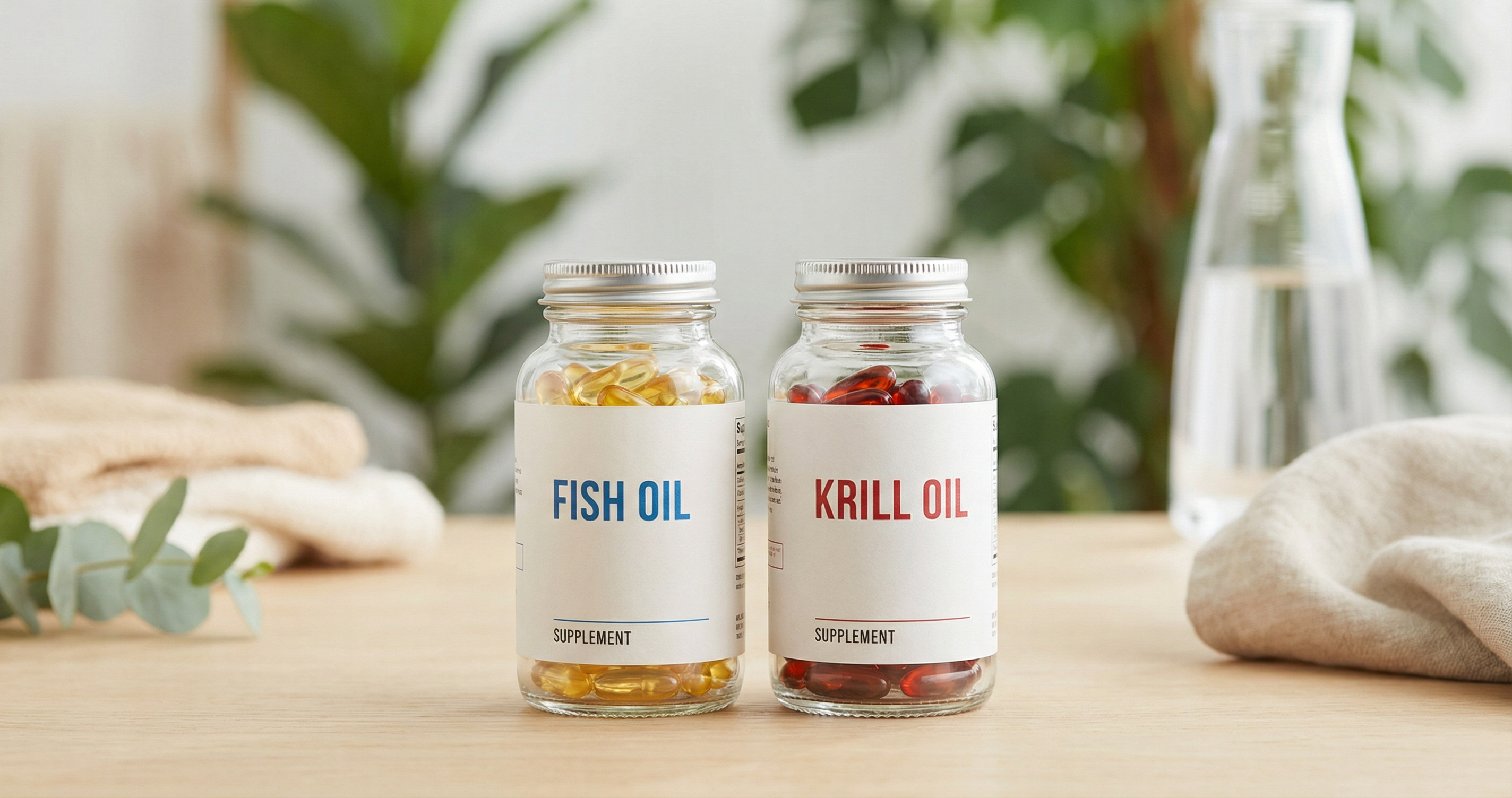
Fish Oil and Krill Oil: What They Have in Common
Both fish oil and krill oil provide the omega-3 fatty acids EPA and DHA, which support heart health, brain function, and a healthy inflammatory response. The difference lies in how those fatty acids are packaged and delivered. Fish oil typically contains EPA and DHA in triglyceride (TG) or ethyl ester (EE) form; krill oil provides them bound to phospholipids and also contains astaxanthin, a carotenoid antioxidant that gives krill oil its red colour. As a CNS/RD I explain that what matters most for benefit is the total amount of EPA and DHA you get per day—so when comparing products, look at the Supplement Facts panel for EPA and DHA per serving, not just total oil weight.
Absorption and Bioavailability
Some studies suggest that phospholipid-bound omega-3s (as in krill oil) may be absorbed or utilised somewhat differently than triglyceride forms, but the clinical significance is debated. Both forms deliver EPA and DHA into the body; head-to-head trials on outcomes (e.g. blood lipids, inflammation markers) have not consistently shown one source to be clearly superior when doses are matched. If you take fish oil with a meal that contains some fat, absorption of TG and EE forms is generally good. Krill oil is often marketed as requiring fewer or smaller capsules for similar benefit; that claim depends on the dose per capsule, so again—compare EPA and DHA per serving.
Cost and Sustainability
Krill oil is usually more expensive per gram of EPA+DHA than conventional fish oil. If budget is a concern, a quality fish oil that provides 500–1,000 mg or more EPA+DHA per serving can be a cost-effective choice. Sustainability and sourcing vary by brand for both fish and krill; some consumers prefer krill because of smaller biomass harvest and regulated Antarctic fisheries, while others prefer fish oil from well-managed stocks. Look for brands that disclose sourcing and, when available, third-party sustainability or quality certifications.
Who Might Prefer Which
Choose fish oil if you want the most studied, often most affordable option with a wide range of doses and formulations (including high-dose prescription-grade for triglycerides). Choose krill oil if you prefer phospholipid form, want astaxanthin in the same product, or find that krill causes less fishy aftertaste or burping (some people do report this). Vegetarians and vegans would use neither—algae oil is the appropriate choice for DHA (and EPA) without fish or krill. If you take blood thinners or have a bleeding disorder, discuss any omega-3 supplement with your doctor.
Summary and Takeaways
- Both provide EPA and DHA; compare products by EPA and DHA per serving, not total oil.
- Form: Fish oil = TG or EE; krill = phospholipid + astaxanthin; both deliver omega-3s.
- Cost: Fish oil is often cheaper per dose of EPA+DHA; krill may suit those who prefer its form or tolerability.
- Choose based on dose, cost, tolerability, and sustainability; consistency matters more than the specific source.
Fish oil and krill oil are both valid ways to get EPA and DHA. Match your choice to your budget, tolerance, and goals, and prioritise a product that clearly states EPA and DHA per serving.