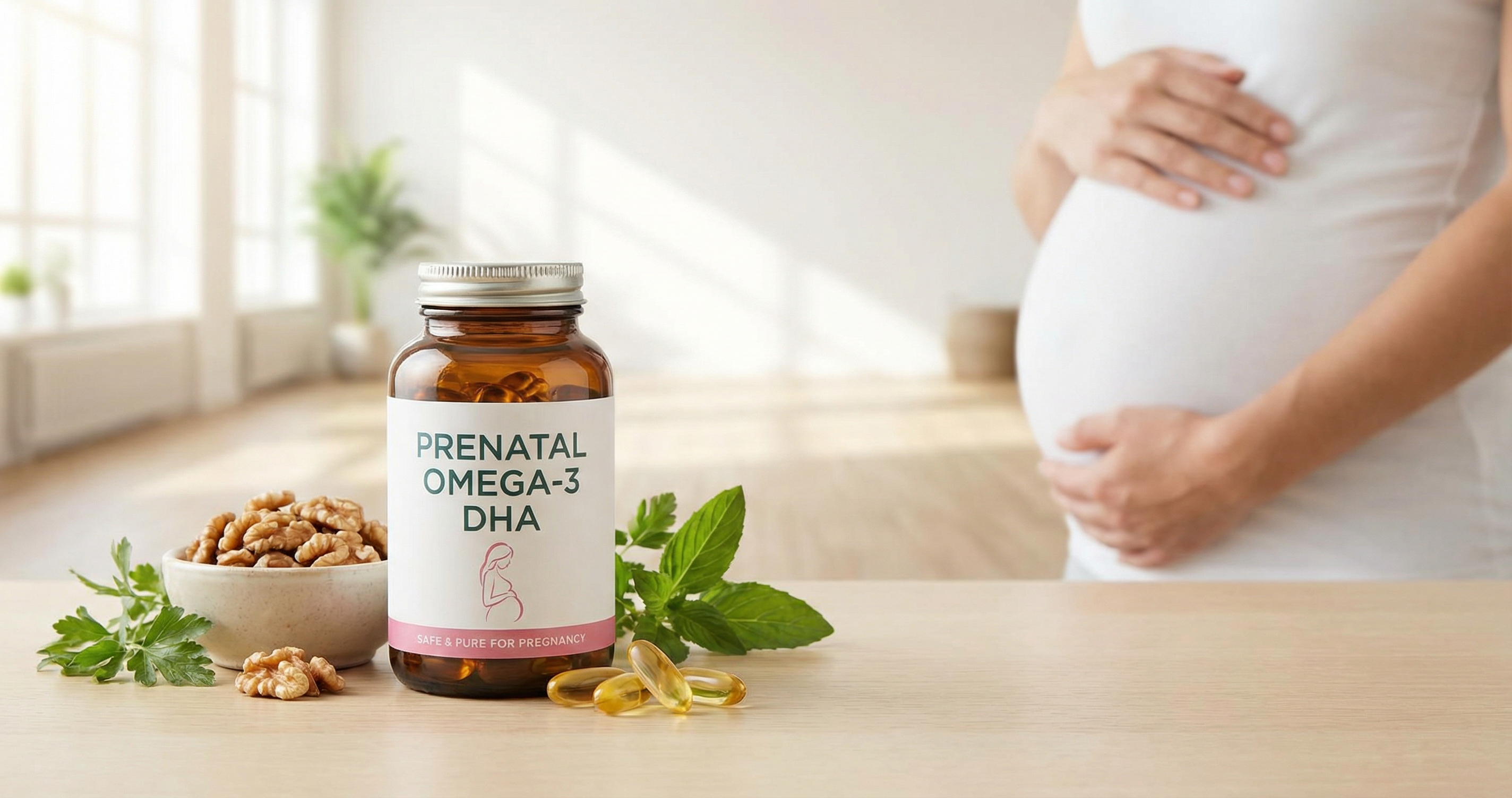
Why Omega-3s Matter During Pregnancy
Omega-3 fatty acids, especially DHA, play important roles in fetal brain and eye development. The third trimester is a period of rapid DHA accumulation in the baby''s brain and retina. Mum''s intake—from diet and, when needed, supplements—affects how much DHA is available. As a CNS/RD I often explain that adequate omega-3 intake during pregnancy is linked in research to developmental outcomes; it is not a guarantee of any specific result but is part of evidence-based prenatal nutrition. EPA also supports a healthy inflammatory response and may contribute to mood; both DHA and EPA are considered important for maternal and fetal health when consumed in appropriate amounts.
Recommended Intake and Safe Doses
Many expert bodies recommend that pregnant and breastfeeding women get at least 200–300 mg DHA per day; some suggest up to 500 mg or more. Combined EPA+DHA in the range of 300–500 mg per day (with DHA emphasised) is commonly cited. Higher doses are sometimes used under clinical guidance. Choose supplements formulated for pregnancy: they typically avoid high-dose vitamin A (retinol) and provide DHA (and often EPA) from fish oil or algae oil. Algae oil is a suitable vegetarian and vegan option. Avoid fish liver oils as a primary omega-3 source during pregnancy because of variable and potentially high vitamin A. Discuss dose and product choice with your obstetrician or dietitian, especially if you have a high-risk pregnancy or take other supplements.
Food First: Fatty Fish and Safety
Fatty fish (e.g. salmon, sardines, mackerel) are excellent sources of DHA and EPA. Two servings per week of lower-mercury fish are generally recommended for pregnancy. Follow local advisories on fish consumption and avoid high-mercury species (e.g. swordfish, king mackerel, tilefish). Cook fish thoroughly. For those who do not eat fish or eat it rarely, prenatal DHA supplements (fish or algae based) help meet recommendations. Fortified foods can contribute but check the label for DHA per serving.
Choosing a Prenatal Omega-3 Supplement
Look for a product that states DHA (and EPA if present) per serving, is third-party tested, and is intended for pregnancy or general adult use with pregnancy-safe dosing. Algae-based DHA is well studied in prenatal formulas and avoids fish; fish oil is also well established. Store supplements away from heat and light. Taking with a meal can improve absorption and reduce aftertaste or digestive upset. If you have a bleeding disorder or take blood thinners, discuss omega-3 use with your doctor before increasing intake.
Summary and Takeaways
- DHA supports fetal brain and eye development; aim for at least 200–300 mg DHA per day during pregnancy and breastfeeding.
- Sources: Fatty fish 2 servings per week (lower mercury); supplements (fish or algae) when fish intake is low.
- Safety: Use pregnancy-formulated products; avoid fish liver oils as primary source; discuss dose with your care team.
- Combine food and supplements as needed to meet recommendations consistently.
Omega-3s are a key part of evidence-based prenatal nutrition. Prioritise DHA from food and supplements as appropriate, and tailor intake with your healthcare provider.