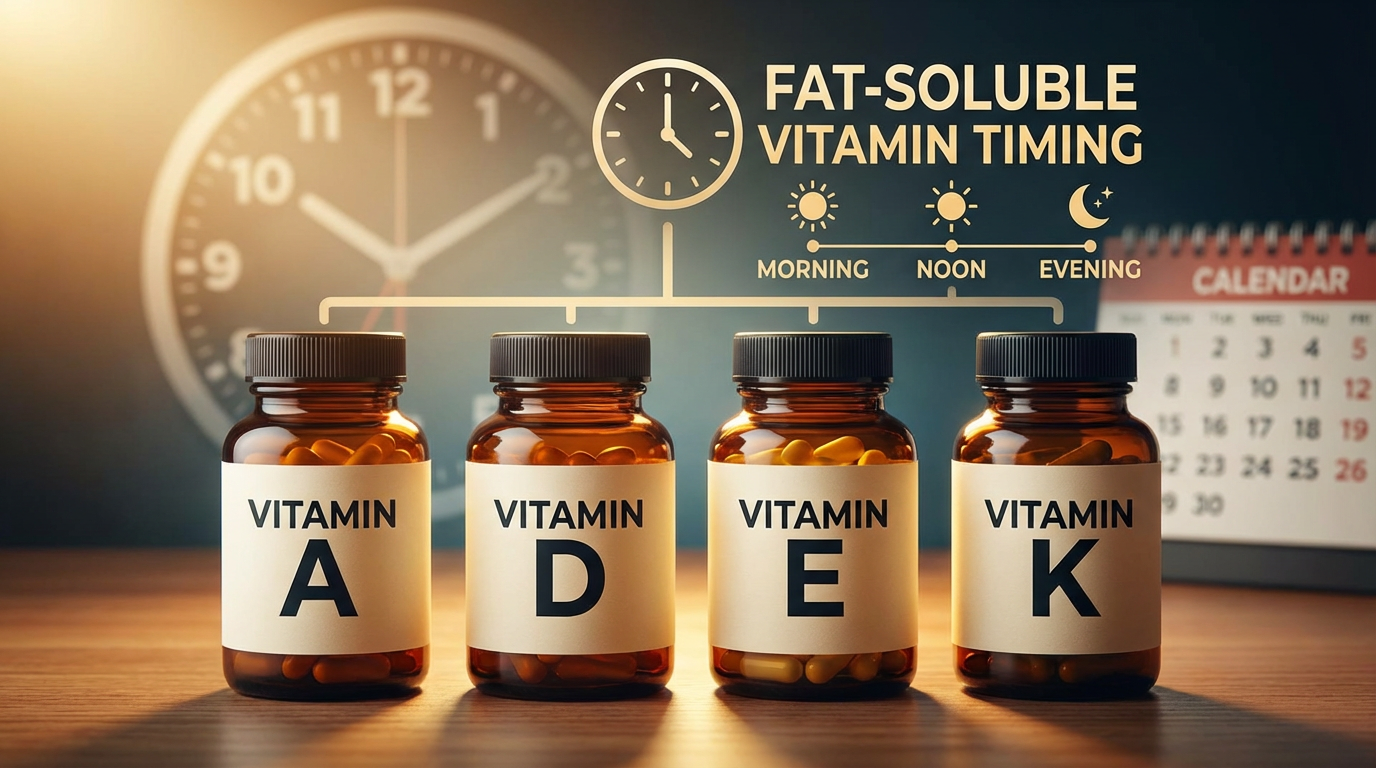
Fat-soluble vitamins—A, D, E, and K—are absorbed with dietary fat and stored in the body. Unlike water-soluble vitamins, they do not wash out quickly, so timing and dose matter for both benefit and safety. This guide covers why timing matters, how to take them with food, evidence-based dosing, and when to get professional advice. For quality options see vitamins on iHerb and vitamin D.
Why fat-soluble vitamins are different
Fat-soluble vitamins dissolve in fat and are absorbed in the small intestine along with dietary lipids. They are stored in the liver and fatty tissues, so daily intake is not always necessary and excess can build up. Water-soluble vitamins (e.g. B complex, C) are excreted in urine when intake exceeds need; fat-soluble vitamins can reach toxic levels if taken in very high amounts for long periods. That is why timing, dose, and taking them with a fat-containing meal matter.
Vitamin A: sources, timing, and safety
Vitamin A supports vision, immune function, and skin health. It is found as preformed retinol (animal sources: liver, fish oil, dairy) and as provitamin A carotenoids (plant sources: carrots, sweet potato, spinach). Retinol is more potent and can be toxic in high doses; beta-carotene from food is converted as needed and is safer. Most people in developed countries get enough from diet; supplements are useful when intake is low or when a clinician recommends them. Take vitamin A with a meal that contains some fat to improve absorption. Avoid megadoses; upper limits for adults are around 3,000 mcg RAE (10,000 IU retinol) per day unless under medical supervision. Pregnant women should not take high-dose retinol (risk of birth defects); beta-carotene from food is preferred. Compare vitamin A products if you need a supplement.
Vitamin D: the sunshine vitamin
Vitamin D is critical for calcium absorption, bone health, and immune function. Many people are low because of limited sun exposure, skin type, latitude, or diet. Blood testing can clarify your status. Vitamin D is fat-soluble, so taking it with a meal that contains fat improves absorption. Studies suggest that taking it with the largest meal of the day or with a fat-containing snack is more effective than on an empty stomach. Dose depends on baseline level and goals; common maintenance doses are 1,000–2,000 IU daily, with higher doses used under guidance when deficiency is confirmed. Do not assume you need very high doses; testing and professional advice help avoid both deficiency and excess. Vitamin D supplements are widely available; choose a form (D2 or D3) and dose that fits your plan.
Vitamin E: antioxidant, dose, and timing
Vitamin E is a group of tocopherols and tocotrienols with antioxidant properties. It is found in nuts, seeds, vegetable oils, and leafy greens. Deficiency is rare in healthy people eating a varied diet. Supplementation is sometimes used for specific conditions under medical supervision. Because it is fat-soluble, take vitamin E with a meal containing fat. High-dose vitamin E (e.g. over 400 IU daily) has been associated with possible risks in some studies; more is not better. Stick to evidence-based doses and avoid megadoses unless prescribed. Vitamin E can thin blood at high doses; if you take anticoagulants, discuss with your doctor before supplementing.
Vitamin K: K1 and K2
Vitamin K is essential for blood clotting (K1, phylloquinone) and for directing calcium to bones and away from arteries (K2, menaquinones). Leafy greens are rich in K1; fermented foods and some animal products provide K2. Many people get enough K1 from diet; K2 supplementation has gained attention for bone and cardiovascular support, though evidence is still evolving. Take vitamin K with fat for better absorption. If you are on warfarin or other anticoagulants, do not change vitamin K intake (food or supplement) without your doctor's knowledge—consistency is key for dosing of your medication. Vitamin K supplements are available for those with a defined need.
Best time of day and with which meal
There is no single “best” time that fits everyone. Practical approach: take fat-soluble vitamins with a meal that contains at least a small amount of fat (e.g. nuts, avocado, olive oil, eggs, full-fat dairy). For many people, breakfast or dinner works well. If you take several supplements, grouping them with one fat-containing meal can simplify the routine and improve absorption. Avoid taking large doses on an empty stomach; absorption may be reduced. Consistency matters more than the exact clock time.
Combining with other supplements and medications
Fat-soluble vitamins can interact with each other and with drugs. High-dose vitamin A and vitamin E may interact with blood thinners; vitamin K definitely affects warfarin. If you take prescription medication or other supplements, check for interactions and ask your doctor or pharmacist. Do not stack multiple high-dose fat-soluble vitamins without professional guidance. A balanced diet plus targeted supplementation when needed is safer than self-prescribing megadoses.
Who may need supplements
Vitamin D is the one most commonly low in northern climates, older adults, and people with limited sun exposure—testing and supplementation are often appropriate. Vitamin A supplementation may be needed in areas where deficiency is common or in specific medical conditions. Vitamin E and K are less commonly supplemented unless there is a defined indication. Blood work and a conversation with a healthcare provider help identify real gaps and avoid unnecessary or excessive intake.
Dosing ranges and upper limits
Vitamin A: adult upper limit about 3,000 mcg RAE/day (retinol); higher intakes increase toxicity risk. Vitamin D: many experts suggest 1,000–2,000 IU daily for maintenance; deficiency may require higher short-term doses under guidance—upper limits vary by authority but very high long-term use can raise calcium and affect kidneys. Vitamin E: 400 IU/day is often cited as an upper safe level for supplements; food sources are safe. Vitamin K: no well-defined upper limit from food; supplement doses should match clinical need and be consistent if you are on warfarin. Always read product labels and do not exceed recommended doses unless your doctor advises.
Food first, then supplements
Prioritize a varied diet: fatty fish and fortified foods for D; leafy greens and colored vegetables for A and K; nuts, seeds, and oils for E. Supplements fill gaps when diet or sun exposure is insufficient. Choose products from reputable brands with clear labeling. Store vitamins in a cool, dry place and respect expiry dates. You can compare vitamin brands to find formulations that suit your needs.
Practical tips
Take your fat-soluble vitamins at the same time each day with your fattiest meal to build a habit and maximize absorption. If you forget a dose, take it with the next meal; do not double up. Keep a simple log if you take several supplements or medications so you and your doctor can review. Recheck blood levels periodically when supplementing vitamin D or A long-term.
Summary
- Fat-soluble vitamins (A, D, E, K) are absorbed with fat; take them with a fat-containing meal.
- They can build up in the body; avoid megadoses and respect upper limits unless under medical care.
- Vitamin D is most commonly supplemented; test and dose according to need.
- Vitamin K and anticoagulants: keep intake consistent and coordinate with your doctor.
- When in doubt or on medications, seek professional advice before adding or changing supplements.