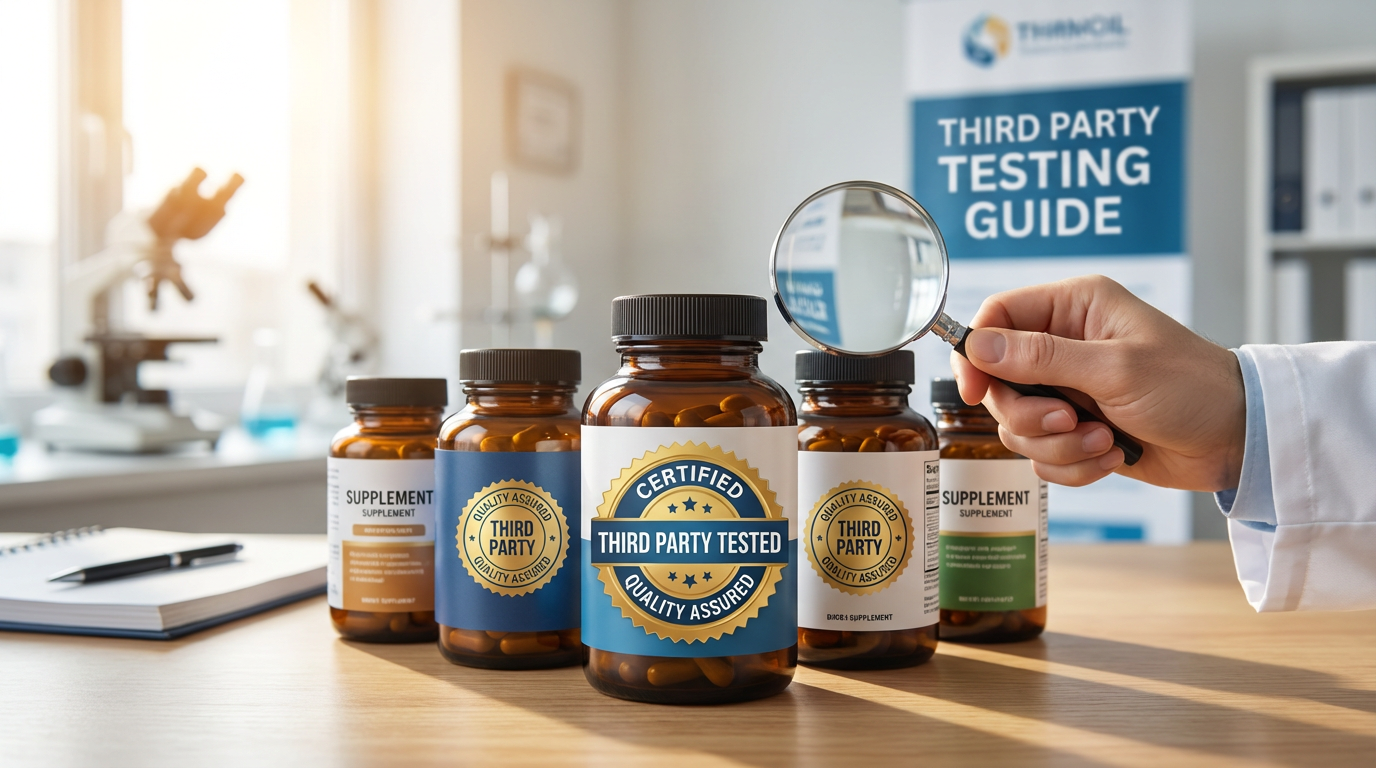
Why Third-Party Testing Matters
Dietary supplements are not approved for safety or efficacy by regulators before sale in many countries. Labels can be wrong: products may contain less or more of an ingredient than stated, or ingredients not listed at all, including banned substances, heavy metals, or microbes. Third-party testing means an independent organisation checks products against their own standards and sometimes against banned-substance lists. Choosing tested products reduces the risk of contamination and mislabelling and is especially important for athletes who are subject to anti-doping rules or anyone who wants to know what they are actually taking.
What Third-Party Testing Covers
Programmes vary, but common elements include: Label claim verification — does the product contain the ingredients and amounts declared on the label? Purity and contaminants — screening for heavy metals, microbes, or other impurities. Banned substances — some programmes test against lists used in sport (e.g. WADA Prohibited List) so that athletes can use certified products with lower risk of a positive test. Good manufacturing practice (GMP) — audits of manufacturing facilities to ensure consistent quality and hygiene. Not every programme does all of these; check what each seal or certification actually covers before relying on it.
Major Third-Party Programmes
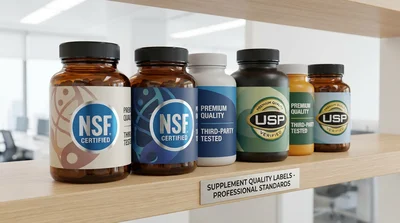
NSF Certified for Sport — tests for label accuracy, contaminants, and more than 280 banned substances. Widely used by professional and collegiate sports. Products are tested batch-by-batch or through facility certification. Informed Sport / Informed Choice — each batch is tested for a list of banned substances (Informed Sport) or for label claims and contaminants (Informed Choice). Used by many athletes and brands. USP Verified — focuses on identity, strength, purity, and dissolution; does not specifically focus on banned substances for sport. ConsumerLab — independent testing and publishing of results; tests for label claims and contaminants. BSCG (Banned Substances Control Group) — tests for banned substances and label claims. Other regional or brand-specific programmes exist; look for clear documentation of what is tested and how often.
How to Use Certifications When Shopping
Look for the certification mark on the package or on the brand’s website (e.g. NSF Certified for Sport, Informed Sport). Verify that the specific product and batch are covered — some programmes list certified products and batch numbers online. A seal on one product from a brand does not automatically mean all products from that brand are certified; check per product. If you are an athlete in a tested sport, prefer programmes that explicitly test against the relevant banned list (e.g. NSF Certified for Sport, Informed Sport) and keep a record of batch numbers in case of a positive test. For general quality and label accuracy, USP or ConsumerLab-type verification can still add value.
Limitations of Third-Party Testing
Testing is not a guarantee. Certifications are typically based on testing at a point in time or on audits; bad batches can slip through, and facilities can change. No programme tests every single batch of every product in the world. Some certifications cover only certain ingredients or dosage forms. Cost and access vary — certified products are often more expensive, and not every supplement has a certified option. Use certifications as one factor in decision-making, not as a guarantee that a product is safe or effective for your goals. Combine tested products with buying from reputable brands and checking for recalls or adverse reports.
What to Do If You Compete or Are Tested
If you are subject to anti-doping rules: (1) Prefer products that are certified by a programme that tests for banned substances (NSF Certified for Sport, Informed Sport, or equivalent). (2) Check the programme’s online database for the exact product and batch. (3) Avoid supplements that make extreme claims (e.g. “legal steroid”) or that are sold as “pre-workout” or “fat burner” without certification — these categories have historically had higher contamination rates. (4) When in doubt, do not take the product or seek advice from your federation or a sports dietitian. (5) Remember: you are responsible for what is in your body; a positive test is not excused by “I didn’t know the supplement was contaminated.”
Summary for Everyday Users
Even if you do not compete, third-party tested products can give you more confidence in label accuracy and lower risk of contaminants. Look for NSF, Informed Sport/Choice, USP, or similar marks on products you buy regularly. Prefer certified options when available and when the cost is acceptable. For vitamins, minerals, and single-ingredient products, tested options are increasingly common; for complex blends and pre-workouts, certification is especially useful given the higher risk of undeclared ingredients.
Summary
- Third-party testing means an independent body checks products for label accuracy, contaminants, and sometimes banned substances.
- Common programmes: NSF Certified for Sport, Informed Sport/Choice, USP Verified, ConsumerLab, BSCG.
- Use: Prefer certified products when possible; verify the specific product and batch; athletes should use programmes that test for banned substances.
- Limitations: Not a guarantee; use as one factor alongside brand reputation and common sense.
Third-party supplement testing helps you choose products with better assurance of quality and purity. For athletes and cautious consumers alike, it is a practical way to reduce risk.