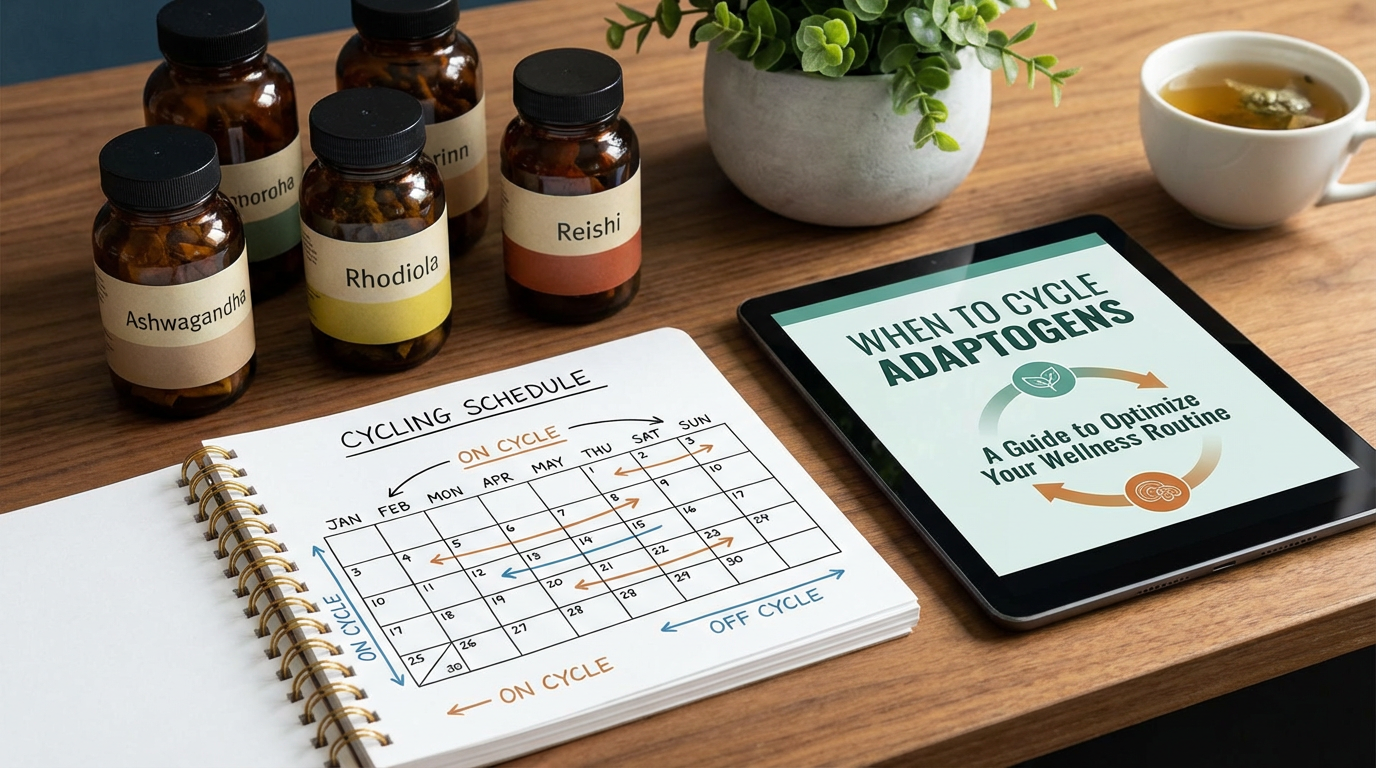
What Adaptogens Are and Why Cycling Comes Up
Adaptogens are substances (often herbs like ashwagandha, rhodiola, ginseng, eleuthero) that are said to help the body adapt to stress and support balance. Research on individual adaptogens is growing but still limited; effects and optimal duration of use are not fully established. "Cycling" means taking a supplement for a period and then stopping or reducing for a break. People cycle adaptogens to reduce the chance of tolerance, dependence, or unknown long-term effects, and to see how they feel without the supplement. This guide summarizes what evidence and practice suggest about when and how to cycle adaptogens.
Evidence for Cycling
There is no large body of clinical trials that definitively support or oppose cycling for most adaptogens. Some studies use adaptogens for 4–12 weeks and then stop; others run longer. A few traditional systems suggest periodic breaks. In the absence of strong data, cycling is often recommended as a precaution: it limits long-term continuous exposure, may help preserve response (avoid "adaptation" in the sense of reduced effect), and allows you to reassess whether you still need the supplement. It is a reasonable default when safety and long-term use are uncertain.
Common Cycling Patterns
Weeks on, weeks off: Many practitioners suggest 4–8 weeks on followed by 1–2 weeks off, or 8–12 weeks on and 2–4 weeks off. This is not evidence-based for every adaptogen but is a simple, memorable pattern. Match study length: If you use a product whose benefits were shown in, say, 8-week trials, taking it for 8 weeks and then pausing aligns with what was tested. Seasonal or stress-based: Some people use adaptogens during high-stress periods (e.g. exams, busy season) and stop when stress eases. Listen to your body: If you notice reduced benefit, side effects, or dependence (e.g. feeling you "need" it to function), a break is sensible regardless of the calendar.
Ashwagandha
Ashwagandha is one of the most studied adaptogens. Trials often run 8–12 weeks; longer-term data are limited. Cycling is commonly suggested: e.g. 8–12 weeks on, 2–4 weeks off, then reassess. Watch for sedation, digestive upset, or thyroid effects; if any appear, consider stopping or reducing and discussing with a provider. Do not use during pregnancy unless under professional guidance.
Rhodiola
Rhodiola is often used for fatigue and performance; studies typically use it for several weeks. Cycling (e.g. 4–6 weeks on, 1–2 weeks off) is a practical approach. Some people use it only on demanding days or during intense periods. Avoid taking it late in the day if it affects sleep. Cycling helps avoid habituation and keeps use aligned with actual need.
Ginseng (Asian and American)
Asian ginseng (Panax ginseng) and American ginseng (Panax quinquefolius) are used for energy and immune support. Traditional use often includes breaks. A common pattern is 4–8 weeks on, 1–2 weeks off, or use only during demanding phases. Do not use continuously at high doses without a break; interaction with drugs (e.g. anticoagulants, diabetes medications) should be discussed with a doctor.
Other Adaptogens
Eleuthero (Siberian ginseng), schisandra, holy basil, and others have less clinical data. The same principle applies: use for a defined period (e.g. 6–8 weeks), take a break (1–2 weeks or more), and reassess. If you stack multiple adaptogens, consider cycling the whole stack or staggering cycles so you are not on everything at once year-round.
When Not to Cycle (or to Pause Cycling)
If a healthcare provider has recommended a specific adaptogen for a defined condition and duration, follow their plan. If you are using an adaptogen for a short, discrete period (e.g. a few weeks before an event), a formal "cycle" may be unnecessary. If you notice adverse effects, stop and reassess before worrying about a schedule. Pregnancy, breastfeeding, and use with prescription drugs are situations where professional guidance overrides generic cycling advice.
Practical Takeaways
Pick a simple schedule (e.g. 8 weeks on, 2 weeks off) and stick to it unless you have a reason to change. Keep a brief log of how you feel on and off the supplement so you can tell if it is still helping. Use the lowest dose that gives the desired effect. Do not assume cycling eliminates all risk; it is a precaution, not a guarantee. When in doubt, shorter cycles and longer breaks are safer.
Summary
- Cycling is precautionary: Evidence is limited; breaks may help avoid tolerance and limit long-term exposure.
- Common pattern: 4–12 weeks on, 1–4 weeks off, then reassess; align with study length when possible.
- By herb: Ashwagandha and rhodiola often 8–12 or 4–6 weeks on with breaks; ginseng similar or use in phases.
- Listen to your body: Stop or take a break if benefit drops, side effects appear, or you feel dependent.
- Professional guidance: Follow your provider''s plan when adaptogens are used for a specific condition or with medications.
Cycling adaptogens is a sensible default when evidence on long-term use is limited. Keep use time-limited, take breaks, and reassess regularly.