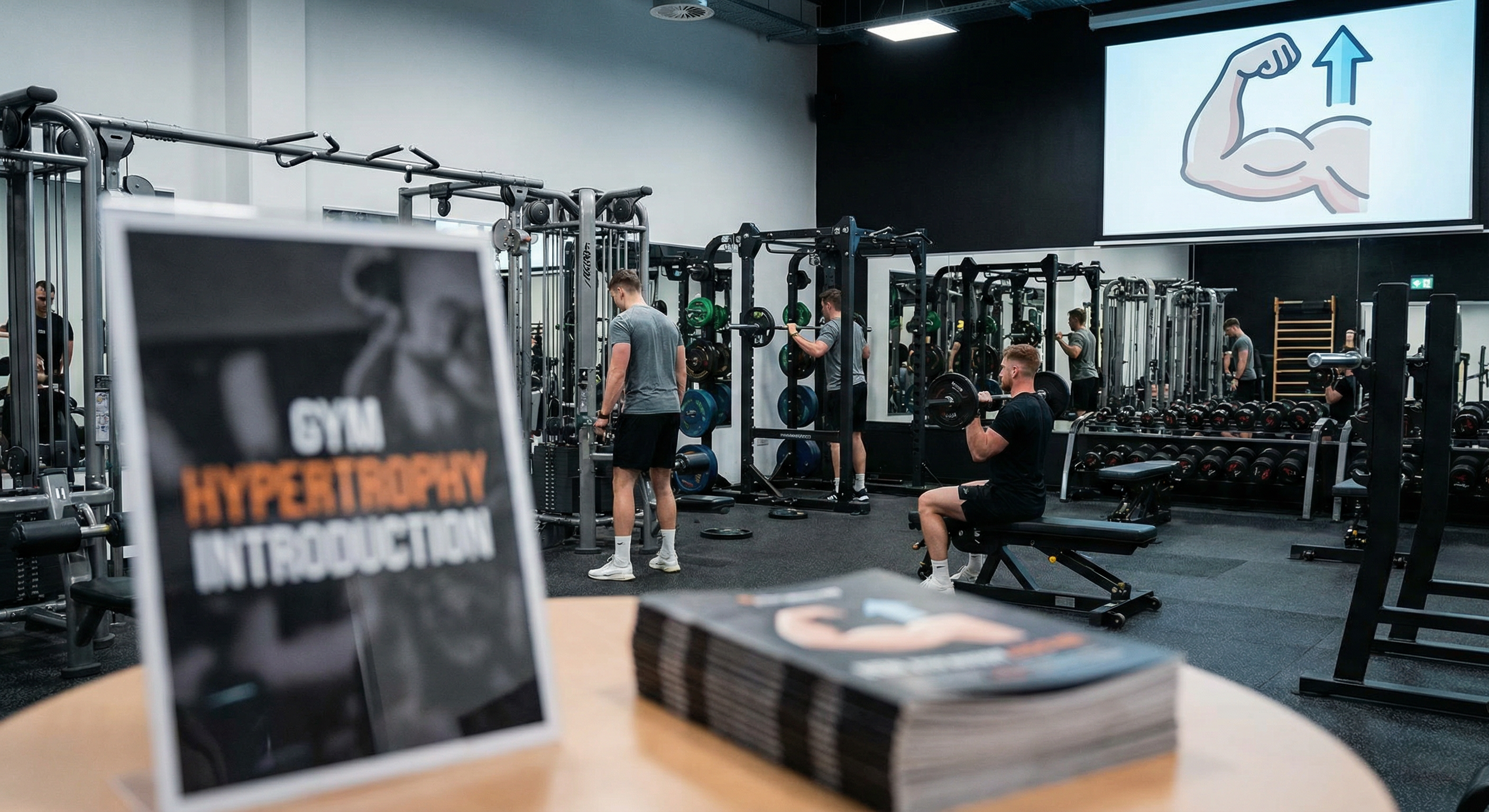
What Is Hypertrophy Training?
Hypertrophy means muscle growth. Unlike pure strength training, which emphasises heavy loads and low reps, hypertrophy programmes use moderate loads and moderate-to-high reps (often 8–15 per set) to create the tension and metabolic stress that encourage muscle fibres to adapt and grow. This 6-week introduction is designed for beginners or anyone returning to the gym who wants to build a foundation for muscle building without jumping into advanced splits or very high volume.
Research consistently shows that muscle growth depends on mechanical tension, metabolic stress, and muscle damage within a range the body can recover from. Hypertrophy-style training targets these drivers through volume (sets × reps × load), time under tension, and sufficient frequency per muscle group. For most people, training each major muscle group at least twice per week with moderate rep ranges yields good results, especially when combined with adequate protein and recovery.
Why Six Weeks?
Six weeks is long enough to learn basic movement patterns, establish a habit, and see early improvements in strength and appearance. It is short enough to stay motivated and to reassess afterwards: you can repeat the programme, add volume, or move on to a more advanced split. The programme is structured in two phases: weeks 1–2 focus on form and building volume gently; weeks 3–6 introduce progressive overload so you add weight or reps over time.
This length also allows you to gauge how your body responds to structured hypertrophy work without committing to a long block. If you feel recovered and progress is steady, you can extend the approach or switch to a different programme; if recovery lags, you can add rest or reduce volume before the next block.
Rep Ranges and Recovery
You will work in the 8–12 rep range for most exercises. Choose a weight that allows you to complete the target reps with good form; the last rep or two should be challenging but not to failure every set. Rest 60–90 seconds between sets so you recover enough to maintain quality. Training four times per week gives each muscle group adequate stimulus and recovery; avoid the temptation to add many more sets or sessions early on — consistency and recovery matter more than maximal volume at this stage.
Evidence suggests that a wide range of rep ranges (roughly 6–20+) can support hypertrophy when sets are taken close to failure and volume is equated. The 8–12 range is a practical sweet spot for beginners: it allows enough load for mechanical tension while keeping technique manageable and reducing injury risk compared with very heavy singles or triples.
Key Exercises and Structure
The programme uses compound movements (squats, bench press, rows, overhead press, deadlifts or variants) as the backbone, with some isolation work (e.g. biceps, triceps, calves) to round out the week. Each session has a clear focus so you can prioritise form and effort. Warm up with light sets and dynamic stretches; cool down with light stretching if you have time. If an exercise causes pain or you do not have the equipment, substitute a similar movement — for example, goblet squats instead of barbell squats, or dumbbell rows instead of barbell rows.
Split the week so that no muscle group is trained on consecutive days. A common layout is upper body / lower body / rest / upper / lower, or push / pull / legs with rest days as needed. Stick to the same split for the full six weeks so you can track progress and build the habit.
Progressive Overload
From week 3 onward, aim to add a small amount of weight or an extra rep when you can do so with good form. Progressive overload — gradually increasing demand on the muscles — is what drives growth. Track your main lifts (weight and reps per set) in a simple log or app so you can see progress and plan the next session. Do not rush; small, steady increases add up over six weeks and beyond.
If you hit a plateau (no progress for two weeks in a row), first check sleep, nutrition, and stress. Then consider a small deload: reduce weight or volume for one week before resuming progression. Do not add volume and intensity at the same time; prioritise one variable (e.g. weight) and keep sets and frequency stable.
Nutrition and Recovery
Muscle grows when you train, eat enough protein and calories, and recover. Aim for sufficient protein (e.g. 1.6–2.2 g per kg bodyweight per day for those focused on muscle gain) and enough total calories to support growth without excessive fat gain. Sleep and rest days are part of the programme — skip them and you limit your results and increase injury risk. Hydrate well and consider timing your largest meals around your training if that fits your schedule.
Supplements are optional and do not replace food. If you struggle to hit protein targets, protein powder can help. Creatine is well supported for strength and hypertrophy when used at standard doses (e.g. 3–5 g per day). Use them as part of a balanced diet; prioritise whole foods, sleep, and consistent training first.
Common Mistakes to Avoid
Do not add too much volume too soon: more is not always better, and recovery capacity is limited. Do not sacrifice form for weight; poor technique increases injury risk and reduces effective stimulus. Do not skip warm-ups or cool-downs; they support mobility and recovery. Do not compare your pace to others; progress is individual. Finally, do not neglect sleep and nutrition — they are as important as the training itself.
After the Six Weeks
Reassess: do you want to repeat the programme with slightly higher weights, add a day or two of training, or try a different split (e.g. push-pull-legs)? Many people benefit from running two or three 6-week blocks with a deload week between blocks before switching to another style (e.g. strength or higher volume). Keep a simple training log so you can plan the next block based on what worked.
Summary
- Goal: Build a foundation for muscle growth with moderate reps and four sessions per week.
- Phases: Weeks 1–2 form and volume; weeks 3–6 progressive overload.
- Recovery: Rest 60–90 seconds between sets; prioritise sleep and rest days.
- Progress: Add weight or reps gradually; track your main lifts.
- Nutrition: Sufficient protein and calories; supplements optional and secondary to food and recovery.
This 6-week gym hypertrophy introduction gives you a clear, manageable path to start building muscle with an emphasis on form, consistency, and recovery.