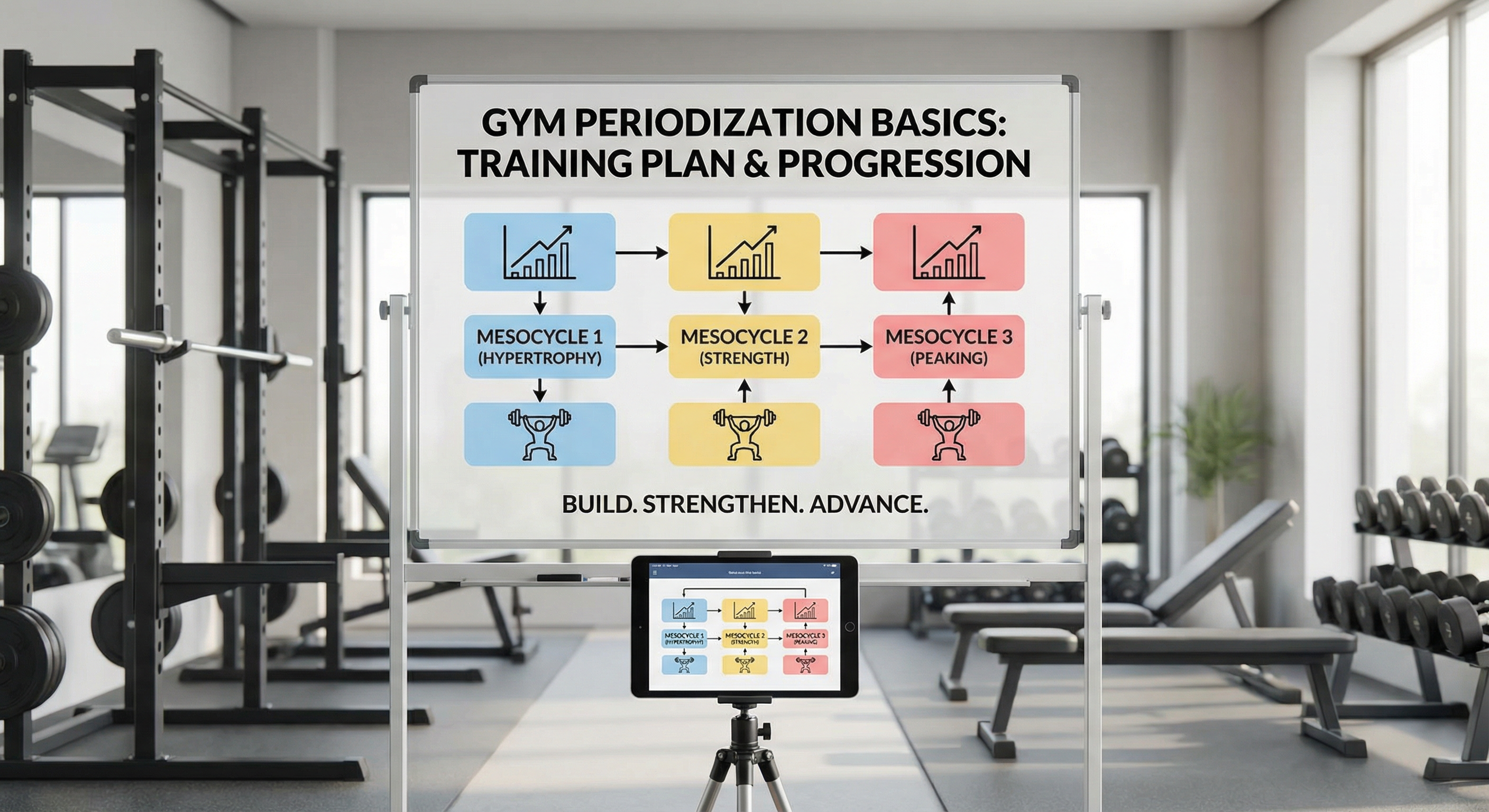
What Is Periodization?
Periodization means organising your training into planned phases (mesocycles) so that volume, intensity, and focus change over time. The goal is to build strength and muscle while managing fatigue and avoiding plateaus or overtraining. This topic affects many people who care about performance, energy, or health. Understanding the evidence and how to apply it in practice helps you make better choices and avoid common mistakes. Research in this area has grown; we summarize what is well supported and what remains uncertain so you can tailor your approach.
Individual response varies due to genetics, baseline status, diet, and lifestyle. What works for one person may not for another. Start with evidence-based recommendations and adjust based on your own experience and, when needed, professional guidance. This guide is for education; it does not replace medical or nutrition advice.
Types of Periodization
Linear (classical) periodization
Volume starts higher and intensity (load) lower; over several weeks, volume decreases and intensity increases. Classic example: a few weeks of 4×10, then 4×8, then 4×6, then 3×5 or 3×3. This pattern is well studied and suits many lifters who want a clear progression toward a peak. It can be run in blocks of 8–16 weeks with a deload week every 4–6 weeks.
Undulating (non-linear) periodization
Volume and intensity vary within the week or from session to session (e.g. heavy day, medium day, light day, or different rep ranges on different days). This approach can reduce monotony and may suit people who train the same muscle group multiple times per week. Evidence suggests both linear and undulating approaches can work; choice often depends on preference and recovery.
Block periodization
Training is divided into distinct blocks: e.g. accumulation (higher volume, moderate intensity), intensification (lower volume, higher intensity), and realisation/taper (peak). This is common in sport and can be adapted for gym goals. Blocks typically last 2–4 weeks each; total cycle might be 8–12 weeks.
What the Evidence Shows
Quality studies point to several consistent findings. Periodized training generally outperforms non-periodized training for strength and often for hypertrophy when volume is equated. Some interventions show clear benefits for specific goals or populations; others are promising but need more data. We focus on practical takeaways: how to structure phases, when to deload, and how to combine with sleep and nutrition. Single headline results are less reliable than patterns across multiple studies.
Be cautious of claims that sound too good to be true. Supplements and timing can support goals but rarely replace fundamentals. Prioritize sleep, balanced nutrition, training consistency, and stress management first; then add targeted support where it is best supported by evidence. For recovery and performance, many lifters use protein and creatine as part of a solid diet; they do not replace periodization or recovery.
Dosage, Timing, and Form (Training Variables)
Most training variables have an effective range. Too little volume may not stimulate growth; too much can cause excessive fatigue or injury. Follow evidence-based guidelines: for hypertrophy, often 10–20 sets per muscle group per week (depending on experience); for strength, include periods of higher intensity (e.g. 85%+ of 1RM) with adequate rest. Timing of sessions matters: allow at least one rest day between heavy sessions for the same muscle group when possible.
Consistency usually matters more than a single perfect block. Building small habits around weekly volume and deloads leads to better long-term outcomes than sporadic intense periods. Track how you feel and perform so you can adjust. If you take other supplements or medications, check for interactions when adding new supplements.
Deloads and Recovery
Plan a deload every 4–6 weeks: reduce weight (e.g. 40–60% of normal) or volume (fewer sets) for one week. This allows joints and the nervous system to recover and often improves performance in the following block. Do not skip deloads when you feel run down or when numbers stall; they are part of the plan, not a sign of failure.
Combining With Lifestyle and Nutrition
Periodization works best as part of a broader approach. Poor sleep, chronic stress, or inadequate nutrition can undermine even well-planned training. Recovery days, hydration, and balanced meals support sustained results. Use the strategies here as one piece of the puzzle, not as a stand-alone fix. Athletes and active adults often benefit from aligning nutrition and sleep with key phases—for example, ensuring sufficient protein and calories during high-volume blocks.
Summary and Takeaways
- Periodization organises training into phases to manage volume, intensity, and fatigue.
- Linear, undulating, and block periodization are all valid; choose based on goals and preference.
- Include a deload every 4–6 weeks; prioritise sleep, nutrition, and stress management.
- Use evidence-based volume and intensity; individual response varies.
- When in doubt or with health conditions, seek professional advice.
Taking a balanced, evidence-based approach to periodization helps you get the most benefit while avoiding unnecessary fatigue or injury.