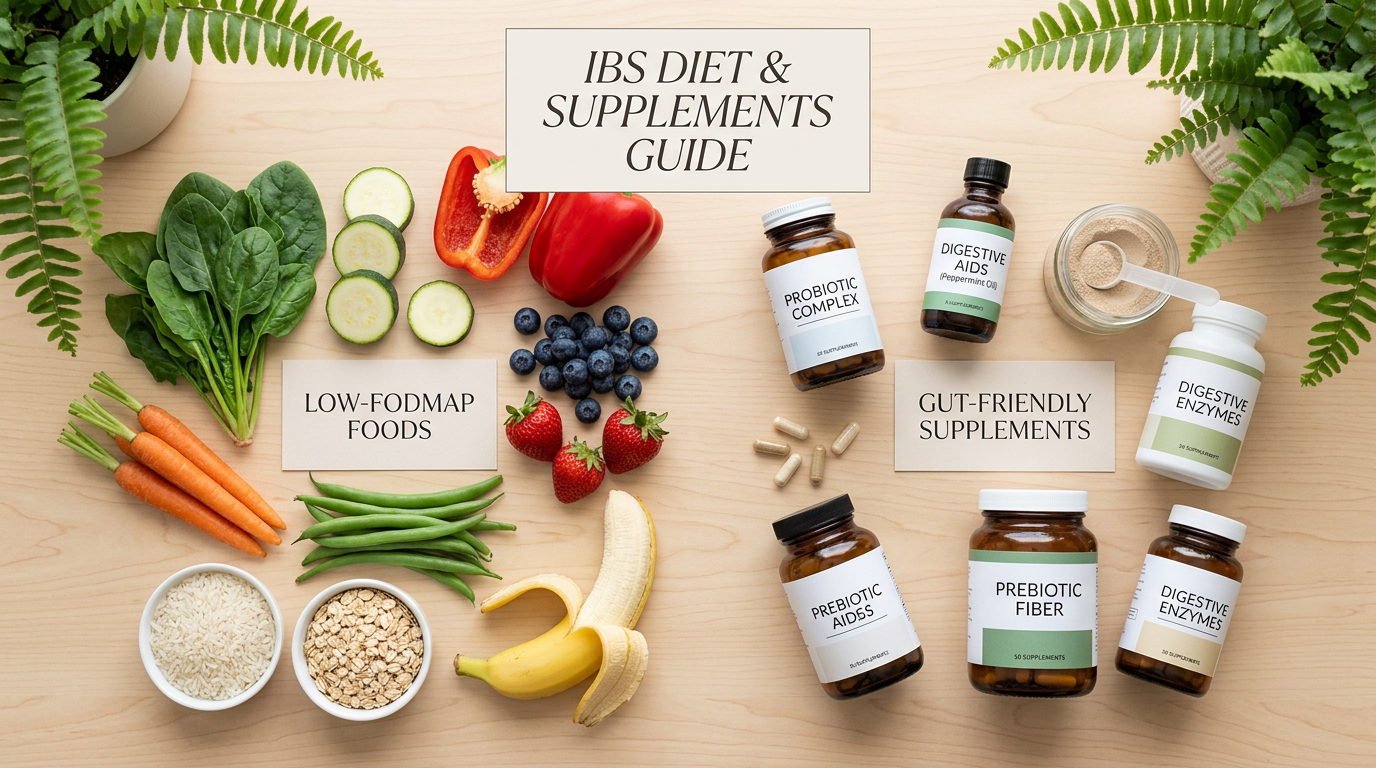
Irritable bowel syndrome (IBS) is a common functional gut disorder characterised by abdominal pain or discomfort, bloating, and changes in bowel habits (diarrhoea, constipation, or both) without a clear structural or biochemical cause. It affects quality of life and is often managed through diet, lifestyle, and sometimes supplements. Diagnosis is usually made after ruling out other conditions (e.g. coeliac disease, inflammatory bowel disease). IBS is heterogeneous: what helps one person may not help another, so an individualised approach with a dietitian or doctor is valuable. This guide covers evidence-based diet and supplement strategies so you can make informed choices and work effectively with your healthcare team.
What is IBS?
IBS is a disorder of gut-brain interaction: the gut may be more sensitive (visceral hypersensitivity), motility may be altered (faster or slower transit), and the microbiome and immune response can play a role. There is no single test for IBS; diagnosis rests on symptom criteria (e.g. Rome criteria) and excluding other conditions. Subtypes include IBS with constipation (IBS-C), IBS with diarrhoea (IBS-D), and mixed or alternating (IBS-M). Understanding your subtype helps tailor diet and supplements. Stress, sleep, and diet often influence symptoms, so a holistic approach—diet, lifestyle, and targeted supplements—usually works best. Do not self-diagnose; if you suspect IBS, see a doctor to rule out coeliac disease, IBD, or other conditions that need different treatment.
Diet: low-FODMAP and fibre
A low-FODMAP diet reduces fermentable carbohydrates (oligosaccharides, disaccharides, monosaccharides, and polyols) that can trigger gas, bloating, and pain in many people with IBS. It is one of the best-studied dietary approaches and is often done in phases: a restriction phase, then systematic reintroduction to identify personal triggers. It should be guided by a dietitian to avoid unnecessary restriction and nutrient gaps. Soluble fibre (e.g. psyllium) may help some people with IBS, especially those with constipation-predominant symptoms; fibre supplements on iHerb offer convenient options. Insoluble fibre can worsen symptoms in some; tailor fibre type and amount with professional support. Keep a food and symptom diary to spot patterns; many people find that a few specific foods or food groups drive most of their symptoms. Once triggers are identified, you can enjoy a more varied diet while avoiding only what bothers you. Long-term strict low-FODMAP is not recommended without dietitian input, as it can affect nutrient intake and gut microbiota diversity.
Probiotics for IBS
Some probiotic strains are studied for IBS (e.g. certain Bifidobacterium and Lactobacillus strains). Results vary by person and strain; not everyone improves, and some people may feel worse. If you try probiotics, choose a product with strains and doses used in IBS trials (often 1–10 billion CFU or more per day), use for at least several weeks, and keep a symptom diary to track response. Probiotics on iHerb include acidophilus and multi-strain formulations. Do not use probiotics as a substitute for medical advice or a structured diet approach. Quality matters: look for products with stated strain names and viability through shelf life. Introduce one product at a time so you can tell whether it helps. If you notice no improvement or worsening after 4–8 weeks, consider trying a different strain or discussing other options with your doctor or dietitian.
Peppermint oil
Enteric-coated peppermint oil is one of the best-studied supplements for functional digestive symptoms, including bloating and abdominal discomfort in IBS. It may work by relaxing smooth muscle in the gut and reducing spasms. Several randomized trials support its use; effects are often modest but meaningful for some. Use enteric-coated products so the oil is released in the intestine rather than the stomach, and follow label dosing. Peppermint can worsen reflux in some people; if you have GERD or hiatal hernia, use with caution or avoid. Do not use in place of a medical workup if you have red-flag symptoms (e.g. weight loss, blood in stool, severe pain). Peppermint oil is often used as needed or in short courses; discuss long-term use with your doctor if you use it regularly.
Other supplements sometimes used
Fibre supplements (e.g. psyllium) can support regularity when introduced gradually and taken with plenty of water; they are often helpful in IBS-C. Digestive enzymes (e.g. alpha-galactosidase for beans, lactase for lactose) may reduce gas and bloating when specific foods are triggers. Digestive enzymes on iHerb are available in various formulations. Vitamin D and magnesium are sometimes discussed in the context of gut and mood; evidence for IBS specifically is limited, but if you are low in either, correction may support overall wellbeing. Glutamine is sometimes tried for gut barrier support; evidence in IBS is mixed and it should not replace first-line diet and lifestyle measures. Always discuss new supplements with your doctor, especially if you take other medications or have kidney or digestive conditions. Avoid stacking many new supplements at once; add one at a time and track symptoms so you can see what helps.
Lifestyle and stress
Stress and poor sleep can worsen IBS symptoms. The gut-brain axis is well recognised: anxiety, stress, and irregular routines can increase sensitivity and alter motility. Regular physical activity, stress management (e.g. mindfulness, relaxation, cognitive behavioural therapy), and consistent meal times may help. A multidisciplinary approach (dietitian, doctor, and sometimes psychologist) is often most effective for moderate to severe IBS. Keeping a food and symptom diary can help identify triggers and patterns. Sleep hygiene—consistent schedule, limiting screens before bed, comfortable environment—supports both mood and gut function. If stress or anxiety are major drivers, consider therapy or counselling alongside diet and supplements; treating only the gut may not be enough when stress is central.
Safety and supplement interactions
Most supplements discussed here (fibre, probiotics, peppermint oil, digestive enzymes) are well tolerated when used as directed. Probiotics can cause initial gas or bloating; fibre needs adequate fluid to avoid constipation. If you take immunosuppressants or have a central line or critical illness, probiotics should only be used under medical guidance. Peppermint oil can interact with some medications and is best avoided in severe liver disease. Always tell your doctor and pharmacist what supplements you take so they can check for interactions with prescription drugs. Quality varies by brand; choose products from reputable companies and store them as directed. If a supplement worsens your symptoms, stop it and discuss with your doctor before trying something else.
When to see a doctor
Do not rely on diet and supplements alone if you have unexplained or persistent symptoms, especially with weight loss, blood in stool, severe pain, vomiting, or family history of digestive disease. A clinician can rule out coeliac disease, inflammatory bowel disease, and other pathology. Once serious causes are excluded, a dietitian can help you design a personalised diet and supplement plan. If you have already been diagnosed with IBS, still report any change in symptoms (new pain, change in bowel habit, fever) so your doctor can reassess. Red flags that need prompt evaluation include unexplained weight loss, rectal bleeding, anaemia, or symptoms starting after age 50. Regular follow-up with your GP or gastroenterologist helps keep your plan up to date and safe.
Putting it together: a practical approach
Start with a clear diagnosis and, if possible, dietitian input for diet and fibre. Introduce one dietary change at a time (e.g. low-FODMAP under guidance, or gradual fibre increase) and track symptoms for 2–4 weeks. If you add a supplement, choose one evidence-based option (e.g. probiotic or peppermint oil) and use it consistently for at least 4–8 weeks before judging effect. Keep a simple diary of food, stress, sleep, and symptoms so you can see patterns. Avoid the temptation to add many supplements at once; it becomes impossible to know what is helping or hurting. Revisit your plan every few months with your doctor or dietitian; as symptoms change, your diet and supplement strategy may need to shift. Many people with IBS find that a combination of tailored diet, stress management, and one or two targeted supplements gives the best long-term result.
Tracking symptoms and triggers
A simple diary can make a big difference. Note what you eat (meals and snacks), approximate portion sizes, stress level, sleep quality, and bowel habits and pain or bloating. After 1–2 weeks you may see clear links (e.g. symptoms after dairy, or worse on high-stress days). Use this to decide which diet change or supplement to try first. When you start a new supplement, keep the diary so you can see whether symptoms improve after 4–8 weeks. Do not assume that more supplements are better; often one or two targeted choices plus lifestyle changes yield the best result. Share your diary with your dietitian or doctor so they can help interpret patterns and adjust your plan.
Low-FODMAP in more detail
FODMAPs are found in many everyday foods: certain fruits (e.g. apples, stone fruits), vegetables (e.g. onions, garlic, cauliflower), grains (e.g. wheat, rye), legumes, and dairy (lactose). The restriction phase removes or reduces high-FODMAP foods; then you reintroduce them in groups to see which cause symptoms. Not everyone with IBS responds to low-FODMAP; it is most evidence-based for overall symptom relief in IBS, but individual response varies. A dietitian can help you plan meals so you stay nourished and avoid unnecessary restriction. Some people discover that only one or two FODMAP groups bother them and can eat most other foods freely. The diet is not meant to be lifelong restriction but a tool to identify triggers.
Gut-directed therapies
Beyond diet and supplements, gut-directed hypnotherapy and cognitive behavioural therapy (CBT) have good evidence for improving IBS symptoms and quality of life. They work by modulating gut-brain communication and reducing hypersensitivity and anxiety around gut symptoms. If your symptoms are strongly linked to stress or if diet and supplements have given only partial relief, ask your doctor about referral to a psychologist or therapist trained in these approaches. They are often used alongside diet and supplements rather than instead of them.
FAQ
How long should I try low-FODMAP?
The restriction phase is typically 2–6 weeks, followed by reintroduction to identify triggers. Do not stay on strict low-FODMAP long-term without dietitian guidance; the goal is to liberalise the diet while avoiding only your personal triggers.
Can I take probiotics and peppermint oil together?
Yes. They work by different mechanisms and are often used together. Take them as directed and track your symptoms; if you add both at once, you will not know which one is helping if you improve.
What if my symptoms are mostly stress-related?
Diet and supplements can still help, but addressing stress (therapy, relaxation, sleep, exercise) is important. Many people need both gut-directed and stress-directed interventions for lasting improvement.
Summary
- IBS is managed with diet, lifestyle, and sometimes supplements under professional guidance.
- Low-FODMAP and tailored fibre (e.g. soluble) are evidence-based diet options.
- Some probiotics may help; choose studied strains and use for several weeks.
- Enteric-coated peppermint oil may reduce bloating and discomfort in IBS.
- Discuss all supplements and diet changes with a doctor or dietitian.
IBS management is individual; work with healthcare providers to find what works for you. A stepwise approach—diagnosis, diet and lifestyle first, then targeted supplements—usually yields the best outcome. Keep expectations realistic: many people achieve good symptom control but may need to adjust their plan over time. Quality of life can improve significantly with the right combination of diet, stress management, and supplements; do not hesitate to ask for dietitian or psychological support when needed. For product options, you can browse digestive aids on iHerb including fibre, probiotics, and enzymes. Remember that IBS is a chronic condition that can fluctuate; having a clear plan and a supportive healthcare team makes it easier to manage flares and maintain progress over the long term. Reassess your diet and supplements every few months; as your symptoms or life circumstances change, your plan may need to be updated to stay effective. Many people with IBS find that a combination of tailored diet, stress management, and one or two targeted supplements gives the best long-term control. Discuss any new or worsening symptoms with your doctor promptly. A clear plan and supportive healthcare team make long-term management easier.