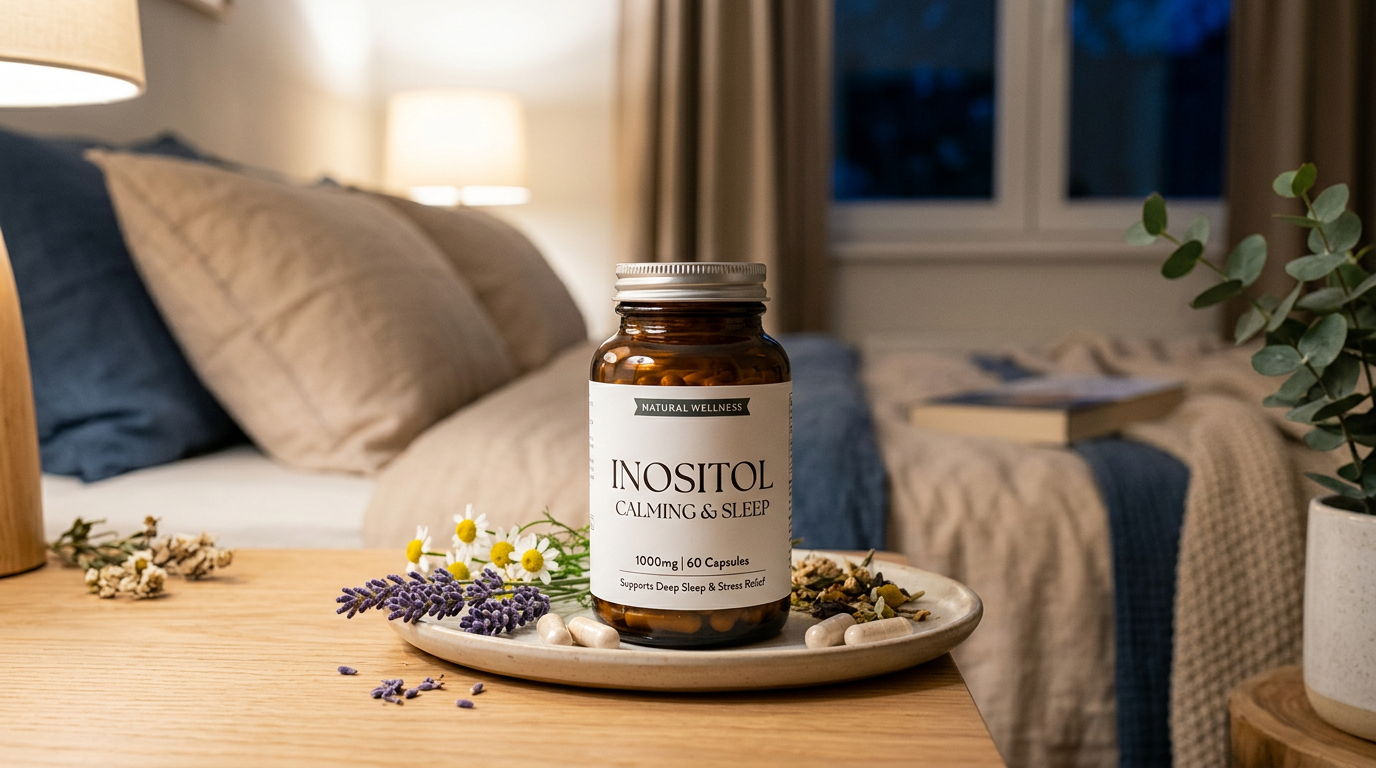
Inositol is a carbohydrate-like compound found in foods (e.g. fruits, beans, grains) and made by the body. It is involved in cell signalling and has been studied for mood, anxiety, and sleep. Myo-inositol is the most common form in supplements. Inositol does not replace medical treatment for anxiety or insomnia—consult a doctor for persistent symptoms. This guide summarises the evidence, dosing, and practical use so you can make informed decisions alongside your healthcare provider.
What Is Inositol?
Inositol is sometimes called a pseudovitamin or vitamin B8, though it is not officially classified as a vitamin. It is a type of sugar alcohol that circulates in the body and crosses the blood-brain barrier, which is why it is of interest for brain-related effects such as mood and anxiety. Dietary intake from a typical mixed diet is relatively small compared with the gram-level doses used in research; supplementation is therefore the practical way to reach the doses studied in trials. Inositol is water-soluble and is excreted in urine; it does not accumulate in fat like some other compounds. Understanding that it is a natural substance produced by the body and found in food can help set realistic expectations: it is not a drug, and effects, when they occur, tend to be modest and variable.
The body can make it from glucose, and it is present in many foods: fruits (especially citrus and cantaloupe), beans, grains, nuts, and some vegetables. Myo-inositol is the predominant form in tissues and in most supplements; D-chiro-inositol is another form studied in metabolic and hormonal contexts (e.g. PCOS). Inositol is involved in insulin signalling, neurotransmitter pathways, and cellular messaging; these roles underlie the interest in its use for mood, anxiety, and sleep. Supplements typically provide doses far higher than dietary intake, which is why effects are studied at gram doses.Calming and Anxiety
Some studies suggest myo-inositol may help reduce anxiety symptoms in certain populations; results are mixed and doses vary (e.g. 12–18 g daily in some trials). Evidence is not as strong as for first-line treatments (therapy, medication when indicated). If you try inositol for anxiety, use evidence-based doses and discuss with your healthcare provider, especially if you take other medications. Several small randomised trials have used myo-inositol at 12–18 g per day (often divided into two or three doses) for panic disorder or generalised anxiety; some showed benefit on symptom scales, others did not. The quality and size of studies vary, and inositol has not replaced standard treatments in guidelines. It may be considered as a complementary option under professional guidance when first-line approaches are in place or when someone is seeking a non-pharmacological addition. Do not stop prescribed anxiety medication in favour of inositol without a doctor's supervision.
Sleep
Inositol is sometimes used for sleep support; data are limited compared with established options like sleep hygiene, cognitive behavioural therapy for insomnia, or prescribed treatments. Combining inositol with good sleep habits may be reasonable for some people; do not use it as a substitute for medical advice if you have chronic insomnia or other sleep disorders. A few studies have looked at inositol and sleep; results are preliminary and not sufficient to recommend it as a first-line sleep aid. If you have insomnia, the most evidence-based non-drug approaches are sleep restriction, stimulus control, and cognitive behavioural therapy for insomnia (CBT-I). Inositol might be tried as an add-on in discussion with your doctor, but it should not delay or replace these. Sleep hygiene—consistent schedule, dark and cool room, limiting screens and caffeine—remains foundational.
PCOS and Metabolic Context
Myo-inositol is well studied in polycystic ovary syndrome (PCOS) for metabolic and hormonal support; that use is different from general calming or sleep. If you have PCOS, discuss inositol with your doctor for appropriate dosing and formulation. Inositol on iHerb is available in various forms. In PCOS, myo-inositol (often 2–4 g daily) or combinations with D-chiro-inositol have been used to support insulin sensitivity and ovarian function; this is a distinct application with more evidence than for anxiety or sleep alone. Do not self-prescribe high doses for PCOS—formulation and dose should be individualised.
Dosing and Safety
Doses in studies range from a few grams to 18 g daily depending on the condition. Start low and increase gradually if needed; higher doses can cause digestive upset. Inositol is generally well tolerated; interactions with mood or diabetes medications are possible—check with your doctor. Not recommended in pregnancy without medical guidance due to limited data. For anxiety, trials often use 12–18 g daily in divided doses; for sleep or general calming, lower doses (e.g. 2–6 g) are sometimes used, though evidence is thinner. Taking inositol with food may reduce stomach discomfort. If you take lithium or other mood stabilisers, or diabetes medications, your doctor should be aware you are using inositol because of potential interactions or effects on blood sugar. Long-term safety at high doses is not fully established; use under supervision when taking gram-level doses for extended periods.
Who Might Consider Inositol
Inositol may be considered by adults with mild to moderate anxiety who are already using or have tried lifestyle and psychological approaches and wish to explore a supplement option under guidance. It is not a first-line treatment for anxiety or insomnia. People with PCOS may use it as part of a broader plan under their doctor or dietitian. If you have bipolar disorder, inositol could potentially affect mood—discuss with a psychiatrist before use. Pregnant or breastfeeding women should avoid inositol unless advised by a doctor. Those with digestive sensitivity may need to start at a low dose and increase slowly.
Combining with Lifestyle and Other Supports
Inositol works best when combined with healthy habits. For anxiety, evidence-based approaches include therapy (e.g. cognitive behavioural therapy), regular exercise, stress management, and adequate sleep. For sleep, prioritise sleep hygiene, a consistent schedule, and treatment of underlying causes (e.g. sleep apnoea, restless legs) when relevant. Inositol is not a substitute for these; it may be an add-on in some cases. Avoid combining multiple new supplements at once so you can tell what helps; if you take other calming or sleep supplements (e.g. magnesium, L-theanine), discuss combinations with your healthcare provider.
Product Quality and Forms
Myo-inositol is the form most studied for mood and anxiety; it is available as powder or capsules. Powder allows flexible dosing but must be measured carefully. Check the label for the amount of myo-inositol per serving (not total product weight if it includes fillers or other ingredients). Some products combine myo-inositol with D-chiro-inositol in a ratio intended for PCOS; for anxiety or sleep, pure myo-inositol is the form used in most trials. If you buy powder, use a scale or measuring scoop for accuracy and start at the low end of the dose range. Choose a reputable brand; quality and purity can vary. Store in a cool, dry place. Inositol supplements on iHerb can be compared for form, dose per serving, and price.
When to See a Doctor
See a doctor if anxiety or sleep problems are severe, persistent, or affecting your daily life. Do not rely on inositol alone for major depressive disorder, panic disorder, or chronic insomnia without professional care. A doctor can rule out medical causes (e.g. thyroid issues, sleep apnoea, anaemia) and recommend therapy or medication when needed. If you experience worsening mood, suicidal thoughts, or unusual side effects while taking inositol, stop and seek help. Inositol is a supportive option, not a replacement for diagnosis or treatment.
FAQ
How long until I notice an effect?
In anxiety trials, effects were often assessed over several weeks. Give inositol at least 4–6 weeks at a consistent dose before judging; do not increase to very high doses quickly.
Can I take inositol with antidepressants?
Discuss with your doctor. Inositol can affect serotonin-related pathways; combining with SSRIs or other psychiatric medications could theoretically increase the risk of serotonin-related effects. Do not combine without medical guidance.
Is inositol safe for long-term use?
Short-term use in studies has been generally well tolerated. Long-term safety at high doses (e.g. 18 g daily) is not fully established; use under supervision if you take it for months.
What about inositol for OCD?
Some early studies suggested benefit for obsessive-compulsive disorder at high doses; evidence is limited and inositol is not a first-line treatment. OCD should be managed with a mental health professional.
Can I take inositol at night for sleep?
Some people take inositol in the evening; there is no strong evidence that timing is critical for sleep. If you take a large dose, splitting it (e.g. morning and evening) may reduce digestive upset. Avoid taking a single very large dose right before bed if it causes stomach discomfort and disrupts sleep.
Mechanisms: How Inositol May Work
Inositol is involved in second-messenger systems inside cells, including those linked to serotonin and other neurotransmitters. Some researchers suggest that inositol might support the sensitivity or function of serotonin receptors, which could theoretically contribute to mood and anxiety effects. These mechanisms are not fully established and may not explain all reported benefits. Inositol also plays a role in insulin signalling, which is relevant to its use in PCOS and metabolic health. For anxiety and sleep, the evidence is more associative than mechanistic; more research is needed to clarify how and for whom inositol works best.
Red Flags and When to Stop
Stop inositol and contact a doctor if you develop significant digestive symptoms (e.g. severe diarrhoea, persistent nausea), dizziness, confusion, or worsening mood or anxiety. If you have bipolar disorder and notice mood swings or manic symptoms, discontinue and seek psychiatric care. Do not use inositol to delay or replace treatment for major depression, suicidal thoughts, or severe anxiety. Pregnant or breastfeeding women should avoid inositol unless specifically recommended by a healthcare provider. If you are unsure whether inositol is appropriate for you, a doctor or pharmacist can help you weigh benefits and risks in the context of your health and medications.
Tracking Your Response
Keep a simple log of the dose you take, when you started, and how you feel over 4–6 weeks. Note any changes in anxiety, sleep quality, or side effects. This helps you and your doctor decide whether inositol is worth continuing or adjusting. Do not expect overnight results; give a consistent dose time to work before concluding it does not help. If you add or remove other supplements or medications during this time, note that too, so you can distinguish what might be affecting your symptoms.
Summary
- Inositol is a natural compound studied for mood, anxiety, and sleep; evidence is evolving.
- Myo-inositol may help some people with anxiety or sleep when used at studied doses.
- It is also used in PCOS under medical guidance.
- Discuss use with a healthcare provider; do not replace prescribed treatments.
- Start low, increase gradually, and allow several weeks to assess effect.
- Combine with lifestyle measures; inositol is not a stand-alone solution for anxiety or insomnia.
- Report any side effects or mood changes to your doctor; adjust or stop if needed.
Inositol can be a supportive option when used sensibly and in line with evidence and professional advice. Prioritise sleep hygiene, stress management, and therapy or medication when indicated; add inositol only as part of a plan agreed with your doctor. It is not a cure for anxiety or insomnia but may offer additional support for some people when used at evidence-based doses and in combination with lifestyle and professional care. Revisit with your healthcare provider after a few weeks to discuss whether to continue, adjust the dose, or consider other options. Quality supplements from reputable brands and consistent use improve the chance of a meaningful trial; avoid switching products or doses too frequently so you can assess the effect clearly.
Quality and consistency matter; track how you feel and report any side effects. If anxiety or sleep problems persist, a full evaluation and tailored treatment plan usually yield better results than supplements alone. Revisit with your doctor after a few weeks to decide whether to continue or adjust.