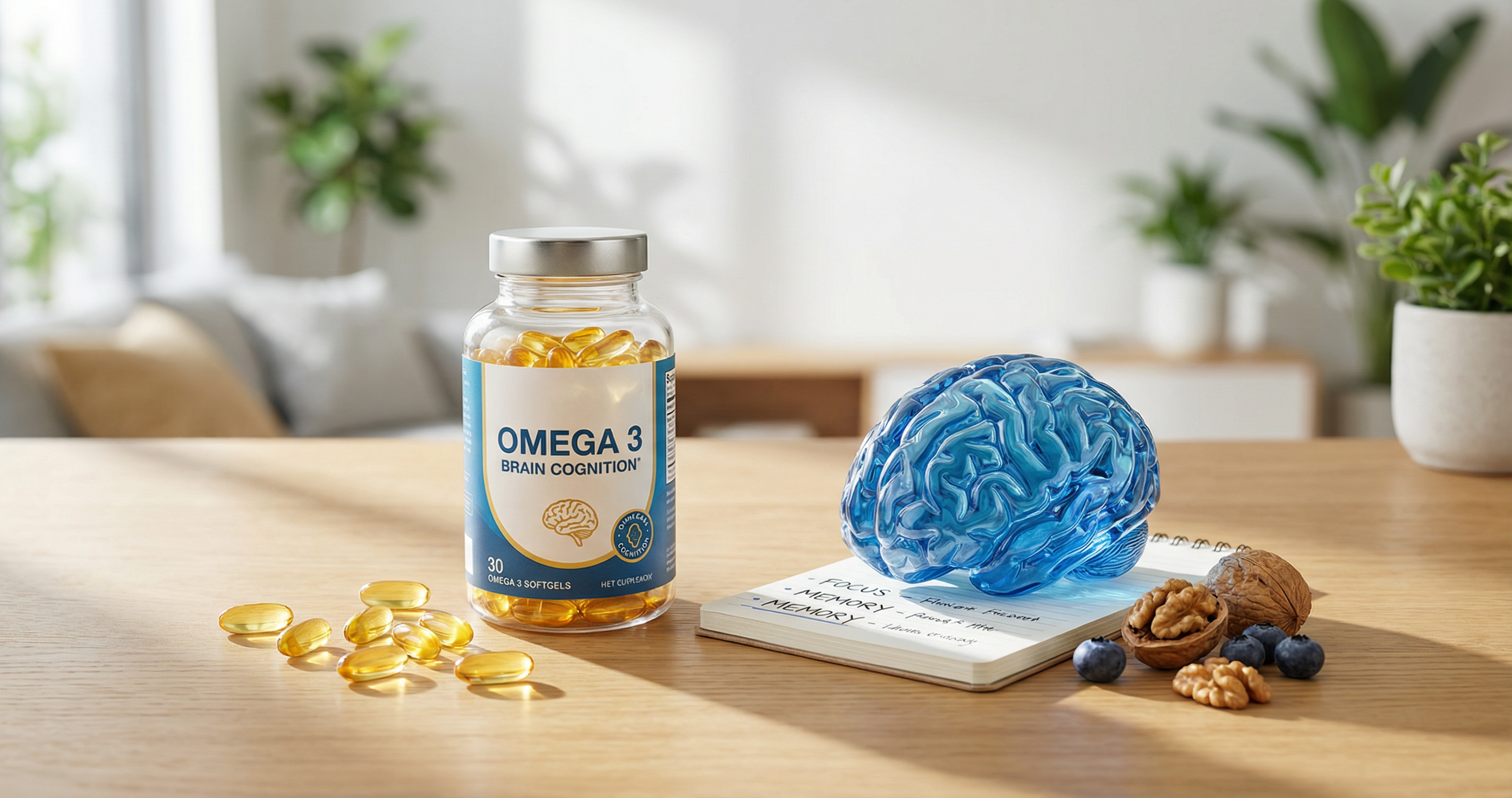
Omega-3 and the Brain
Omega-3 fatty acids—especially DHA (docosahexaenoic acid) and EPA (eicosapentaenoic acid)—are long-chain fats that are structural and functional components of cell membranes in the brain and retina. DHA is the dominant omega-3 in the brain; both DHA and EPA support anti-inflammatory and signalling pathways. The body can make limited amounts from alpha-linolenic acid (ALA) in plant foods, but conversion is inefficient; direct intake from fatty fish or supplements is the main way to raise blood and tissue levels. As a dietitian I see strong interest in omega-3 for brain health and cognition; adequate intake supports normal brain development and maintenance, but evidence that supplementation improves cognition in already well-nourished adults is mixed—benefits are most consistent when intake is low or in specific populations.
What the Research Shows
Observational studies link higher fish or omega-3 intake to better cognitive outcomes and lower risk of cognitive decline in some populations; causality is not fully established. Randomised trials of omega-3 supplementation for cognitive function in healthy adults show mixed results—some find modest benefits (e.g. memory, processing speed), others no significant effect. Benefits appear more likely in people with low baseline intake, mild cognitive impairment, or in longer-term studies. Omega-3 does not prevent or cure dementia or replace medical care; it is one factor in a brain-healthy lifestyle that includes diet, exercise, sleep, and cardiovascular risk management. For pregnancy and early life, adequate DHA supports fetal and infant brain development; recommendations often suggest 200–300 mg DHA per day for pregnant and breastfeeding women.
Food Sources and Intake
Fatty fish (salmon, mackerel, sardines, herring, trout) are the best sources of EPA and DHA; aim for at least two servings per week as part of a balanced diet. Algae-based supplements provide DHA for vegetarians and vegans. ALA is found in flaxseed, chia, walnuts, and some oils; conversion to EPA and DHA is limited (roughly 5–15%). Many people in Western diets consume less omega-3 than recommended; increasing fish intake or taking a modest supplement (e.g. 250–500 mg EPA+DHA per day) can help meet goals. High-dose fish oil (e.g. 2–4 g EPA+DHA per day) is sometimes used under medical supervision for triglycerides or inflammation; do not self-prescribe megadoses for cognition—evidence does not support it and bleeding risk can increase.
Dose and Form
General health guidelines often suggest 250–500 mg EPA+DHA per day from fish or supplements; higher intakes (e.g. 1 g or more) may be used for cardiovascular or anti-inflammatory support under guidance. Fish oil, krill oil, and algae oil are common forms; quality varies—choose reputable brands and check for freshness (oxidation can reduce benefit). Take with meals to improve absorption and reduce GI upset. If you take blood thinners or have bleeding disorders, discuss omega-3 supplements with your doctor—high doses can prolong bleeding time. For brain and cognition, consistency and adequacy matter more than megadoses.
Safety and Who Might Benefit
Omega-3 from food is generally safe; supplements are well tolerated at moderate doses. Side effects can include fishy aftertaste, burping, or loose stools; enteric-coated or refined products may reduce these. People allergic to fish should avoid fish oil (algae oil is an option). Those most likely to benefit from supplementation include people with low fish intake, vegetarians/vegans (algae DHA), pregnant and breastfeeding women (DHA for baby), and possibly those with mild cognitive concerns and low baseline omega-3—always in the context of medical advice. Do not use omega-3 as a substitute for diagnosis or treatment of cognitive or mental health conditions.
Summary
- Role: DHA and EPA are key for brain structure and function; support anti-inflammatory and signalling pathways.
- Evidence: Adequate omega-3 supports brain health; supplementation may help when intake is low or in specific groups; mixed results in replete, healthy adults.
- Food: Fatty fish at least twice a week; algae oil for vegetarians/vegans; ALA in flax, chia, walnuts (limited conversion).
- Safety: Moderate doses generally safe; discuss with doctor if on blood thinners; do not megadose for cognition.
Omega-3 and brain cognition: prioritise food (fish); consider supplements when intake is low; work with your doctor or dietitian for personalised advice.