Omega-3s Without Fish
If you follow a vegetarian or vegan diet, you can still meet your omega-3 needs. The main challenge is that the most studied forms—EPA and DHA—are found mainly in fish and fish oil. Plant sources provide ALA, which the body converts partly to EPA and DHA, and algae-based supplements provide DHA (and sometimes EPA) directly. This guide covers the best vegetarian and vegan omega-3 options. Compare omega-3 and algae options on iHerb.
ALA from Plants
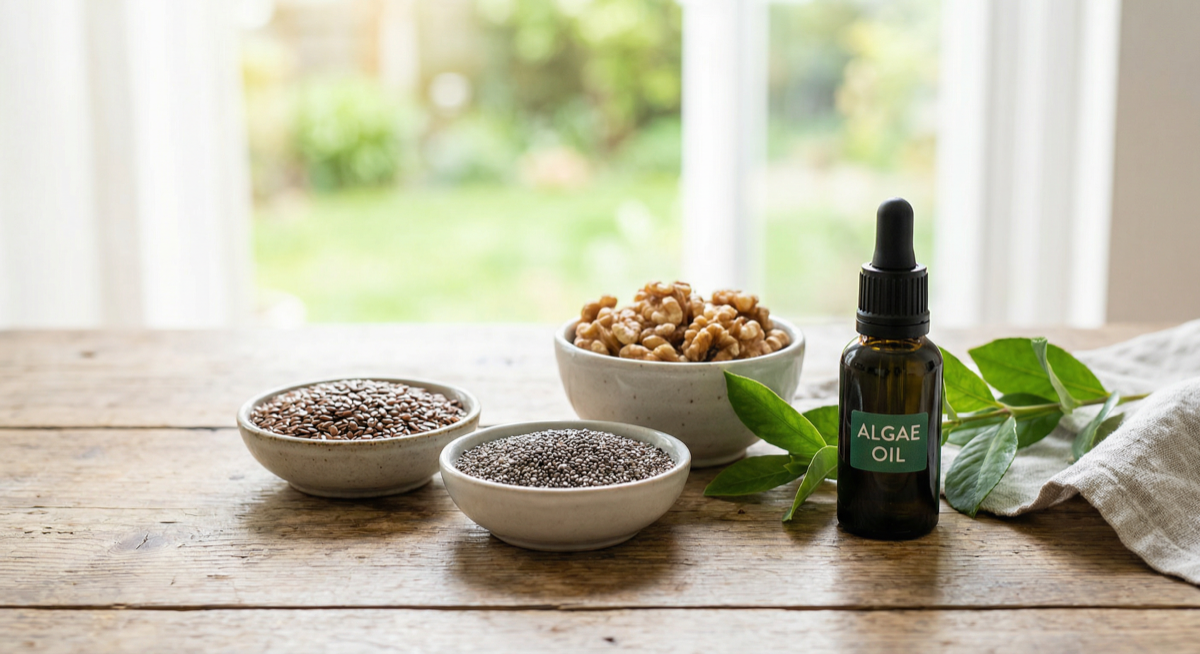
Flaxseed (ground or oil), chia seeds, walnuts, hemp seeds, and canola oil are rich in ALA (alpha-linolenic acid). The body converts ALA to EPA and DHA, but conversion is limited and varies by person. Including these foods daily improves omega-3 status and supports overall fat quality. Ground flax or chia can be added to oatmeal, smoothies, or baked goods; flax oil should not be heated at high temperatures.
Algae Oil Supplements
Algae are the original source of DHA in the marine food chain. Algae oil supplements provide DHA (and in some products, EPA) without any fish. They are suitable for vegetarians and vegans and are often used in prenatal and children''s formulas. Algae oil is well tolerated and avoids concerns about ocean contaminants. Check the label for DHA (and EPA if present) per serving.
How Much ALA?
Recommendations for ALA intake vary; about 1.1–1.6 g per day is often cited for adults. Two tablespoons of ground flaxseed or chia provide roughly 2–4 g ALA. If you rely only on ALA, include several servings of these foods daily and consider an algae oil supplement for more reliable DHA intake, especially during pregnancy or if you avoid fish long term.
Combining Sources
For best results, combine daily ALA-rich foods with an algae oil supplement. This way you get direct DHA (and possibly EPA) plus the benefits of plant-based fats and fibre. Avoid high-heat cooking with flax or chia oil to preserve the omega-3 content.
Takeaways
- ALA: Flax, chia, walnuts, hemp, and canola oil; include daily for baseline intake.
- DHA: Algae oil supplements provide DHA (and sometimes EPA) without fish.
- Pregnancy and children: Algae oil is a common choice for DHA when fish is avoided.
- Combine ALA-rich foods and algae oil for a complete vegetarian or vegan omega-3 strategy.
With a little planning, vegetarian and vegan diets can fully support omega-3 needs. Prioritise algae oil for DHA and include flax, chia, and walnuts for ALA and overall diet quality.
Summary
Vegetarian and vegan omega-3 strategies rely on ALA from plants (flax, chia, walnuts, hemp) and DHA from algae oil. Aim for daily ALA-rich foods plus an algae oil supplement providing at least 250–500 mg DHA (and EPA if available) for general health. During pregnancy or when avoiding fish long term, algae oil is especially important for DHA.