What Are Prebiotics?
Prebiotics are fibres or other compounds that your body does not digest but that feed beneficial bacteria in your gut. They pass through the small intestine and are fermented in the colon, where bacteria produce short-chain fatty acids (SCFAs) such as butyrate—important for gut lining health and anti-inflammatory effects. As a dietitian, I often explain that prebiotics are "food for your good bugs." They are not the same as probiotics (live bacteria); prebiotics support the bacteria you already have and that you may get from food or probiotics. This guide covers food sources, types of prebiotics, and how to use them safely.
Common Types of Prebiotic Fibre
Inulin and fructooligosaccharides (FOS) are found in chicory root, garlic, onions, leeks, asparagus, and Jerusalem artichoke. Galactooligosaccharides (GOS) are in some legumes and in human milk (often added to infant formula). Resistant starch—starch that resists digestion and reaches the colon—is in cooked-and-cooled potatoes, green bananas, legumes, and whole grains. Beta-glucan (in oats and barley) and pectin (in apples, citrus) also have prebiotic-like effects. Variety in your diet helps you get a mix of these; no single prebiotic does everything.
Food Sources: Practical Tips
To get more prebiotics from food: include garlic, onions, and leeks in cooking; add asparagus, artichokes, and leafy greens; eat oats, barley, and whole grains; include legumes (lentils, chickpeas, beans) regularly; enjoy bananas (including slightly green for more resistant starch); and use cooked-and-cooled potatoes or rice in salads. Increase fibre and prebiotic intake gradually—a sudden big increase can cause gas, bloating, or discomfort. Drink plenty of water. People with IBS or small intestinal bacterial overgrowth (SIBO) may need to limit or adjust prebiotic foods under dietitian or doctor guidance.
Prebiotic Supplements
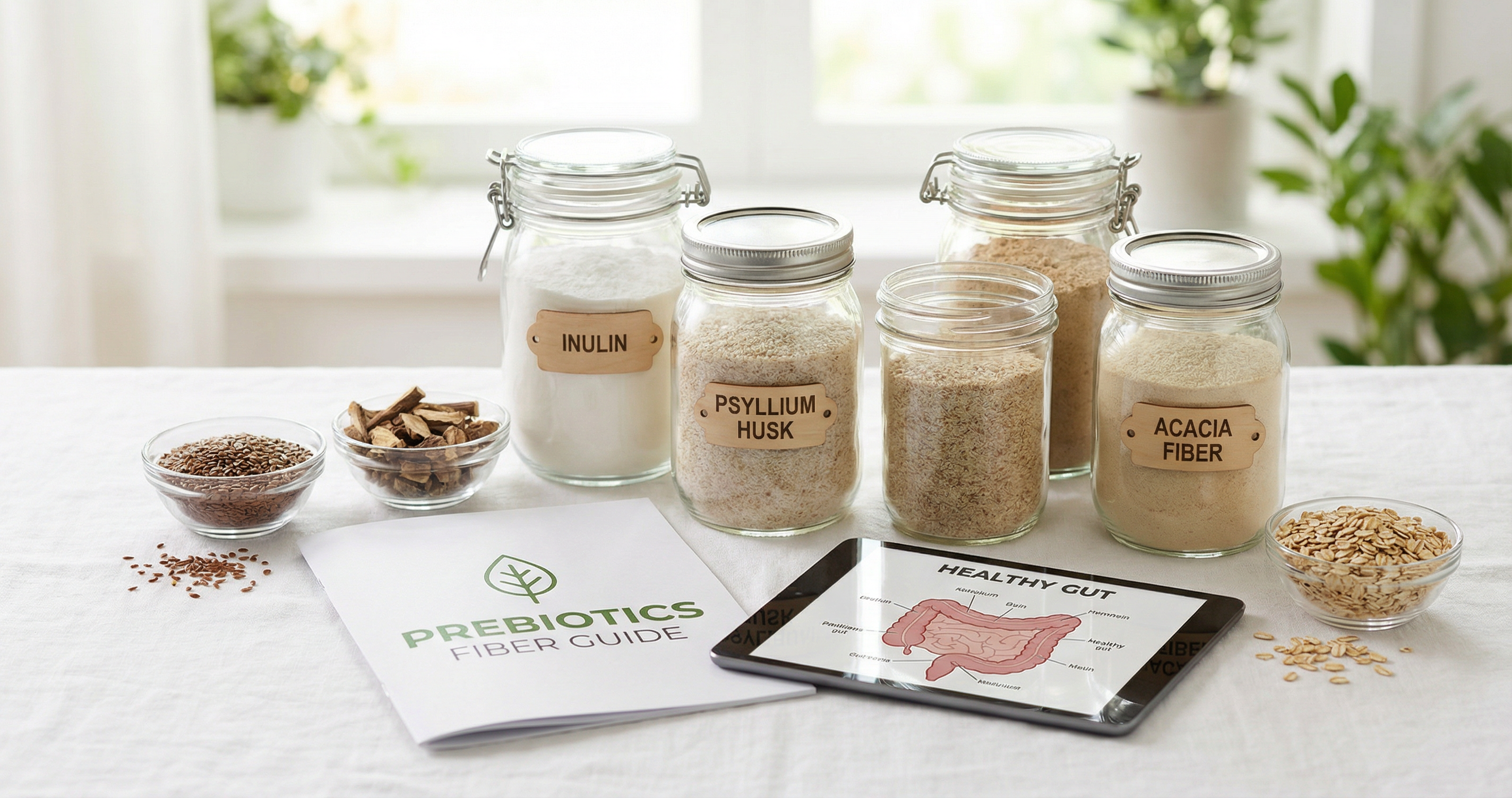
Prebiotic supplements (inulin, FOS, GOS, or blends) are available in powder or capsule form. They can help if your diet is low in fibre or you want to add a targeted dose. Start with a small amount (e.g. half the suggested dose) and increase slowly over weeks to reduce gas and bloating. Do not assume more is better—high doses can cause significant digestive discomfort. If you have SIBO, fructose malabsorption, or other gut conditions, discuss supplement use with your doctor or dietitian before starting.
Prebiotics and Probiotics Together
Prebiotics and probiotics work together: prebiotics feed beneficial bacteria, including those from probiotic foods or supplements. You can get prebiotics from food and take a probiotic, or use a "synbiotic" product that contains both. There is no single best combination; consistency and tolerance matter. For most people, prioritising fibre-rich whole foods first, then adding a probiotic if needed, is a sensible approach. Prebiotics do not replace a balanced diet—they are part of it.
Summary
- Prebiotics: Non-digestible fibres/compounds that feed beneficial gut bacteria; fermented in the colon to produce SCFAs.
- Types: Inulin, FOS, GOS, resistant starch, beta-glucan, pectin—from vegetables, grains, legumes, and some fruits.
- Food first: Garlic, onions, leeks, asparagus, oats, legumes, cooked-and-cooled potatoes; increase gradually.
- Supplements: Can help when intake is low; start low, go slow; avoid if SIBO or other conditions without guidance.
Prebiotics are a key part of gut-friendly eating. Get them from a varied, fibre-rich diet and add supplements only if needed. For personalised advice, see a registered dietitian.