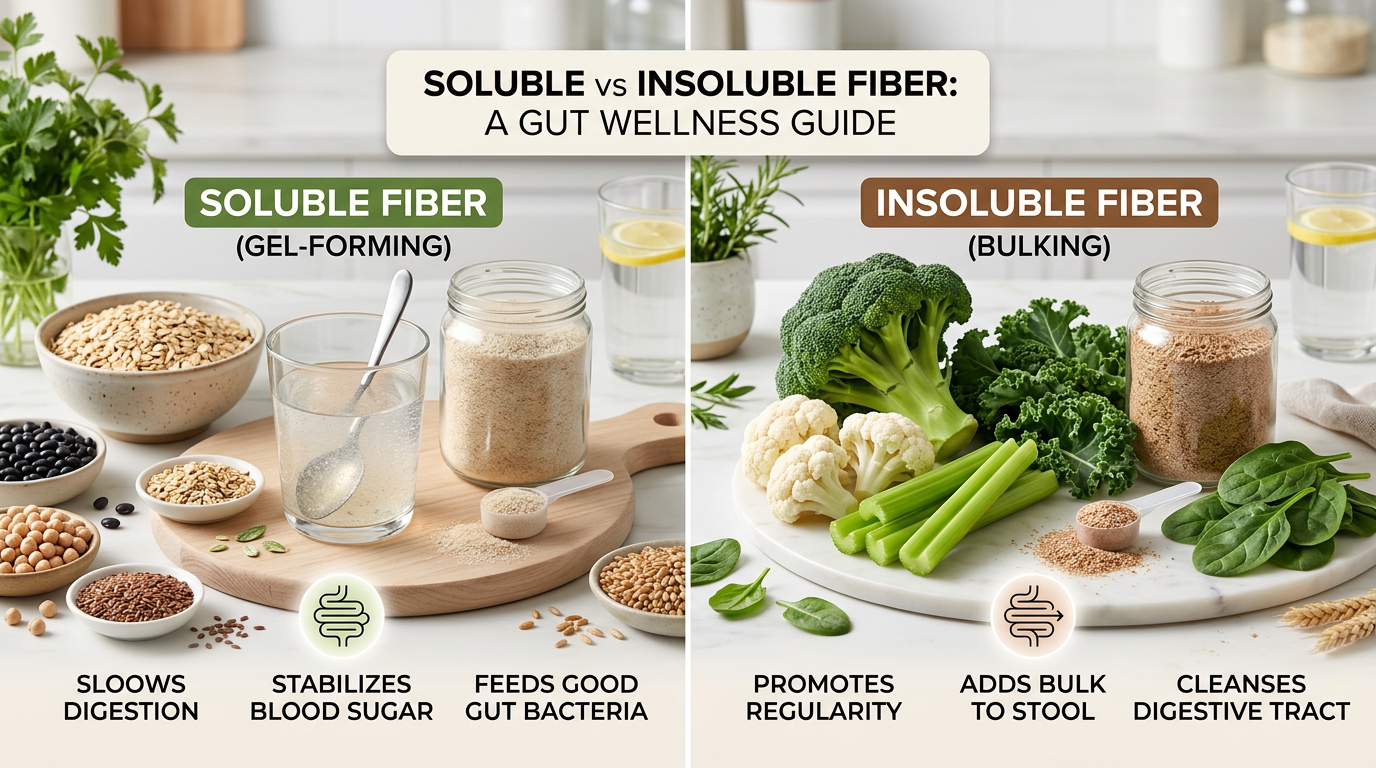
Two Types of Dietary Fibre
Dietary fibre is the part of plant foods that the human body does not fully digest or absorb. It passes through the stomach and small intestine largely intact and is then broken down to varying degrees by bacteria in the large intestine. Fibre is often divided into two broad categories: soluble fibre, which dissolves in water and can form a gel-like substance, and insoluble fibre, which does not dissolve and adds bulk to stool. Both types support digestive health, regularity, and a healthy gut microbiome in different ways. Most whole plant foods contain a mix of both; nutrition labels and guides sometimes list "soluble" and "insoluble" separately to help you tailor intake. Understanding how each type works can help you make better choices for your gut and overall health.
Soluble Fibre: Sources and Benefits
Soluble fibre is found in oats, barley, legumes (beans, lentils, peas), apples, citrus fruits, carrots, and some supplements such as psyllium on iHerb. It dissolves in water and can form a gel that slows digestion, which helps support more stable blood sugar after meals and can contribute to a feeling of fullness. Soluble fibre also acts as a prebiotic: it feeds beneficial gut bacteria, which produce short-chain fatty acids (e.g. butyrate) that nourish the cells of the intestinal lining. Some forms of soluble fibre, such as beta-glucan in oats, are associated with modest cholesterol-lowering effects when consumed as part of a balanced diet. If you increase soluble fibre quickly, you may experience temporary bloating or gas; building up gradually and drinking enough water helps improve tolerance.
Insoluble Fibre: Sources and Benefits
Insoluble fibre is found in whole grains (wheat bran, brown rice), many vegetables (broccoli, cabbage, leafy greens), nuts, and seeds. It does not dissolve in water and adds bulk to stool, helping material move through the gut more efficiently and supporting regularity. It is generally less fermented by gut bacteria than soluble fibre but still contributes to a diverse microbiome when you eat a variety of plants. People who struggle with constipation often benefit from adequate insoluble fibre combined with sufficient fluids and physical activity. In some people with irritable bowel syndrome (IBS) or sensitive digestion, large amounts of insoluble fibre at once can worsen symptoms; in those cases, a dietitian can help balance types and amounts of fibre.
How Much Fibre and From Where
Guidelines in many countries recommend at least 25–30 g total fibre per day for adults, with higher intakes acceptable for people who tolerate them well. Rather than counting soluble vs insoluble exactly, aim for variety: whole grains, legumes, vegetables, fruits, nuts, and seeds. That approach usually gives you a good balance of both types. If you have IBS or other digestive conditions, some people do better with more soluble and less insoluble fibre (or the opposite); a dietitian can help tailor intake. Fibre from food is generally preferred over supplements because it comes with other nutrients and phytochemicals; supplements like apple fibre or psyllium can be useful to top up intake when needed, as long as you increase dose gradually and drink plenty of water.
Practical Tips
Increase fibre gradually over several weeks to allow your gut and microbiome to adapt; a sudden jump can cause bloating, gas, or discomfort. Drink plenty of water throughout the day, as fibre absorbs water and needs it to work effectively. Soaking or cooking legumes and whole grains can improve digestibility and tolerance. If you use a fibre supplement such as psyllium, start with a small dose (e.g. as directed on the label) and take it with a full glass of water. Fibre works best as part of a balanced diet rich in whole plant foods, not as a replacement for them. If you have medical conditions or take medications that affect digestion, discuss fibre changes with your doctor or dietitian.
Summary
- Soluble fibre dissolves in water and can feed gut bacteria; insoluble adds bulk and supports regularity.
- Eat a variety of plants to get both types; aim for 25–30 g total fibre per day where appropriate.
- Increase fibre gradually and stay hydrated; adjust by type if you have IBS or digestive sensitivity.
Both soluble and insoluble fibre support gut health; variety and consistency matter more than strict ratios.
Evidence and Practical Tips
Research on supplements has grown; quality matters: choose reputable brands and follow dosing. Give new supplements several weeks before judging effect. Supplements do not replace diet, sleep, or medical care. Consult a provider if you take medications or have health conditions. Compare options at iHerb and store in a cool, dry place; check expiry dates. Individual response varies; consistency and lifestyle remain the foundation.
Evidence and Practical Tips
Research on supplements has grown; quality matters: choose reputable brands and follow dosing. Give new supplements several weeks before judging effect. Supplements do not replace diet, sleep, or medical care. Consult a provider if you take medications or have health conditions. Compare options at iHerb and store in a cool, dry place; check expiry dates. Individual response varies; consistency and lifestyle remain the foundation.