What the L-Sit Is and Why It''s Worth It
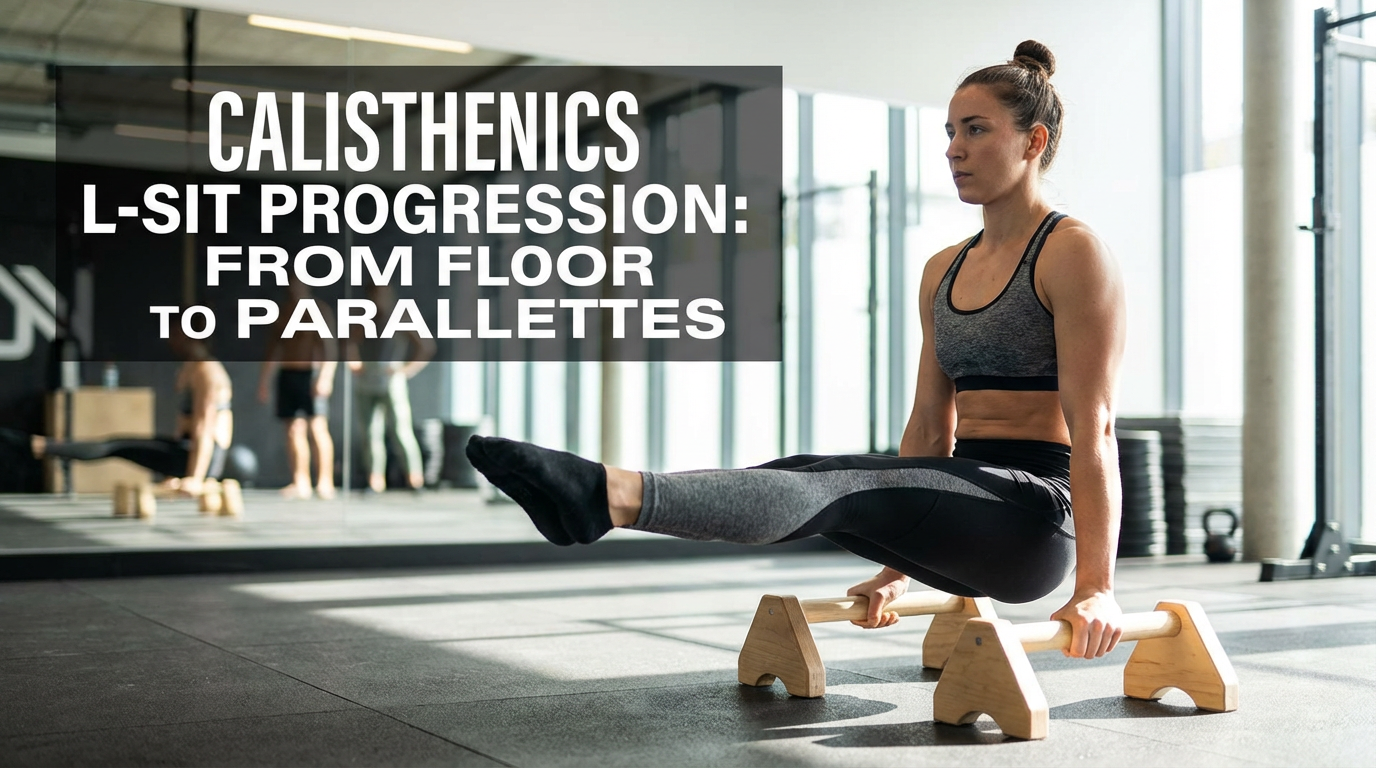
The L-sit is a classic calisthenics hold: you support your body on your hands (or parallettes) with your legs extended in front in an L shape. It builds serious core and hip flexor strength, shoulder stability, and triceps lockout. You can train it on parallel bars, parallettes, floor (hands beside hips), or even on rings. This guide walks you through a clear progression so you can go from tuck to full L-sit and then build hold time—no fluff, just the steps that work on the street or at home.
Prerequisites
You need enough straight-arm support: at least 15–30 seconds on bars or parallettes with shoulders down and locked elbows. If you can''t hold that, work on support holds and dips first. Some compression (bringing knees toward chest with legs bent) and hip flexor flexibility help; we''ll build both in the progression. Wrists need to handle your weight; if they bother you, use parallettes or bars so wrists stay neutral.
Step 1: Tuck L-Sit (Tuck Sit)
Start with a tuck: support on hands, knees pulled to chest, feet off the ground. Squeeze the tuck tight—knees high, core engaged. Hold 3×20–30 seconds. Focus on pushing the shoulders down (depression) and keeping elbows locked. If that''s easy, extend one foot forward a little, then the other, and go back to tuck. The goal is a solid 30-second tuck with no shoulder shrugging before you move on.
Step 2: One-Leg Extended
From the tuck, extend one leg forward. Keep the other leg tucked. Hold 3×15–25 seconds per side. This teaches you to manage the leverage of one straight leg while keeping the core and hip flexors working. Keep the extended leg as horizontal as you can; point the toe. Switch legs each set. When both sides feel strong and you can hold 20+ seconds, add the next step.
Step 3: L-Sit with Bent Legs (V-Sit or Pike)
Now extend both legs forward but keep knees slightly bent if needed—often called a "bent-leg L-sit" or pike. This reduces the lever and lets you get used to having both legs out. Push the shoulders down hard and keep the chest up. Hold 3×15–30 seconds. As you get stronger, straighten the legs a bit more each week until they''re as straight as you can get them. Compression work (sitting on the floor, legs in front, and actively pulling toes toward you or lifting legs) helps here.
Step 4: Full L-Sit
Full L-sit = both legs straight and horizontal (or close), body in an L. Start with short holds: 3×5–10 seconds. Quality over duration: legs straight, toes pointed, shoulders depressed, no piking at the hips. Add 1–2 seconds per hold each week, or add a set. Train it 3–4 times per week. Once you hit 3×20 seconds, you have a solid L-sit. From there you can work toward V-sit, L-sit to handstand, or other skills.
Compression and Hip Flexor Work
L-sit height depends a lot on compression—how close you can bring your legs toward your torso. Do compression drills: seated leg lifts (legs straight, lift off the floor and hold), hanging leg raises (knees to chest or L), and straddle compression (straddle sit, lean forward, lift legs). Stretch hip flexors and quads so they don''t limit you. A few minutes before or after your L-sit work is enough to see progress over time.
Equipment and Surfaces
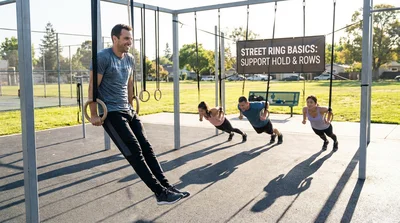
Parallel bars: Most common for street workout. Hands on the bars, body between them; full range for L-sit and progressions. Parallettes: Same idea, often lower; good for home and for keeping wrists neutral. Floor: Hands next to hips, fingers forward or slightly out. Harder because you can''t push down through the bars; need strong triceps and compression. Rings: Unstable; do these after you have a solid L-sit on bars. Start in support, then tuck and extend. Pick one main surface and get your L-sit there first, then try another.
Common Mistakes
Shrugging shoulders—push them down and back. Bent elbows—keep them locked. Letting legs drop—squeeze hip flexors and quads; think "legs forward and up." Piking at the hips—keep the torso upright. Training only at the end of a long session when you''re fried—do L-sit early when you''re fresh so you can push quality. If you plateau, add more compression work and slightly increase frequency (e.g. 4× per week) or hold length instead of adding weight.
Programming
Put L-sit at the start of your session or after a short warm-up. 3–4 sets of max hold (or timed sets like 3×20 sec) 3–4 times per week. Rest 60–90 seconds between sets. Once you have a full L-sit, you can maintain it with 2–3 sets a couple of times per week and use the rest of your time for harder progressions (V-sit, L-sit to handstand) or other skills.
Summary
- Progression: Tuck → one leg out → bent-leg L-sit → full L-sit. Build hold time (3×20 sec) before moving on.
- Compression: Leg lifts, hanging leg raises, straddle compression; stretch hip flexors.
- Cues: Shoulders down, elbows locked, legs straight and horizontal, toes pointed.
- Equipment: Bars or parallettes first; floor and rings once you''re solid.
- Frequency: 3–4× per week, quality holds; then maintain or progress to V-sit / other skills.
L-sit is a staple for a reason: it''s simple to scale and builds real strength. Follow the steps, work compression, and stay consistent—you''ll get there.