Why This Topic Matters
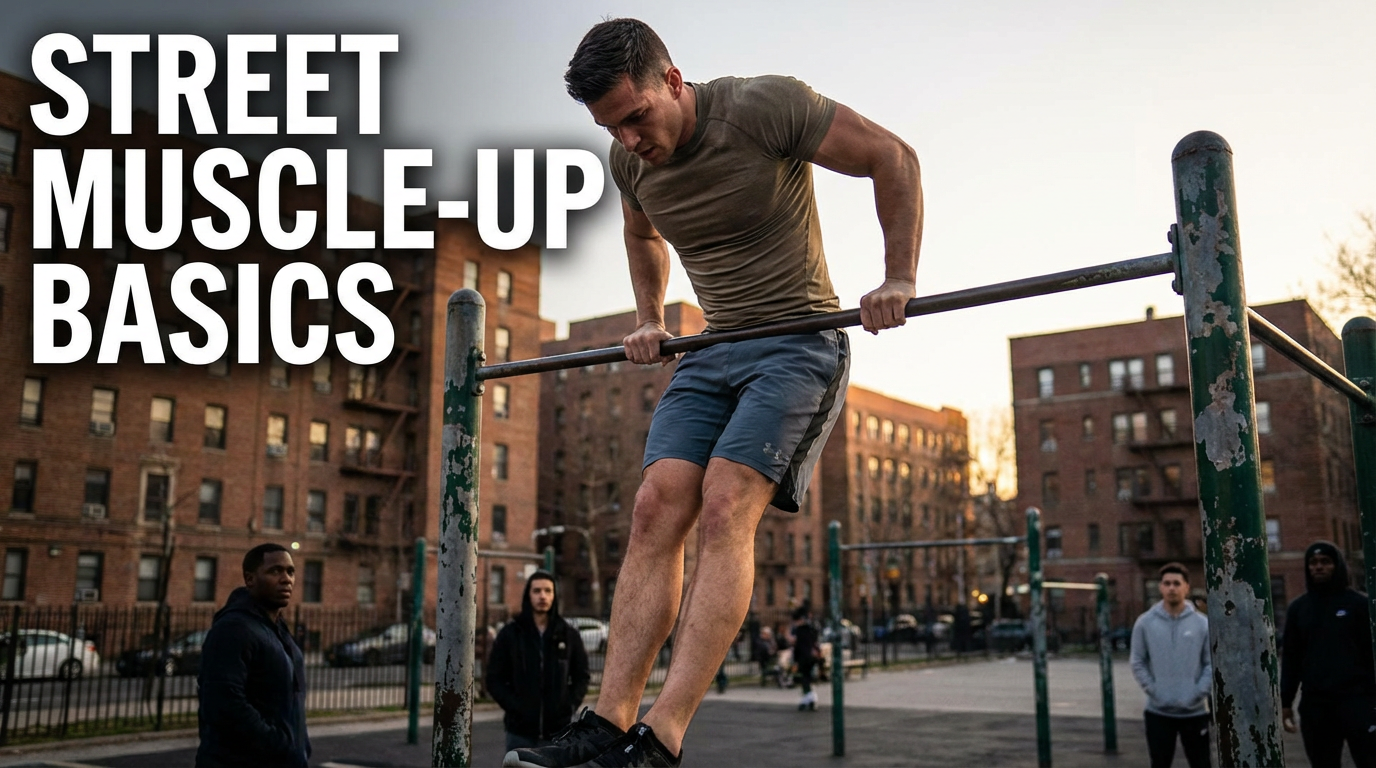
The muscle-up bridges pull-up and dip into one explosive movement. It requires pulling strength, transition technique, and pushing power. Learning it safely avoids shoulder and elbow strain.
What the Evidence Shows
Progressions from high pull-ups, chest-to-bar work, and supported transitions build the pattern. Ring and bar muscle-ups share similar mechanics; rings allow more natural rotation through the transition.
Dosage, Timing, and Safety
Build a solid base: multiple strict pull-ups and dips before attempting the full move. Use bands or jumping progressions to practice the turnover. Avoid kipping until you can do a strict muscle-up.
Summary
- Master high pull-ups and deep dips first.
- Practice transition with bands or feet-assisted.
- Keep shoulders healthy with mobility and controlled volume.
- Progress from bar to rings if available.
Evidence and Practical Tips
Research on calisthenics progressions and injury prevention has grown; quality programming and gradual progressions reduce injury risk. Give each progression several weeks before advancing. Calisthenics do not replace medical advice for existing injuries. Consult a physiotherapist or sport doctor if you have joint or back issues. Warm up and cool down; prioritise mobility and recovery. Individual response varies; consistency and patience build strength and skill safely.
Structured progressions from basic to advanced moves are well supported by coaching practice. Track your volume and how you feel; deload when needed. Evidence-based progressions help you build strength and skill without overreaching. Compare quality equipment and recovery support as needed.
Evidence and Practical Tips
Research on calisthenics progressions and injury prevention has grown; quality programming and gradual progressions reduce injury risk. Give each progression several weeks before advancing. Calisthenics do not replace medical advice for existing injuries. Consult a physiotherapist or sport doctor if you have joint or back issues. Warm up and cool down; prioritise mobility and recovery. Individual response varies; consistency and patience build strength and skill safely.
Structured progressions from basic to advanced moves are well supported by coaching practice. Track your volume and how you feel; deload when needed. Evidence-based progressions help you build strength and skill without overreaching. Compare quality equipment and recovery support as needed.
Evidence and Practical Tips
Research on calisthenics progressions and injury prevention has grown; quality programming and gradual progressions reduce injury risk. Give each progression several weeks before advancing. Calisthenics do not replace medical advice for existing injuries. Consult a physiotherapist or sport doctor if you have joint or back issues. Warm up and cool down; prioritise mobility and recovery. Individual response varies; consistency and patience build strength and skill safely.
Structured progressions from basic to advanced moves are well supported by coaching practice. Track your volume and how you feel; deload when needed. Evidence-based progressions help you build strength and skill without overreaching. Compare quality equipment and recovery support as needed.
Evidence and Practical Tips
Research on calisthenics progressions and injury prevention has grown; quality programming and gradual progressions reduce injury risk. Give each progression several weeks before advancing. Calisthenics do not replace medical advice for existing injuries. Consult a physiotherapist or sport doctor if you have joint or back issues. Warm up and cool down; prioritise mobility and recovery. Individual response varies; consistency and patience build strength and skill safely.
Structured progressions from basic to advanced moves are well supported by coaching practice. Track your volume and how you feel; deload when needed. Evidence-based progressions help you build strength and skill without overreaching. Compare quality equipment and recovery support as needed.
Evidence and Practical Tips
Research on calisthenics progressions and injury prevention has grown; quality programming and gradual progressions reduce injury risk. Give each progression several weeks before advancing. Calisthenics do not replace medical advice for existing injuries. Consult a physiotherapist or sport doctor if you have joint or back issues. Warm up and cool down; prioritise mobility and recovery. Individual response varies; consistency and patience build strength and skill safely.
Structured progressions from basic to advanced moves are well supported by coaching practice. Track your volume and how you feel; deload when needed. Evidence-based progressions help you build strength and skill without overreaching. Compare quality equipment and recovery support as needed.
Evidence and Practical Tips
Research on calisthenics progressions and injury prevention has grown; quality programming and gradual progressions reduce injury risk. Give each progression several weeks before advancing. Calisthenics do not replace medical advice for existing injuries. Consult a physiotherapist or sport doctor if you have joint or back issues. Warm up and cool down; prioritise mobility and recovery. Individual response varies; consistency and patience build strength and skill safely.
Structured progressions from basic to advanced moves are well supported by coaching practice. Track your volume and how you feel; deload when needed. Evidence-based progressions help you build strength and skill without overreaching. Compare quality equipment and recovery support as needed.
Evidence and Practical Tips
Research on calisthenics progressions and injury prevention has grown; quality programming and gradual progressions reduce injury risk. Give each progression several weeks before advancing. Calisthenics do not replace medical advice for existing injuries. Consult a physiotherapist or sport doctor if you have joint or back issues. Warm up and cool down; prioritise mobility and recovery. Individual response varies; consistency and patience build strength and skill safely.
Structured progressions from basic to advanced moves are well supported by coaching practice. Track your volume and how you feel; deload when needed. Evidence-based progressions help you build strength and skill without overreaching. Compare quality equipment and recovery support as needed.