Why Timing Matters
When you take supplements can affect how well your body absorbs and uses them. Fat-soluble vitamins need dietary fat; some minerals compete with each other; and taking everything at once may cause stomach upset or reduce effectiveness. Learning a few simple rules helps you get the most from your routine without overcomplicating it.
Fat-Soluble vs Water-Soluble
Fat-Soluble Vitamins (A, D, E, K)
These vitamins are absorbed best when taken with a meal that contains some fat. Taking them on an empty stomach or with a fat-free snack can mean less absorption. A small amount of fat is enough — a few nuts, avocado, or oil in a salad. Many people take them with breakfast or their largest meal. Vitamin D is especially common as a daily supplement; taking it with a morning or evening meal that includes fat supports consistent absorption.
Water-Soluble Vitamins (B complex, C)
Water-soluble vitamins do not require fat and are not stored in large amounts; excess is excreted. They can be taken with or without food, though taking B vitamins with food often reduces stomach upset. Some people prefer taking B vitamins in the morning to support energy; taking them at night is fine too if that fits your routine better. Vitamin C can be taken anytime; splitting the dose across the day is optional and may help maintain steady levels if you use higher doses.
Minerals: When and With What
Iron is best absorbed on an empty stomach, but if that causes nausea, taking it with a small amount of food or with vitamin C can help. Calcium can interfere with iron absorption, so avoid taking high-dose calcium and iron at the same time — space them by a few hours. Magnesium is often well tolerated with food and is commonly taken in the evening to support relaxation and sleep. Zinc is another mineral that can cause nausea on an empty stomach; taking it with a light meal is a good compromise. If you take multiple minerals, spreading them across the day or taking them with different meals can improve tolerance and absorption. Browse vitamins and minerals on iHerb.
Morning vs Evening
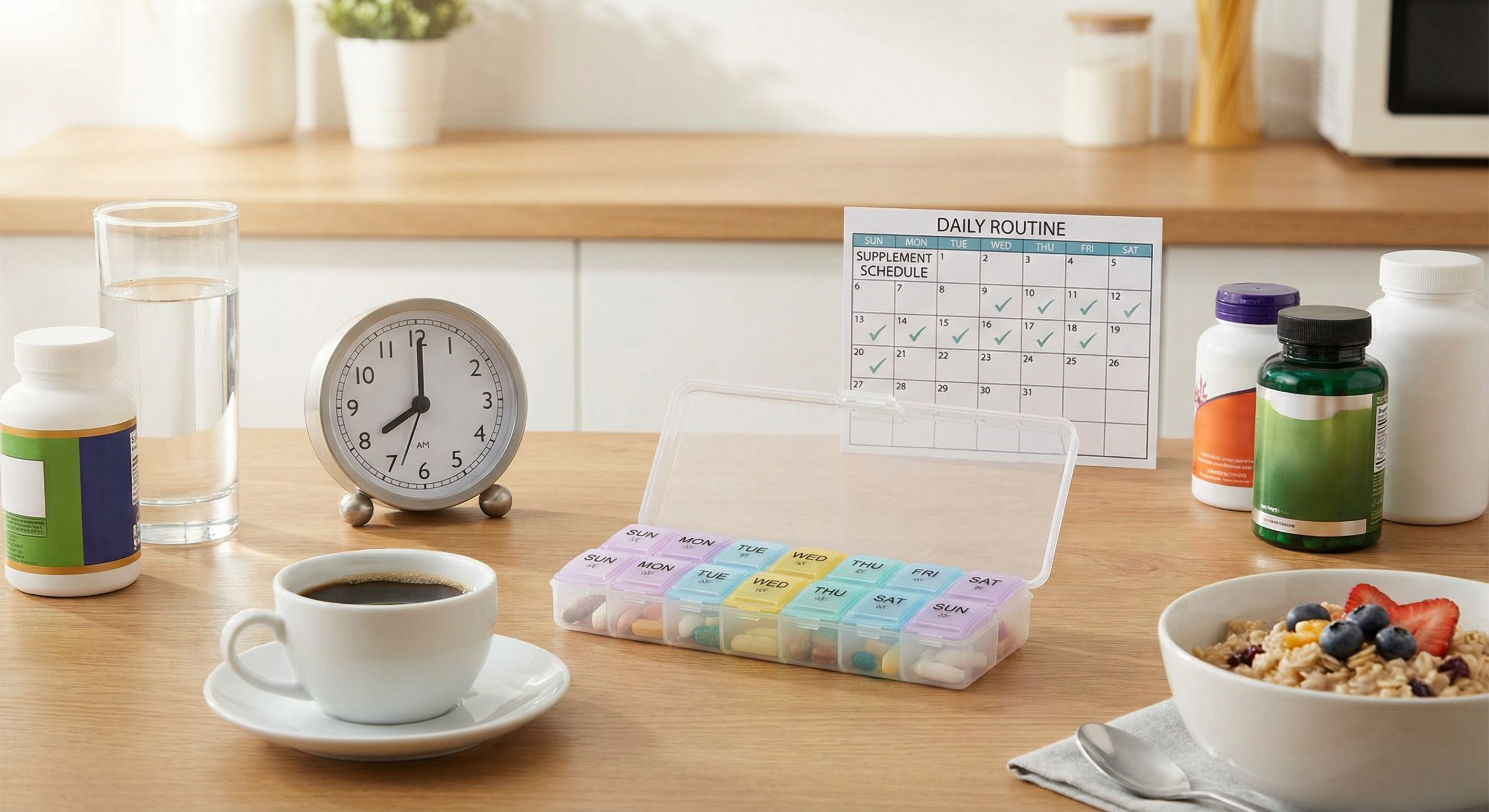
There is no single rule; it depends on the supplement and your schedule. Multivitamins and B vitamins are often taken in the morning with breakfast. Magnesium, and sometimes zinc, are popular in the evening for people who find they support sleep or relaxation. Probiotics can be taken with a meal in the morning or another time that is easy to remember. The most important factor is consistency: taking supplements at roughly the same time each day helps you remember and supports steady levels where applicable.
Practical Tips
- Check the label: Many products suggest taking with food or water; follow those instructions when given.
- Fat-soluble with fat: Always take A, D, E, and K with a meal that contains some fat.
- Iron and calcium apart: Separate iron and calcium by at least a couple of hours.
- Consistency: Pick a time that fits your day and stick to it so you do not forget.
Timing supplements does not need to be perfect. A few simple rules — fat with fat-soluble vitamins, spacing iron and calcium, and taking things with food when the label or your stomach suggests it — go a long way toward better absorption and comfort.
Evidence and Practical Tips
Research on supplements and nutrition has grown over the past decades. Most studies focus on specific doses and populations, so results are not always generalisable. Quality matters: choose products from reputable brands that disclose ingredients and dose per serving. Third-party testing (e.g. USP, NSF, ConsumerLab) when available adds assurance. Start with the lowest effective dose and give any new supplement at least four to six weeks of consistent use before judging effect. Many factors influence how well a supplement works: your baseline status, diet, sleep, and lifestyle. Keeping a simple log of what you take and how you feel can help you and your provider decide whether to continue or adjust.
Supplements are not a substitute for a varied diet, adequate sleep, and regular physical activity. If you are pregnant, breastfeeding, or have a chronic condition, talk to your doctor before starting any new supplement. Do not use supplements to replace diagnosis or treatment. When in doubt, a short conversation with a doctor or dietitian can clarify whether a supplement is right for you and how to use it safely.