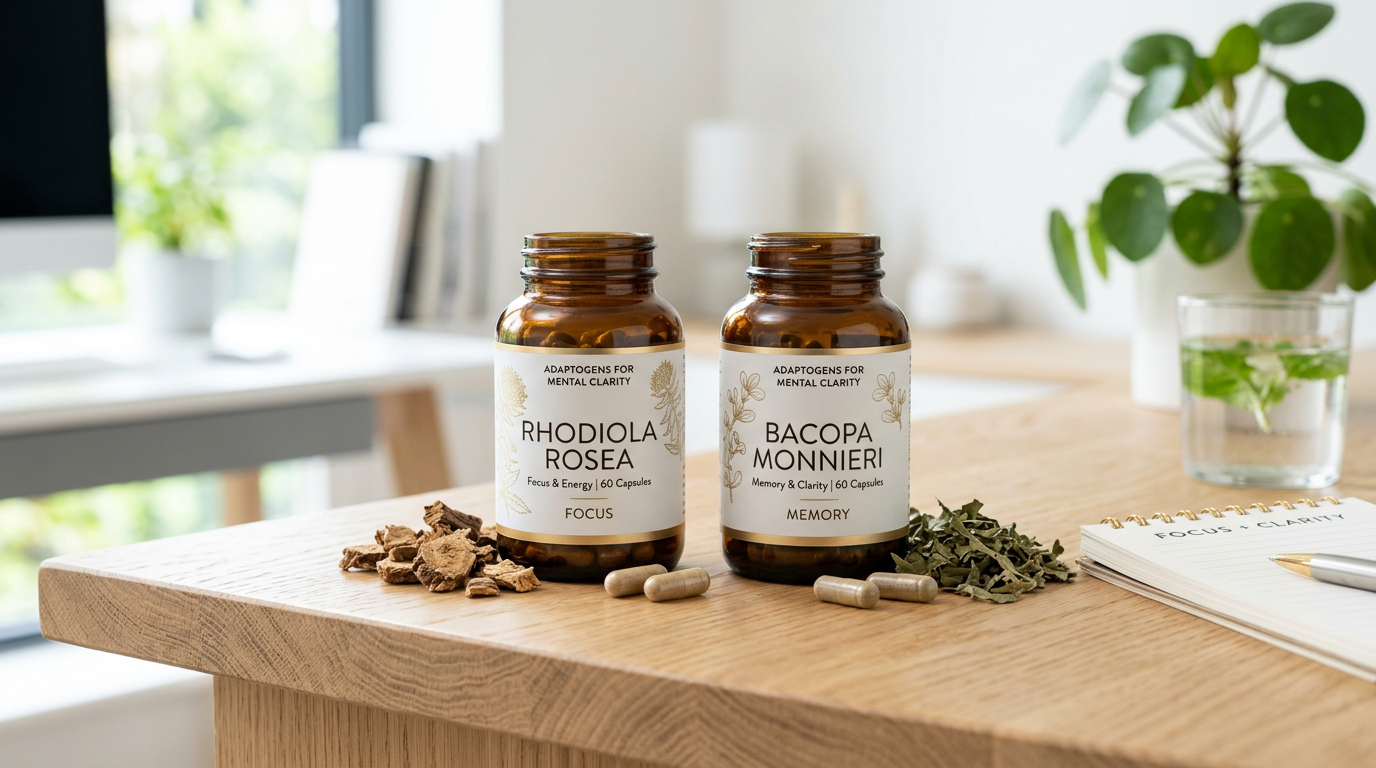
Mental clarity is not always about “more stimulation.” Many people focus better when stress is lower, sleep is steadier, and energy is stable throughout the day. Adaptogens are commonly used for exactly that: supporting resilience under stress so your brain can perform without the wired feeling some get from high caffeine.
This guide covers popular adaptogens and supportive herbs used for focus, how to choose based on symptoms, how to dose and cycle, and how to build simple stacks. For product comparison, start with adaptogen supplements and herbal extracts.
What “mental clarity” really means
People use the phrase “mental clarity” to describe several different problems. Matching the tool to the problem is the fastest way to get results.
- Brain fog: slow thinking, heavy head, reduced motivation.
- Stress-focus problems: you can work, but you feel tense, scattered, and reactive.
- Low stamina: you start strong but crash mid-day.
- Overstimulation: caffeine helps initially but causes jitters, anxiety, or poor sleep.
Adaptogens are most useful for stress-related focus issues and low stamina. If the primary issue is depression, ADHD, thyroid dysfunction, sleep apnea, or medication effects, adaptogens may be supportive but are not a primary treatment.
Top adaptogens and herbs for focus (how they differ)
Rhodiola rosea
Rhodiola is a common “focus under stress” adaptogen. Many people use it when they feel mentally tired, overwhelmed, or easily distracted during heavy workloads. It can feel mildly energizing, so it is usually taken in the morning.
Ashwagandha
Ashwagandha is often used when stress and poor sleep drive brain fog. It may help by supporting calmer stress physiology, which can improve sleep quality and daytime focus. Many take it in the evening.
Eleuthero (Siberian ginseng)
Eleuthero is typically subtle. It is often used for steady mental and physical stamina rather than a sharp “focus hit.”
Bacopa monnieri
Bacopa is widely used for memory and learning support. It is not a stimulant and may take weeks of consistent use to notice. Some people report calmer focus and better recall over time.
Panax ginseng
Panax ginseng is sometimes used for cognition and endurance. It may feel too stimulating for sensitive users, so start with low doses.
How to choose based on your symptoms
- Stress, anxiety, “wired but tired”: ashwagandha in the evening plus sleep improvement.
- Mental fatigue and long workdays: rhodiola in the morning, or eleuthero for steadier support.
- Learning and memory: bacopa daily and consistently (long-term approach).
- Caffeine sensitivity: reduce caffeine first; then use adaptogens for stability.
Keep expectations realistic: the goal is often better consistency, not a dramatic immediate “boost.”
Dosing basics and timing
Labels and standardization matter. Start with one supplement at a time, use it consistently, and track results. Common timing patterns:
- Morning: rhodiola, ginseng, eleuthero (avoid late day if sleep is affected).
- Evening: ashwagandha (often paired with sleep hygiene).
- Any time with food: bacopa (many take it with a meal to reduce stomach upset).
If your focus is worse in the afternoon, consider whether lunch composition, hydration, or sleep debt is the real driver. Adaptogens can help, but basics still dominate.
Stack examples (simple and safe)
Stack A: Calm focus
- Ashwagandha (evening)
- Moderate caffeine in the morning (if you use caffeine)
- Optional: L-theanine with coffee if you get jitters
Stack B: Mental stamina
- Rhodiola (morning)
- Electrolytes and hydration
- Optional: creatine monohydrate for overall performance support
Stack C: Study and recall
- Bacopa (daily, consistent)
- Sleep schedule and consistent wake time
- Short movement breaks during study blocks
Try stacks for 3–6 weeks and evaluate. If you combine multiple new supplements at once, you will not know which one helped (or caused side effects).
Common mistakes that sabotage mental clarity
- Too much caffeine: it can raise anxiety and fragment sleep, reducing next-day focus.
- Skipping meals: under-eating can look like “brain fog,” especially with long workdays.
- Too little sleep: even one hour less per night adds up quickly.
- Overtraining: excessive training volume without recovery can increase fatigue and impair cognition.
If you fix these basics, adaptogens often work better and require lower doses.
Safety and who should be cautious
Adaptogens and herbal nootropics are active compounds. Use caution if you are pregnant or breastfeeding, have autoimmune disease, take psychiatric medication, have thyroid disease, or use blood pressure medications. If you have a medical condition, check with a clinician before starting new herbs.
- Sleep disruption: rhodiola and ginseng can be too stimulating for some users.
- Digestive upset: bacopa can cause stomach upset in some; take with food.
- Thyroid considerations: discuss with a clinician if you take thyroid medication.
FAQ
How long does it take to notice?
Rhodiola can be felt within days for some; ashwagandha often takes 2–4 weeks; bacopa is usually a longer-term supplement that may take several weeks of daily use.
Can I take adaptogens with caffeine?
Yes, but consider lowering caffeine first if you experience jitters or anxiety. The best “nootropic” is often better sleep and less overstimulation.
Do I need to cycle?
Some people cycle adaptogens (e.g., weekdays only or 6–8 weeks on, 1–2 weeks off). Cycling is optional, but it can help prevent tolerance and clarify whether the supplement still provides benefit.
A 4-week focus protocol (simple and measurable)
If you want to improve clarity without guessing, use a short structured protocol. The purpose is not instant intensity. The purpose is calm, repeatable focus and fewer energy crashes.
Week 1: Pick one main tool and keep everything else stable
- Pick one: rhodiola in the morning for daytime stamina, or ashwagandha in the evening for stress recovery and sleep support.
- Keep caffeine dose and timing the same for this week.
- Track three markers daily: sleep quality, afternoon focus, and stress reactivity.
Week 2: Fix the biggest clarity killers
- Set a consistent wake time and a reasonable sleep window.
- Get morning light exposure and a short walk to reduce sleep inertia.
- Use a simple work block: 25–50 minutes focused work, then a 5–10 minute break.
Week 3: Add one supportive lever
- If you get jitters, reduce caffeine or add L-theanine with coffee.
- If brain fog follows meals, adjust lunch size and composition and add a short walk after eating.
- If sleep is still poor, move stimulating herbs earlier or switch to a calmer strategy.
Week 4: Decide what stays
- Keep the lowest effective dose and simplify your stack.
- If benefit fades, try cycling (for example weekdays only).
- If there is no benefit after consistent use, stop and try a different single option rather than piling on more products.
Daily routine for mental clarity (non-supplement levers)
Adaptogens work best when the nervous system has predictable inputs. A few consistent habits can improve clarity more than any capsule.
- Sleep rhythm: consistent wake time is often more important than perfect bedtime.
- Movement breaks: brief walks and light mobility reduce mental fatigue during long desk days.
- Hydration: mild dehydration can feel like fog. Drink water regularly and consider electrolytes if you sweat.
- Work design: batch shallow tasks, protect 1–2 deep work blocks, and avoid constant context switching.
- Stress unloading: a short decompression routine after work reduces the habit of carrying stress into the evening.
Nutrition for focus: steady energy beats stimulation
Brain fog often has simple drivers: under-eating, reactive hunger, or a lunch pattern that causes a sharp energy dip. Try these adjustments before adding more supplements.
- Protein at breakfast: it can reduce mid-morning cravings and improve focus stability.
- Balanced lunch: pair carbohydrates with protein and fiber to reduce post-meal sleepiness.
- Omega-3 intake: consider dietary sources or a supplement if intake is consistently low.
- Iron and B12 basics: if you are low, supplements will not replace addressing the root deficiency.
Troubleshooting: when focus gets worse
If clarity worsens, it usually means timing, dose, or the match is wrong.
- More anxiety: reduce caffeine first, then reassess rhodiola or ginseng dose.
- Worse sleep: move stimulating herbs earlier, reduce dose, or use an evening-focused approach.
- Flat mood: check calories and recovery; long-term under-eating can reduce motivation and focus.
- GI upset: take with food when appropriate or discontinue and try a different option.
When to get medical guidance
If brain fog is persistent or comes with other symptoms, consider evaluation. Supplements can support, but they do not replace diagnosis.
- New or worsening fatigue, shortness of breath, palpitations, or dizziness
- Persistent low mood, panic symptoms, or major sleep disruption
- Unexplained weight loss, fever, or night sweats
- High snoring and daytime sleepiness (possible sleep apnea)
Quality checklist: how to choose an herb product
Herbs vary widely by extraction method, dose, and standardization. Two bottles with the same plant name can produce very different results.
- Prefer standardized extracts when available for consistent active compounds.
- Check dose per serving and compare it across products, not just capsule count.
- Start with simple formulas so you can troubleshoot effects and side effects.
- Match timing to your response: stimulating options early, calming options later.
If you already use many supplements, consider removing non-essential ones for a short period, then reintroduce one at a time. This makes it much easier to identify what actually improves focus.
Quick start plan
If you want the simplest version: improve sleep consistency first, keep caffeine moderate, and add a single herb for 2–4 weeks. Use rhodiola in the morning if the main issue is mental fatigue, or use ashwagandha in the evening if stress and poor sleep drive brain fog. Track afternoon productivity and sleep quality. Keep what works, stop what does not, and avoid adding multiple new products at once.
Caffeine strategy for clearer thinking
Caffeine can improve performance, but it can also create a cycle of anxious focus and poor recovery. A few timing rules often make adaptogens feel more effective because the baseline becomes calmer.
- Delay the first dose: many people feel less jittery when they wait 60–90 minutes after waking.
- Cut off early: stop caffeine 8–10 hours before bedtime if sleep is fragile.
- Use the smallest effective dose: more is not always better for focus, especially during stress.
- Pair with food: caffeine on an empty stomach can amplify anxiety for some people.
- Do not chase crashes: if you crash daily, look at sleep debt, calories, hydration, and workload before adding more stimulants.
If you are very sensitive to caffeine, consider reducing it gradually over 1–2 weeks. Once your baseline is steadier, herbs aimed at stress resilience often feel more noticeable and more sustainable.
Mini checklist for better clarity this week
- Sleep: fixed wake time, phone out of bed, dark room.
- Morning: water, light exposure, short walk.
- Work: one deep block before email and chat.
- Food: protein early, balanced lunch, short walk after lunch.
- Stimulants: moderate caffeine, early cutoff.
- Supplements: one main herb, consistent dose, track results.
Use this checklist for seven days. If clarity improves, keep the smallest set of habits that created the change. If clarity does not improve, consider whether the issue is sleep quality, medical factors, workload design, or mental health support rather than a supplement gap.
Also remember that focus is a skill as much as a state. Even with the right supplements, deep work requires reducing distraction. Put the phone in another room, close extra tabs, and work in one-task mode for short blocks. When the block ends, take a real break: stand up, breathe, and reset. Over time this builds mental stamina, and herbs become an optional support rather than the main driver.
If you take prescription medication, especially for mood, attention, blood pressure, or thyroid, treat herbs as active compounds. Start low, change one variable at a time, and stop if you notice new symptoms. When in doubt, ask a clinician to check for interactions and to help you separate stress fatigue from medical causes. Keep it simple and consistent over weeks.
Key takeaways
- Mental clarity improves when stress is lower and sleep is stable; adaptogens can support that foundation.
- Rhodiola is often used for mental fatigue; ashwagandha for stress-related brain fog; bacopa for learning and memory support.
- Start with one product, use consistent dosing, and evaluate over 2–6 weeks.
- Reduce caffeine overload, improve sleep, and manage workload to make any supplement work better.