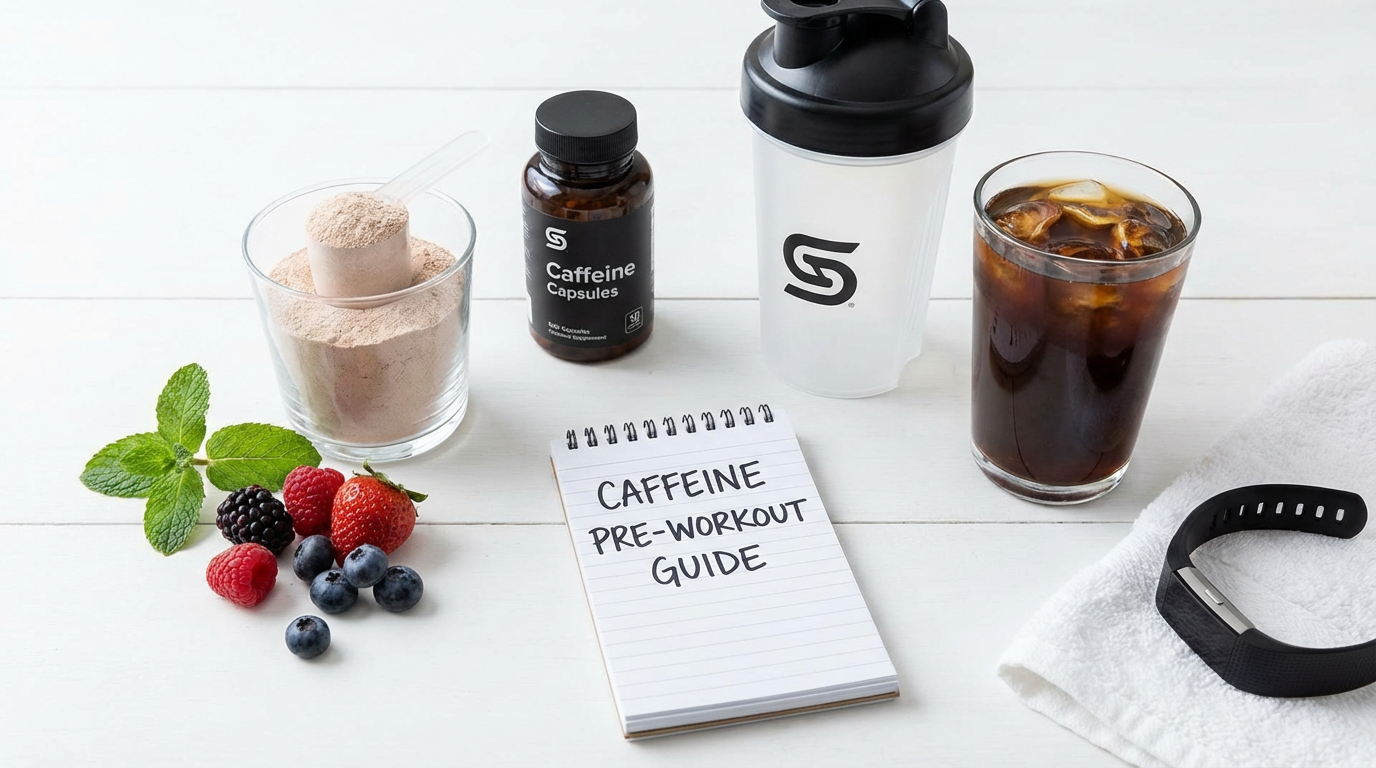
As a fitness trainer, I see athletes and gym-goers use caffeine before training every day. Used well, it can sharpen focus, improve endurance, and make hard efforts feel a bit easier. Used poorly, it can cause jitters, stomach upset, or wreck your sleep. This guide covers what the evidence says about caffeine as a pre-workout: how much to take, when to take it, which forms work best, and how to stay safe so you get the benefits without the downsides. For product options, you can browse caffeine supplements and pre-workout formulas on iHerb.
Why caffeine works as a pre-workout
Caffeine is one of the most researched ergogenic aids in sport. It works mainly by blocking adenosine receptors in the brain, which reduces perceived effort and fatigue and can improve alertness and focus. In practice, that often means you can push a bit harder or longer during resistance training, cardio, or sport. The effect is well documented for endurance; for strength and power, results are more mixed but many people still report better focus and session quality. Caffeine does not replace sleep or good nutrition—it just helps you get more out of the session when you are already prepared.
Effective dosage: how much to take
Research typically uses about 3–6 mg of caffeine per kilogram of body weight for performance. For a 70 kg (154 lb) person, that is roughly 210–420 mg—about two to four cups of brewed coffee. Lower doses (1–2 mg/kg, or about 70–140 mg for that same person) can still improve alertness and focus without as much risk of side effects. More is not better: very high doses can cause jitters, anxiety, stomach issues, or heart palpitations and do not add extra performance. If you are new to caffeine or sensitive, start at the lower end (e.g. 1–2 mg/kg) and only increase if you tolerate it and want a stronger effect. If you already drink coffee daily, you may need a bit more for the same boost because of tolerance, but avoid endlessly escalating; cycling or reducing intake periodically helps keep sensitivity.
Timing: when to take caffeine before training
Peak blood levels usually occur 30–90 minutes after consumption. Most people take caffeine 45–60 minutes before training or competition so the peak lines up with the start of the session. Capsules and chews often hit faster than coffee because of gastric emptying, so you might take them 30–45 minutes before. If you train first thing in the morning, having caffeine 30–45 minutes before you start is a simple default. For afternoon or evening training, be aware that caffeine has a half-life of about 3–7 hours; taking it too late can interfere with sleep. A practical rule: avoid caffeine in the 6–8 hours before bed if sleep is a priority.
Forms: coffee, capsules, or pre-workout blends
Coffee: Familiar and easy to dose if you know how much caffeine your brew delivers (typically 80–100 mg per 8 oz cup, but it varies). Downsides: stomach irritation for some, less precise dosing, and possible need for a bathroom break.
Anhydrous caffeine capsules: Give precise dosing and predictable timing; no extra calories or additives. Good if you want caffeine only without other pre-workout ingredients.
Pre-workout blends: Usually contain caffeine plus other ingredients (e.g. beta-alanine, citrulline, B vitamins). Convenient but check the label for total caffeine so you do not stack multiple sources and exceed safe limits. Many pre-workouts have 150–300 mg per scoop.
Choose based on what fits your stomach, schedule, and goals. You can compare caffeine and pre-workout options on iHerb to find a form that works for you.
Safety and who should be careful
Caffeine is generally safe for healthy adults at moderate doses (e.g. up to 400 mg per day for most). Side effects are more likely at high doses or in sensitive people: anxiety, restlessness, rapid heart rate, stomach upset, or trouble sleeping. If you have anxiety disorders, heart conditions, high blood pressure, or are pregnant or breastfeeding, talk to your doctor before using caffeine for performance. It is not essential—it is an optional tool. Never use caffeine to mask poor sleep or replace recovery; prioritize sleep and then add caffeine only when it fits.
Tolerance and cycling
Regular high intake can blunt the performance and alertness effects and make you depend on it to feel normal. To keep benefits and avoid dependence, consider using caffeine mainly for key sessions or competition, or take occasional breaks (e.g. a few days to a week at lower intake). Many athletes cycle caffeine so that when they use it, it still works.
Combining with other supplements
Caffeine is often combined with other pre-workout ingredients. There is some evidence that caffeine plus creatine may support performance; caffeine plus carbs can help in endurance contexts. Avoid doubling up: if your pre-workout already has 200 mg caffeine, do not add a large coffee on top without counting total intake. Stay within safe daily limits (e.g. 400 mg for most adults unless your doctor says otherwise).
Practical tips from the gym
Try your timing and dose in training before race day or a big event. Keep a simple log: dose, time before session, and how you felt (focus, stomach, sleep that night). Adjust from there. Hydrate well; caffeine can have a mild diuretic effect. If you train fasted, caffeine can help with focus and performance, but pair it with proper nutrition later in the day. Finally, respect individual response: some people thrive on 100 mg; others feel best at 200–300 mg. Find what works for you and stick to it.
FAQ
How long before a workout should I take caffeine?
Most people take it 45–60 minutes before. Capsules or chews can be 30–45 minutes; coffee sometimes a bit earlier. Test in training to find your sweet spot.
Can I take caffeine every day before training?
You can, but tolerance may build. Many athletes use it for key sessions only or cycle so that it stays effective.
Is coffee as good as caffeine pills for performance?
Yes, for the caffeine effect. Pills give more precise dosing; coffee is familiar and may suit people who like the ritual. Choose what you tolerate and will use consistently.
Key takeaways
- Caffeine can improve focus, endurance, and perceived effort when taken 45–60 minutes before training.
- Dose: about 3–6 mg/kg for performance; 1–2 mg/kg for focus with fewer side effects.
- Use coffee, capsules, or pre-workout—match form to your stomach and goals; watch total caffeine.
- Stay within safe limits (e.g. 400 mg/day); avoid late-day caffeine if sleep matters.
- Cycle or limit use so tolerance does not wipe out the benefits; prioritize sleep and recovery first.