What Is Green Tea Extract?
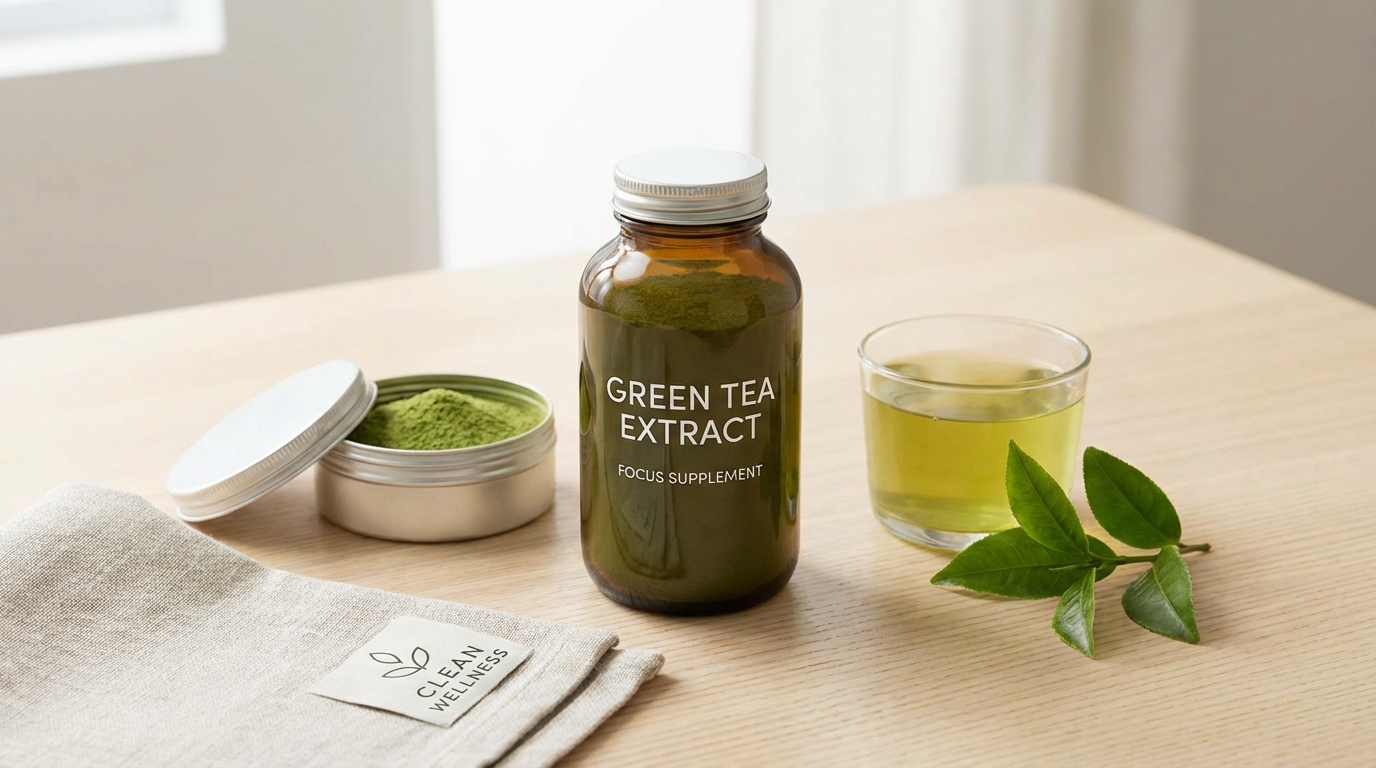
Green tea extract is a concentrated form of compounds from the leaves of Camellia sinensis. Unlike black tea, green tea is minimally oxidised, so it retains more of the natural polyphenols, especially catechins. The most studied catechin is EGCG (epigallocatechin gallate), which has antioxidant and anti-inflammatory properties and is often linked to the potential benefits of green tea for metabolism, cardiovascular health, and cognitive function. Green tea also contains caffeine and L-theanine, an amino acid that may promote relaxation without sedation. The combination of caffeine and L-theanine is sometimes associated with improved focus and alertness without the jitteriness that high doses of caffeine alone can cause.
Green Tea Extract and Focus: What the Evidence Shows
Research on green tea and cognition has grown over the past decade. Many studies use brewed green tea or combined extracts (EGCG plus caffeine and/or L-theanine) rather than EGCG alone. Findings suggest that green tea compounds may support attention, working memory, and subjective alertness in some trials, especially when caffeine is present. L-theanine in combination with caffeine appears to improve sustained attention and reduce the increase in blood pressure that caffeine can cause in some people. EGCG itself has been studied more for metabolic and antioxidant effects; direct evidence that EGCG alone improves focus in humans is still limited. Overall, the focus and alertness benefits are most consistently seen with green tea extracts or beverages that provide both caffeine and L-theanine, and often EGCG, in doses used in clinical studies.
Quality of Evidence and Limitations
Study designs and populations vary: some trials use healthy young adults, others older adults or people with mild cognitive complaints. Results are not uniform; effect sizes are often modest. Confounding factors (sleep, diet, baseline caffeine intake) can influence outcomes. Green tea extract is not a substitute for diagnosing or treating attention disorders (e.g. ADHD) or cognitive decline; anyone with persistent concentration problems should see a doctor for evaluation.
Key Compounds: Caffeine, L-Theanine, and EGCG
Caffeine in green tea (typically 25–45 mg per 8 fl oz cup, depending on brewing) promotes alertness and can improve reaction time and attention in the short term. L-theanine (often 20–40 mg per cup in brewed tea) may smooth the stimulant effect and support alpha-brainwave activity linked to relaxed alertness. EGCG in extracts can be standardised (e.g. 50–90% or more by weight); high-dose EGCG supplements are sometimes used for other goals (e.g. metabolic support) and should be taken with care due to possible liver effects in rare cases. For focus and alertness, products that provide moderate caffeine plus L-theanine (and optionally EGCG) in studied doses are the most relevant.
Dosing and Timing for Focus
For focus and alertness, typical study doses range from about 100–200 mg EGCG (from extract) with caffeine in the range of 30–100 mg and L-theanine around 50–200 mg. Some products combine these in a single capsule or serving. If you use brewed green tea, 2–3 cups per day can provide similar compounds in lower, more variable amounts. Taking green tea extract in the morning or early afternoon helps avoid interfering with sleep; avoid large doses of caffeine in the late afternoon or evening. Start with the lowest effective dose on the label and give it a few days to a week to assess tolerance and effect. Do not exceed recommended serving sizes.
Forms of Green Tea Extract
Green tea extract is available as capsules, tablets, liquid drops, and as an ingredient in pre-workout or focus blends. Standardised extracts often state the percentage of catechins or EGCG per serving. Choose products from reputable brands with clear labelling of EGCG, caffeine (if added), and L-theanine content. If you are sensitive to caffeine, look for decaffeinated or low-caffeine options, or L-theanine-only products. For a wide selection of quality options, browse green tea extract and energy supplements on iHerb.
Safety and Side Effects
Green tea and its extracts are generally well tolerated in moderate amounts. Caffeine can cause jitteriness, palpitations, or sleep disturbance in sensitive people or at high doses. L-theanine is generally considered safe; rare allergic reactions have been reported. EGCG in very high doses (e.g. from mega-dose EGCG supplements) has been associated with rare cases of liver injury; stick to recommended doses and avoid stacking multiple high-EGCG products. Pregnancy and breastfeeding: caffeine intake should be limited per guidelines; high-dose EGCG supplements are not recommended without medical advice. If you take blood thinners, stimulants, or have liver or heart conditions, discuss green tea extract use with your doctor.
Who Might Consider Green Tea Extract for Focus
Adults looking for a moderate boost in alertness and focus without heavy reliance on high-dose caffeine may find green tea extract (with caffeine and L-theanine) useful. It is not a treatment for ADHD or other medical conditions. Pair it with adequate sleep, a balanced diet, and good hydration; supplements do not replace healthy habits. If you have anxiety, hypertension, or sleep disorders, discuss use with a healthcare provider before starting.
When to See a Doctor
If you have persistent difficulty concentrating, memory problems, or fatigue that affects daily life, see a doctor to rule out medical causes (e.g. thyroid issues, sleep apnoea, anaemia, mood disorders). Do not use green tea extract or other supplements as a substitute for diagnosis or treatment. A healthcare provider can help tailor recommendations based on your health and medications.
Summary
- Green tea extract provides EGCG, caffeine, and often L-theanine; the caffeine–L-theanine combination is most linked to focus and alertness in studies.
- Typical doses for focus: moderate caffeine (e.g. 30–100 mg) with L-theanine (e.g. 50–200 mg) and optionally EGCG; follow product labels.
- Take in the morning or early afternoon to avoid affecting sleep; do not exceed recommended doses.
- Generally well tolerated; high-dose EGCG may rarely affect the liver—use standard doses and avoid stacking.
- Supplements do not replace sleep, diet, or medical care; seek professional advice for persistent focus or health concerns.
Green tea extract can support focus and alertness when used in evidence-based doses alongside healthy lifestyle habits. Choose quality products and stay within recommended intakes. Compare options on iHerb for trusted brands.