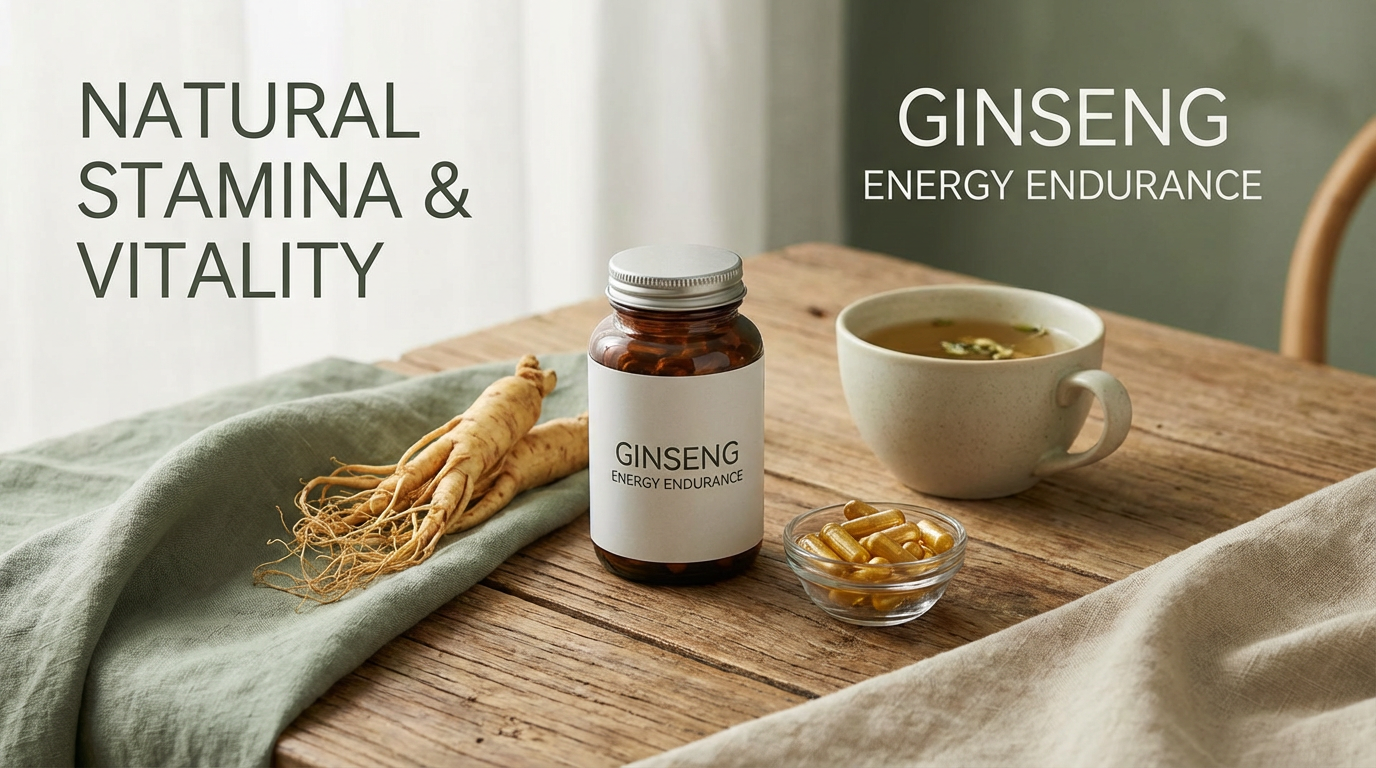
Ginseng refers to several species of perennial plants whose roots are used in traditional medicine for vitality, stamina, and mental clarity. Asian ginseng (Panax ginseng) and American ginseng (Panax quinquefolius) are the most studied; both contain ginsenosides, which are thought to support energy, stress resilience, and immune function. As a fitness coach, I often get questions about whether ginseng really helps with energy and endurance, what type and dose to use, and how it fits with training. This guide covers what the evidence shows, the main types and forms, practical dosing, and safety so you can use ginseng sensibly. For product options you can browse ginseng and energy support on iHerb.
What Is Ginseng?
Panax ginseng (Asian or Korean ginseng) is often considered more “stimulating” and is used for fatigue, concentration, and physical performance. Panax quinquefolius (American ginseng) is often described as more “calming” or adaptogenic and is used for immune support and stress. Both have been studied for effects on fatigue, cognitive function, and exercise performance; results are mixed and depend on dose, duration, and population. Siberian ginseng (eleuthero) is a different plant and is not a true Panax ginseng; it has its own evidence base. When buying supplements, check which species and part (root, extract) you are getting and whether the product is standardised to ginsenosides.
What the Evidence Shows
Meta-analyses and individual trials have looked at ginseng for physical performance, fatigue, and mental performance. Some studies report improved endurance, reduced fatigue, or better cognitive scores; others find no significant effect. Differences may be due to the type of ginseng (Asian vs American), extract quality, dose (often 200–400 mg standardised extract or equivalent), and duration (weeks to months). Effects, when they occur, tend to be modest. Ginseng is not a substitute for adequate sleep, nutrition, and training; it may offer complementary support for some people when used consistently. Do not use ginseng to replace medical treatment for chronic fatigue or other conditions.
Types and Forms
Asian ginseng (Panax ginseng): Available as white ginseng (dried, unprocessed) or red ginseng (steamed and dried), and as extracts standardised to ginsenoside content. Red ginseng is often used in traditional formulas for vitality. American ginseng (Panax quinquefolius): Typically used for immune and stress support; often sold as extract or root powder. Dose and standardisation: Products vary; look for standardisation to ginsenosides (e.g. 2–5% or higher). Typical study doses are 200–400 mg of standardised extract once or twice daily. Whole root or non-standardised preparations make it harder to compare with research.
Dosage and Timing
Doses in studies often range from 200 mg to 400 mg of standardised extract once or twice daily. Some traditional protocols use cycling (e.g. several weeks on, then a break) to reduce the chance of tolerance or overstimulation; evidence for cycling is not strong, but it is a common practice. Take ginseng with food to reduce stomach upset. Give it at least 4–8 weeks before judging effect on energy or endurance. Do not exceed the dose on the product label. If you take other stimulants (caffeine, other adaptogens) or medications, consider total load and discuss with your doctor.
Safety and Side Effects
Ginseng is generally well tolerated at standard doses. Possible side effects include insomnia, digestive upset, headache, and mild stimulation; some people find Asian ginseng too stimulating if taken late in the day. Ginseng can affect blood sugar and may interact with diabetes medications; if you have diabetes, monitor glucose and discuss with your doctor. It may also affect blood pressure and clotting; if you take blood thinners or have cardiovascular disease, get medical clearance before using ginseng. Pregnancy and breastfeeding: not recommended due to insufficient safety data. Do not use ginseng instead of prescribed treatment for fatigue or mood disorders.
Ginseng and Exercise
Some athletes and active adults use ginseng hoping to support endurance or recovery. Evidence for ergogenic effects is inconsistent; a few trials suggest modest benefits in endurance or perceived exertion when ginseng is taken for several weeks. Combining ginseng with proper training, sleep, and nutrition is more important than the supplement alone. If you try ginseng for performance, use a standardised product at evidence-based doses and give it time; do not expect an immediate “pre-workout” boost like caffeine.
Who Might Consider Ginseng
Adults looking for a traditional option to support energy, focus, or resilience during busy or demanding periods may consider ginseng after discussing with their doctor. People with diabetes, high blood pressure, or on blood thinners should get medical approval first. If you are sensitive to stimulants or have trouble sleeping, choose American ginseng or take Asian ginseng earlier in the day and avoid late doses.
Practical Tips
- Type: Asian ginseng for energy and focus; American for a milder, more adaptogenic profile.
- Dose: 200–400 mg standardised extract once or twice daily; follow the label.
- Timing: Morning or early afternoon to avoid interfering with sleep.
- Duration: At least 4–8 weeks; some people cycle with breaks.
- Safety: Discuss with your doctor if you have diabetes, take blood thinners, or have cardiovascular issues.
FAQ
What is the difference between Asian and American ginseng?
Asian ginseng (Panax ginseng) is often considered more stimulating; American (Panax quinquefolius) is often described as more calming or adaptogenic. Both contain ginsenosides but in different profiles.
Can ginseng help with exercise performance?
Evidence is mixed. Some studies show modest benefits in endurance or fatigue when used for weeks; it is not a substitute for training and recovery.
Is ginseng safe with diabetes medication?
Ginseng can affect blood sugar. If you have diabetes, monitor glucose and talk to your doctor before using ginseng.
Key Takeaways
- Ginseng (Asian and American) is used for energy, endurance, and stress resilience; evidence is mixed but promising for fatigue and performance in some studies.
- Types: Asian (Panax ginseng) often more stimulating; American (Panax quinquefolius) often more adaptogenic. Choose standardised extracts.
- Dose: 200–400 mg standardised extract once or twice daily; give 4–8 weeks. Take with food; avoid late in the day if it affects sleep.
- Safety: generally well tolerated; caution with diabetes, blood thinners, and cardiovascular conditions. Not for pregnancy or instead of prescribed treatment.
- Use as part of a balanced approach to energy: sleep, nutrition, and training first. Compare ginseng and adaptogens on iHerb.